
Share this @internewscast.com
On Monday, China’s military initiated joint exercises involving air, naval, and rocket forces around Taiwan. Beijing described this move as a “stern warning” to separatist elements and external forces interfering in its affairs.
The exercises followed China’s displeasure over U.S. arms sales to Taiwan and remarks by Japan’s Prime Minister, Sanae Takaichi. Takaichi suggested that Japan’s military might intervene if China took aggressive action against Taiwan, which China insists must be reunified under its control.
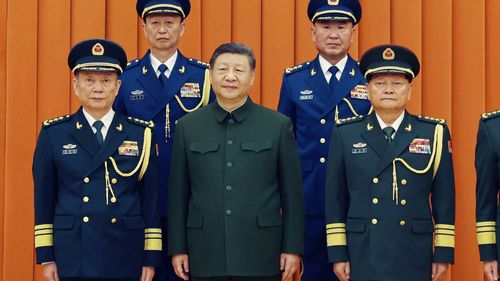
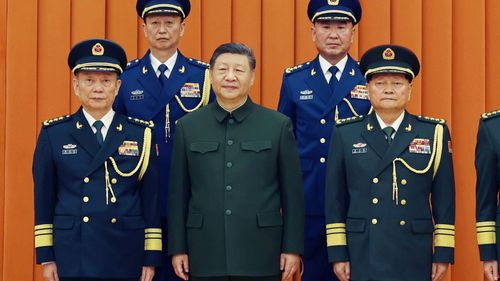
U.S. federal law, in effect for decades, mandates that Washington support Taipei in its defense, a stance that remains a significant point of contention with China.
The U.S. and Taiwan maintained official diplomatic ties until 1979, when President Jimmy Carter’s administration formally recognized Beijing and established relations.
Taiwanese army on high alert
Monday’s exercises have escalated tensions between the two sides.
Karen Kuo, a spokesperson for Taiwan’s presidential office, stated that the drills threaten the stability and security of the Taiwan Strait and the broader Indo-Pacific region, while also challenging international law and order.
“Our country strongly condemns the Chinese authorities for disregarding international norms and using military intimidation to threaten neighboring countries.” she said.
Beijing sends warplanes and navy vessels toward the island on a near-daily basis, and in recent years it has stepped up the scope and scale of these exercises.
In October, the Taiwanese government said it would accelerate the building of a “Taiwan Shield” or “T-Dome” air defense system in the face of the military threat from China.
The military tensions came a day after Taipei Mayor Chiang Wan-an said he hoped the Taiwan Strait would be associated with peace and prosperity, instead of “crashing waves and howling winds,” during a trip to Shanghai.