Share this @internewscast.com
Leaders from Australia, the United States, and the United Kingdom took to the airwaves on Wednesday, aiming to calm public anxiety amid the most significant disruption to global energy markets seen in years due to the ongoing conflict in the Middle East.
In a rare display of synchronized communication, Anthony Albanese, Donald Trump, and Keir Starmer each addressed their nations, explaining how the war is exerting immediate economic stress domestically, affecting everything from fuel costs to supply chain stability, while also detailing their government’s strategic responses.
Although they all recognized the same core disturbance, each leader offered a distinct perspective on both the root cause and potential remedies.
Albanese centered his discussion on domestic relief and conservation efforts, Trump emphasized the necessity of an expanded military response, and Starmer advocated for enhanced energy security and international cooperation.
A shared burden
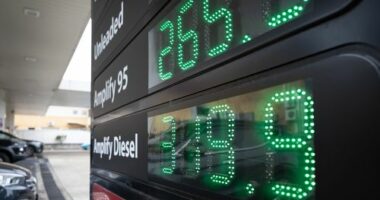
With rising costs already impacting citizens, Albanese focused part of his speech on the financial strain, informing Australians that the conflict had triggered “the biggest spike in petrol and diesel prices in history” and cautioning that the “economic shocks … will linger for months.”
This announcement followed a day brimming with speculation, as the unusual format of a nationally televised address—typically reserved for significant crises like the COVID-19 pandemic—was announced just hours beforehand, sparking rumors about possible fuel rationing or deeper engagement in the conflict.
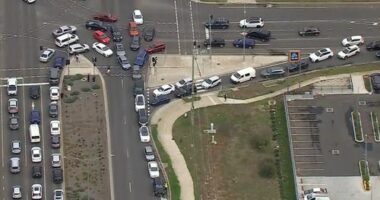
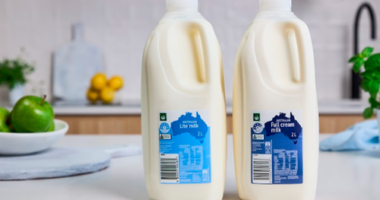
Instead, Albanese spoke mainly of the current domestic fallout, emphasising that while “Australia is not an active participant in this war”, households were already feeling the impact, pointing to rising costs “at the servo and at the supermarket”, with “farmers and truckies, small businesses and families” under acute pressure.
When the United States and Israel launched coordinated strikes across Iran on February 28, Australia backed the operation as necessary to prevent nuclear proliferation. It has since called for de-escalation.
Albanese’s government has also acknowledged that three Royal Australian Navy personnel were aboard a US submarine involved in sinking the Iranian warship IRIS Dena in March, stating they were on training placements and did not participate in the offensive action.
The federal response has focused on immediate relief, with Albanese reiterating it had cut the fuel excise in half — reducing the tax on every litre of petrol by 26 cents — and cut the Heavy Vehicle Road User Charge to zero for three months, alongside efforts to secure supply.
He pointed to a four-stage fuel security framework, indicating Australia remains in the second phase focused on voluntary conservation rather than mandatory restrictions.
Unlike Donald Trump, who foregrounded military outcomes, Albanese urged public cooperation, asking Australians to “not take more fuel than you need” and, where possible, to “switch to catching the train or bus or tram to work”.
He tempered expectations: “No government can promise to eliminate the pressures that this war is causing,” before closing on collective action, saying Australia would respond “the Australian way” by “working together — and looking after each other”.
There were no new measures announced, instead a telling reveal that “if the global situation gets worse … we can co-ordinate the next steps together.”
The address’ focus on incremental measures and shared responsibility drew criticism from the Opposition and online meme creators, with some suggesting it lacked urgency and could have been delivered “as an email”.
War footing and mixed signals
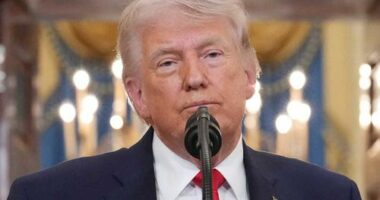
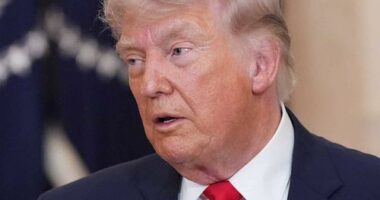
Trump used his lengthier, 20-minute prime-time address to defend a month-long military campaign, declaring US forces had delivered “swift, decisive, overwhelming victories” and asserting: “Tonight, Iran’s Navy is gone. Their Air Force is in ruins,” presenting the conflict as near-total strategic success.
He said the US had “completely decimated” Iran’s militarily and was “on track to complete all of America’s military objectives shortly, very shortly”, projecting an end within weeks while continuing to justify the operation as essential to prevent a nuclear threat.
Although, Trump had previously declared in a June 2025 address that Iran’s key nuclear enrichment facilities were, at the time, “completely and totally obliterated”.
Much of his Wednesday address echoed his recent public messaging, restating familiar claims and threats made particularly on Truth Social, including a warning that “if there is no deal, we are going to hit each and every one of their electric generating plants very hard”.
At the same time, the speech left key questions lingering, including what would constitute victory and how or when the conflict would end, with Trump offering no clear pathway beyond saying objectives were “nearing completion”.
Unlike Albanese, Trump gave limited attention to domestic cost pressures, acknowledging “many Americans have been concerned … about gasoline prices” but describing the increase as only “short term” and attributing it entirely to Iranian actions.
He instead stressed US energy independence, saying America had “plenty of gas” and “does not need” Middle Eastern oil, while urging countries reliant on Gulf supply to “take the lead” in securing shipping routes, telling them to “go to the Strait and just take it”.
Iran has rejected that framing, with its paramilitary Revolutionary Guard this week stating the Strait of Hormuz was “firmly and decisively under the control” of its forces and warning it “will not be opened to the enemies of this nation through the ridiculous spectacle by the president of the United States”.
The address combined assertions of military success with continued threats and competing claims over control of the conflict’s central chokepoint, offering no firm timeline for an end to hostilities while maintaining that the United States held “all the cards”.
Diplomacy, security and economic reset
Starmer framed the war as both an immediate economic challenge and a longer-term test of national resilience, warning it would “affect the future of our country” while insisting Britain was “well-placed to weather it”.
He mirrored Albanese in distancing Britain from direct involvement, stating: “this is not our war. We will not be drawn into the conflict” but placed greater emphasis on coordinated international action to stabilise energy flows.
Starmer said the UK had brought together 35 nations to push for maritime security and would assess “all viable diplomatic and political measures” to restore “freedom of navigation” and reopen critical trade routes.
Domestically, he outlined targeted support, including cutting energy bills by over £100 ($192) per household, extending fuel duty cuts and allocating funds to households exposed to heating oil price rises, while acknowledging concerns at the petrol bowser and over energy bills.
Unlike Albanese’s narrower focus on immediate relief, Starmer embedded these measures in a broader reform agenda, arguing “this time will be different” and linking the crisis to energy independence, investment in “clean British energy” and closer cooperation with European partners.
He reinforced that argument with a personal anecdote, recalling that in the 1970s his “family could not pay every bill”, appearing to position the current shock touching millions as part of a longer economic cycle.
How long it lasts, and how the AUKUS leaders will continue to respond, remains unclear.
For the latest from SBS News, download our app and subscribe to our newsletter.