
Share this @internewscast.com
The COP30 conference in Belém, Brazil has ended after two weeks with a compromised climate deal that exposed deep rifts between countries on future action.
On Saturday local time, the conference’s presidency pushed through the modified agreement, after nearly 200 countries approved by consensus.
The deal launches a voluntary initiative to speed up climate action to help countries meet their existing pledges to reduce emissions, and calls for rich countries to at least triple the amount of money they provide to help developing ones adapt to a warming world by 2035.
But its passage only came after a coalition that included the European Union and Australia dropped demands for the agreement to include a plan to phase out fossil fuels.
The group of 80 countries had pushed for a transition from oil, coal and gas, calling for follow-through on an agreement at COP28 in 2023 to move away from fossil fuels.

The latest climate summit was marked by intense discussions with a faction led by Middle Eastern nations, notably Saudi Arabia, the world’s leading oil exporter, alongside Russia. This coalition, including coal-rich India and several developing countries, resisted any reference to fossil fuels in the final agreement. Their stance created a significant hurdle in the negotiations.

The EU agreed on Saturday not to block a final deal, but said it did not agree with the conclusion.
“We would have preferred to have more ambition on everything,” EU climate commissioner Wopke Hoekstra told reporters.
“It is not perfect, but it is a hugely important step in the right direction,” he said.
COP30 president André Corrêa do Lago acknowledged that some countries had “greater ambitions for some of the issues at hand” and would feel disappointed by the new wording of the agreement.
Corrêa do Lago said on Saturday that the presidency was issuing a side text on fossil fuels — as well as on protecting forests — while keeping it out of the main accord because of the lack of consensus.

Meanwhile, dissatisfaction simmered among other attendees. Several nations, including three of Brazil’s Latin American neighbors, voiced their discontent over the summit’s failure to produce a stronger framework for curbing greenhouse gases and addressing fossil fuel usage. They were seeking a more assertive approach to tackle these pressing environmental issues.

A man seated at a desk, banging down a gavel. There is a sign that says "COP PRESIDENT" on the desk.

André Corrêa do Lago, the president of COP30, acknowledged the disparity in ambitions among the participating countries. He admitted that some nations had hoped for more aggressive measures to be included in the agreement. This divergence in expectations highlights the complexity of global climate negotiations.

The negotiator from Colombia made a pointed remark regarding the omission of fossil fuels, which are the largest contributors to global warming. She argued that her country could not endorse an agreement that disregarded scientific evidence, stating, “A consensus imposed under climate denialism is a failed agreement.” This statement underscores the critical need for aligning international climate policies with scientific realities.
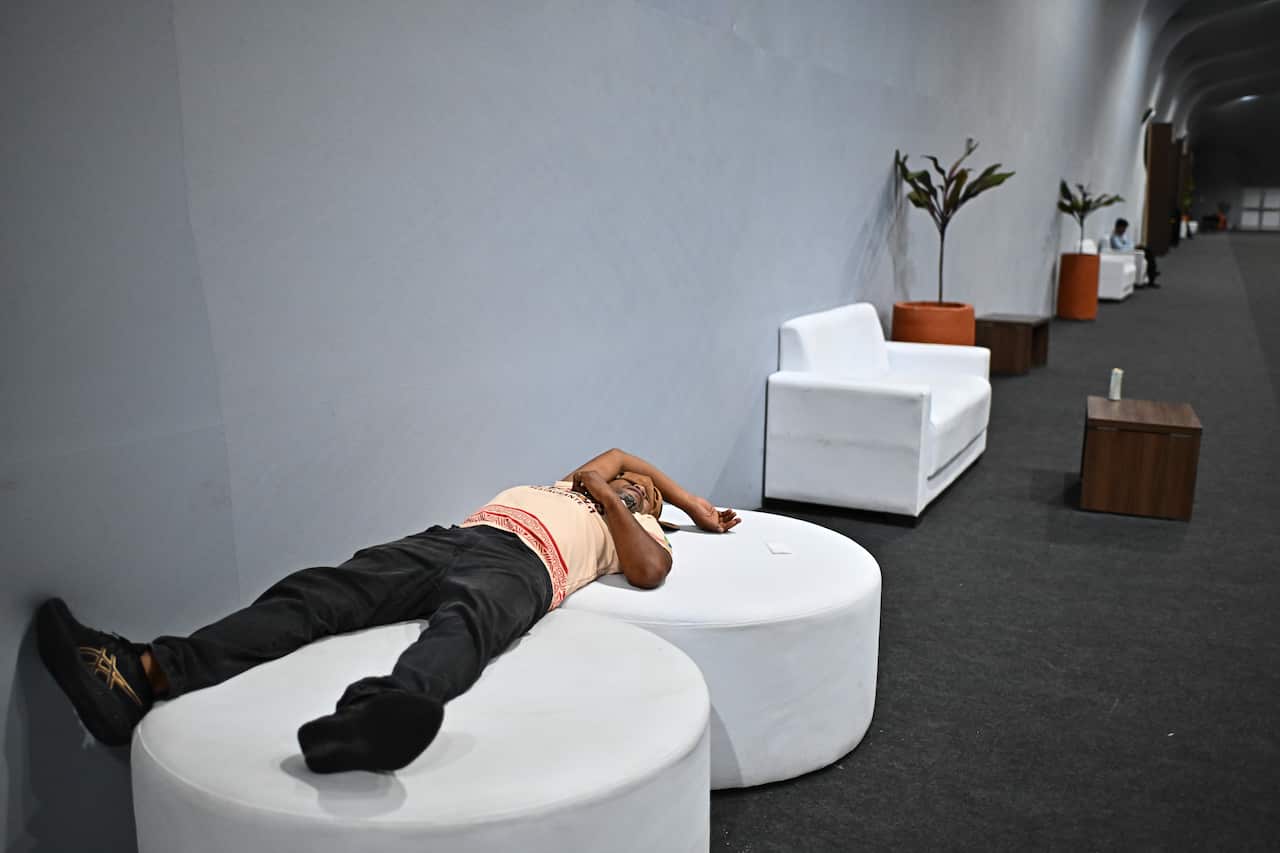
A man in an orange shirt sleeps on two white chairs in a grey room.

As the summit unfolded at the Hangar Convention Centre, its corridors were abuzz with activity. Government representatives mingled with researchers, activists, and journalists, creating a vibrant atmosphere. Behind closed doors, a select group of key negotiators worked tirelessly to reach a consensus, highlighting the challenging nature of such high-stakes international dialogues.

Arthur Wyns, research fellow at the University of Melbourne and former adviser to the COP28 presidency, told SBS News it had been a “really long day”.

“People were hanging out on chairs, and there were negotiators having a beer in the corner,” Wyns told SBS News.
While it isn’t unusual for COP negotiations to go well into the night on the final day of the conference, this year’s conference came at a time of increased urgency, with the world having passed the threshold of keeping warming to 1.5C above pre-industrial levels.

Fossil fuels and deforestation dropped

Tensions began after Brazil published its draft wording of the final deal in the early hours of Friday morning local time.
The text was in stark contrast to an earlier draft, which offered three separate options for nations to reduce their reliance on coal, oil and gas — the source of 68 per cent of global greenhouse gas emissions, according to the United Nations.

“A lot of parties were quite surprised,” Wyns told SBS News, adding that references to deforestation were also removed.

While the main COP30 agreement sidestepped mention of fossil fuels, around two dozen countries — including Australia — signed a statement called the Belém Declaration on the Transition Away from Fossil Fuels.
Dr Simon Bradshaw, COP31 lead at Greenpeace Australia, welcomed the move that acknowledged a “legally binding international commitment” to limit warming.

“This is the strongest ever statement from Australia on fossil fuels, and we intend to hold them to it,” Bradshaw said in a statement.

A ‘significant step back’

It was the first COP to officially recognise the role of fossil fuels in global warming, but stopped short of calling for a full “phase out” of their usage.
“It took a lot of diplomatic balancing in the United Arab Emirates to get the wording in,” Wyns said.

The new agreement recalls the consensus reached at COP28 on transitioning away from fossil fuels, and calls on countries to voluntarily “accelerate” their climate action.
A man in a grey suit against a grey background with two flags.

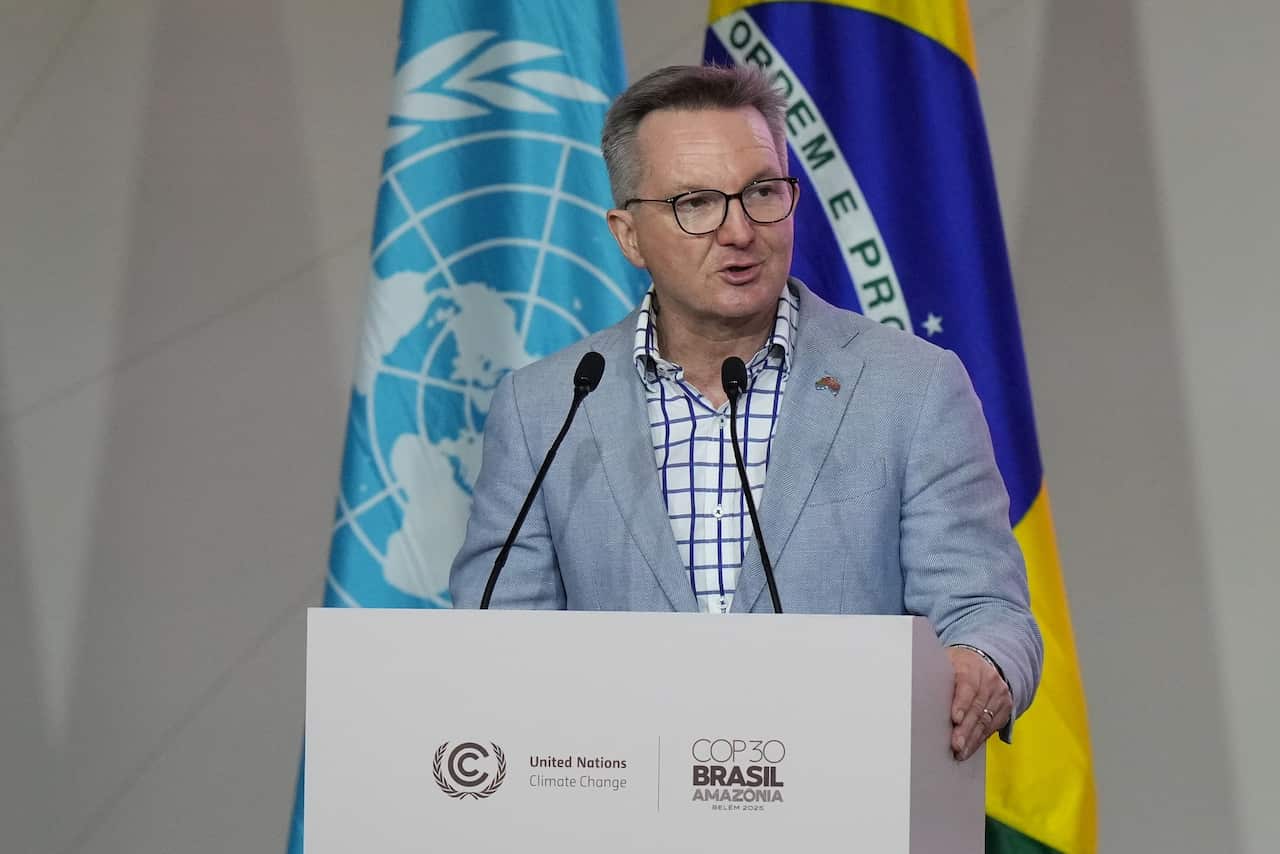
The Australian delegation, led by Climate Change and Energy Minister Chris Bowen, supports a phase-out of fossil fuels being included in the agreement. Source: AAP / Fernando Llano

This year’s COP conference was also a crucial test of global cooperation against climate change, after the leaders of China, the United States and India all decided not to attend.

Wyns, before the final agreement had been reached, told SBS News that a COP outcome that didn’t name fossil fuels, or ended without an agreement at all, would be a “significant step back”.

“And it also means that Türkiye and Australia will have to deal with this mess next year.”

Possible ‘diplomatic trainwreck in the making’

Wyns also told SBS News the recently announced COP31 deal — under which Türkiye will host next year’s event, but Australia will lead negotiations — could be a “diplomatic trainwreck in the making”.
“Australia will lead the climate negotiations, but Türkiye will hold the political power at the end of the day, who will gavel through the decisions, literally, with a hammer.”
According to a partnership agreement seen by SBS News — which is yet to be formally signed — Türkiye will preside over the conference as president. At the same time, Australia will elect a vice president and a “president of negotiations”.

The document states that, if there is a difference of view between the two nations, “consultations will take place until the difference is resolved to mutual satisfaction”.

Wyns said the problem is Türkiye and Australia are “miles apart when it comes to climate change priorities”.
“If Australia doesn’t wield the political power to come up with a political solution, then we have a serious problem because it means Türkiye will be the final decision-maker.”
Speaking to SBS News from Belém, Climate and Energy Minister Chris Bowen said the agreement — made to resolve both nations’ bids to host the event — was a “significant concession” for both Australia and Türkiye.
“It would be great if Australia could have it all, but we can’t have it all.”
— With additional reporting by Reuters and Agence France-Presse

Share this @internewscast.com
You May Also Like
Emma Sleep mattress

Mattress Industry Leader Faces $15 Million Penalty for Deceptive Online Advertising

Mattress company Emma Sleep has been ordered to pay a $15 million…

UK Plans New Legislation to Prohibit Cigarette Sales for Those Born After 2008

In brief A rolling age ban means children and anyone born in…

Unpacking the Key Issues in the NDIS Overhaul

In Brief Roughly 160,000 Australians are set to lose access to the…
Robert F Kennedy has doubled down on Donald Trump's incorrect maths.

Trump and Kennedy’s Baffling Math Claims: Unraveling the Controversial Calculations

The President of the United States has consistently asserted that his initiatives…

Woolworths Executive Announces Price Reductions Amid Evolving Inflationary Challenges

In brief: The supermarket giants are before Federal Court over accusations of…
The owner of a service station in Sydney has been left fuming after a truck driver stole close to $3000 worth of petrol in one hit.

Brazen Petrol Theft Sparks Outrage: Service Station Owner Fumes Over Fuel Heist

A Sydney gas station proprietor is up in arms after a truck…
The Australian soldiers who fought epic battle in the 'forgotten war'

Heroic Australian Soldiers Recall Epic Battle in the Overlooked Korean War

Anzac Day falls 75 years after Australian soldiers fought a bloody battle…
Alexander Philogene and his uncle Chris Jarmer

Tragic Passing: 21-Year-Old Zander Succumbs to Sudden Illness Mid-Flight

Australians have been warned against a severe strain of meningococcal B circulating…
Ed Sheeran's LOOP world tour got off to a flying start, raking in a staggering £5million per show during its opening leg

Ed Sheeran’s LOOP Tour: Unveiling the £5 Million Per Show Phenomenon!

Ed Sheeran’s LOOP world tour has started with remarkable success, earning an…

Lebanon’s Pivotal Role: How Its Future May Shape Regional Conflict Dynamics

in brief World leaders have called for peace talks to take place…
Michelle Stalimeros (pictured) grew up in a 'chaotic' home where alcohol was woven into family life

Weekend Wine Habit Triggered Blackouts and Anxiety, Straining Marriage; Reflecting on Three Years of Sobriety

At first glance, Michelle Stalimeros appeared far from someone struggling with alcohol.…
Ahead of the Budget delivery on Tuesday evening, Greens housing spokesman Max Chandler-Mather slammed the $9.3billion surplus as evidence of 'how little Labor cares about the housing crisis'

Budget 2024: Albo’s Challenger Unveils Key Oversight by Jim Chalmers

For the second consecutive year, Treasurer Jim Chalmers has announced a budget…