
Annually, in north-east Arnhem Land, the Garma Festival unites Yolŋu leaders, families, cultural custodians, and guests from all over Australia for a four-day event focused on learning, ceremonies, and cultural exchange.
Located on Gumatj country at Gulkula, a remote ceremonial site near Nhulunbuy in the Northern Territory, Garma stands as Australia’s largest First Nations cultural gathering and a key forum on Indigenous affairs.

The festival serves as a meeting point for cultural traditions and urgent national discussions, shaping the future through dialogues rooted in the past.

A deeply cultural event

Garma is hosted by the Yothu Yindi Foundation and has been running since 1999.
It was established to celebrate Yolŋu culture and share it with the broader Australian community.
From the beginning, it has been led by Yolŋu people, on Yolŋu terms.
Yothu Yindi Foundation CEO Denise Bowden said that Garma was established not only to preserve Yolŋu cultural practices, but also to create a national platform for conversation and leadership grounded in cultural authority.
“But the Yunupiŋu brothers also envisaged that Garma would be a place of serious business – a home to high-level discussion and debate, and a forum to test policy and present Yolŋu knowledge systems. A catalyst for new ideas and fresh thinking,” Bowden said.

The festival is grounded in traditional ceremony, with daily bunggul (dance), manikay (song), and miny’tji (art) shared in the open air.

Storytelling, intergenerational learning and the continuation of songlines are central to the event, offering an immersive cultural experience that invites guests to listen, witness and learn.
Tanya Denning-Orman, SBS Director of Indigenous Content, describes Garma as a significant moment on the national calendar and a privilege to experience.

“Each year, the Yolŋu community warmly welcomes over 2,500 attendees to Gulkula, and we are proud to extend this invitation to all Australians through our event coverage,” she noted.

How Garma began

The first Garma Festival was held in 1999, initiated by the Yunupingu family and the Yothu Yindi Foundation.

The festival originated as a means to safeguard and celebrate Yolŋu cultural heritage during a period when numerous Elders were concerned it was fading. Gulkula, the chosen venue, is recognized for its cultural and ceremonial significance, as it is where the Yolŋu ancestor Ganbulabula introduced the yidaki (didgeridoo or Aboriginal wind instrument) into Yolŋu culture.

The late Yolnu leader Dr Galarrwuy Yunupingu AC, a founding member of the Yothu Yindi Foundation and a prominent land rights leader, played a central role in establishing Garma as a space where cultural strength and political advocacy could come together.

His legacy continues to shape the event.

When is Garma?

The Garma Festival takes place annually in early August. The 2025 event will run from 1 to 4 August at the Gulkula site, which overlooks the Gulf of Carpentaria.

Gulkula is sacred to the Gumatj clan and bears profound ceremonial and cultural importance. The event unfolds in its natural bushland setting, with participants camping on site and adhering to cultural protocols throughout the gathering.
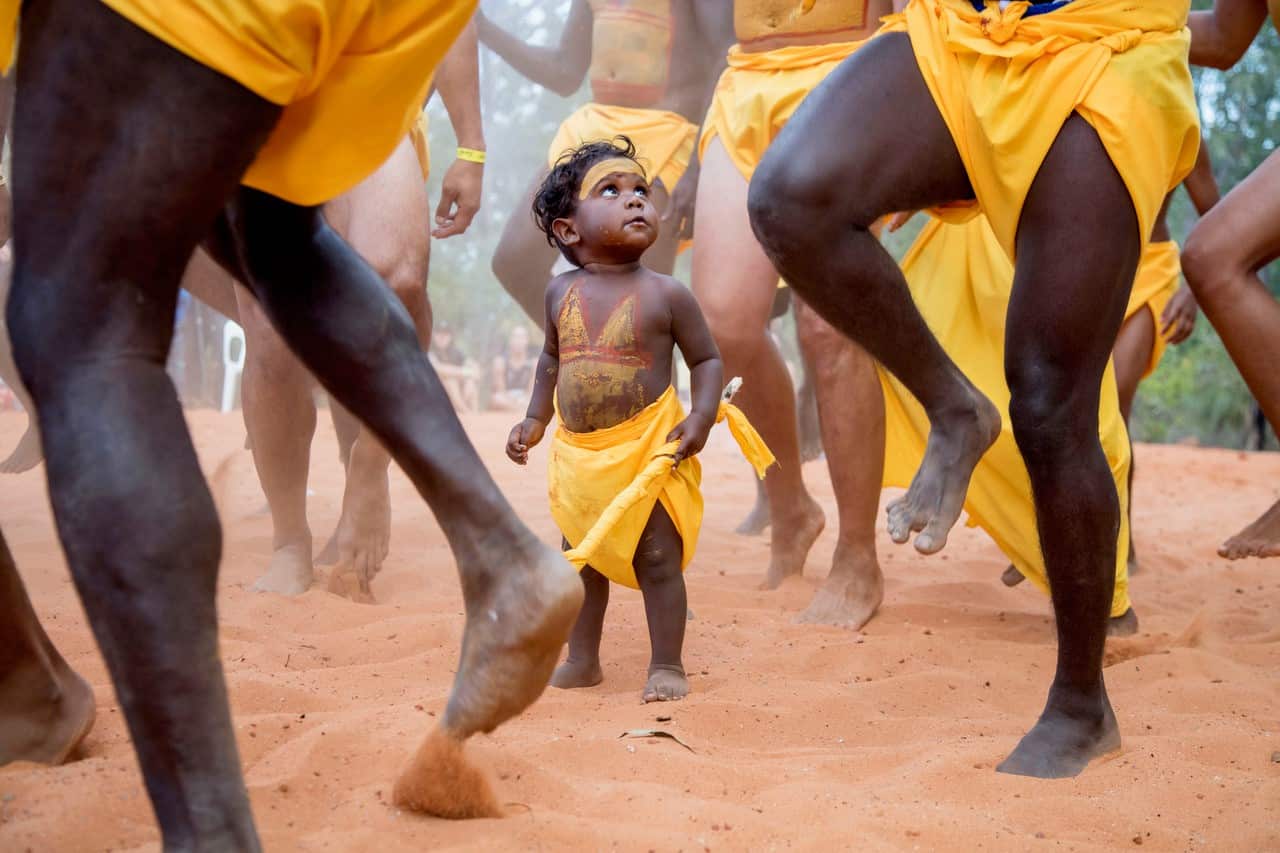
A young child in a yellow garb tied around his legs stands in the centre, looking at adult dancers during a traditional dance performance.

A young child performs the bungul surrounded by family. Source: Supplied / yyf.com.au

Why 2025 is a milestone year

This year marks the 25th anniversary of Garma, a significant milestone in its evolution from a regional cultural gathering into a nationally respected event that shapes public dialogue.
The 2025 theme is ‘Law of the Land: Standing Firm’, or in Yolŋu: Matha, ‘Rom ga Waŋa Wataŋu’.
Yothu Yindi Foundation chair Djawa Yunupingu said: “This year’s anniversary theme acknowledges 25 years of achievement and success, and a milestone moment in the life of our event.”
NITV and SBS will be the official media partners, providing coverage across television, radio and digital platforms. This includes daily highlights, special broadcasts and reporting from the ground, allowing audiences around the country to experience Garma from wherever they are.

A space for conversation and change

While Garma is first and foremost a celebration of culture and Country, it is also a respected platform for policy discussion and leadership.
The key forum, held each year during the festival, brings together Indigenous community leaders, policymakers, academics and corporate figures to discuss issues such as truth-telling, treaty, education, economic development and land rights.

The festival has been crucial in amplifying Yolŋu perspectives and promoting Indigenous-led solutions in governance, health, and community empowerment sectors.

Anthony Albanese, wearing a hat, is sitting next to a man in a yellow shirt who is speaking with his finger pointing upwards. There's a crowd sitting around them.

Garma, the annual festival and celebration of Yolŋu life and culture, is marking 25 years. Credit: Melanie Faith Dove/Yothu Yindi Foundation

Conversations held at Garma often ripple outward into national policy circles.

Denise Bowden, CEO of the Yothu Yindi Foundation, stated: “Garma plays a vital educational role, aiding Australians in understanding Yolŋu culture more profoundly, ensuring its practices continue robustly, and are transmitted from one generation to the next.”

Who attends Garma?

Garma brings together a diverse cross-section of Australia: Elders, young people, artists, political leaders, journalists, educators and members of the broader public.
Some come for the music and art, others for the chance to engage in meaningful dialogue. All are invited to participate respectfully and learn from Yolŋu hosts and the broader Arnhem Land community.
Over 25 years, the festival has grown in scale and impact, but its purpose remains the same: to celebrate Yolŋu culture, to uphold traditional knowledge, and to invite others to walk alongside in the spirit of listening and learning.

You May Also Like

Israel and Lebanon Reach Conditional Ceasefire Agreement: What You Need to Know

In brief Israel and Lebanon have agreed to a conditional ceasefire in…

Fiji Stands Firm: Denies Australian Billionaire’s Controversial Waste-Burning Proposal

In brief Fiji has rejected a plan by an Australian billionaire to…

I’ve Inherited the Gene Behind My Mother’s Greatest Fear

Welcome to your go-to destination for keeping abreast of the latest happenings…

CSIRO Announces Substantial Workforce Reductions Amid Increased Scientific Expenses

IN BRIEF Almost 100 roles in the environmental research unit will be…
Daryl Mitchell was England's nemesis four years ago, scoring a century in all three Tests - but still ended up on the wrong side of a series whitewash

Daryl Mitchell Thrilled by New Zealand’s Bowling Prowess as Black Caps Target England, Aiming to Match Bradman and Dad’s World Cup Triumphs

It’s been four years since New Zealand’s last Test tour of England,…

How a Blue-Tongued Lizard Became a Symbol of Reconciliation at a Local School

Stay informed with our reliable daily news updates and in-depth analyses delivered…

Australian Researchers Discover Clues to the Milky Way’s Ancient Beginnings

In brief CSIRO scientists are helping map the origins of the Milky…
Named the Mangatangi Fault, the fault line runs alongside the Hunua Ranges in South Auckland, close to the city of Auckland

Scientists Identify Active Fault Line in Auckland, Warn of Potential 6.8 Magnitude Earthquake in New Zealand

When most people think of the ‘Big One,’ their minds usually drift…
Haiti forward Ruben Prividence celebrates after scoring the opening goal in Florida

Scotland Fans Beware: Haiti’s World Cup Team Packs a Surprising Punch

Following a confident 4-1 triumph over Curacao at Hampden last weekend, Steve…