
Share this @internewscast.com
The early hours of Monday in Beirut were marked by a series of loud explosions as Israel launched a strike on the Lebanese capital. Alongside this, a fresh wave of attacks targeted Tehran. Meanwhile, in a related incident, Dubai was compelled to temporarily shut down its airport due to an Iranian drone strike that hit a fuel tank.
In the aftermath of an assault by the United States and Israel over two weeks ago, Iran has retaliated by consistently launching drone and missile attacks against Israel, American bases, and the energy infrastructures of its Gulf Arab neighbors.
This ongoing conflict has severely disrupted shipping in the Strait of Hormuz, a vital passage for approximately 20% of the world’s oil supply. The situation is stoking fears of an impending global energy crisis, adding pressure on Washington as consumers already grapple with surging fuel prices.
On Monday, Brent crude oil—a benchmark for international pricing—remained persistently above the $100 mark, trading at $104 per barrel in early sessions. This reflects an increase of nearly 45% since the US and Israel initiated their attacks on Iran on February 28, with prices having peaked at around $120 during the conflict.
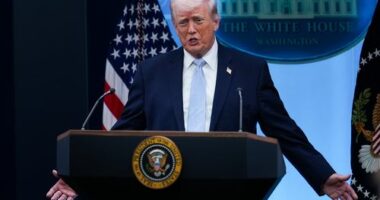
President Donald Trump announced that he has called on approximately seven countries to deploy naval forces to ensure that the Strait of Hormuz remains open. However, his pleas have yet to yield any firm commitments. Rising energy costs are becoming a growing concern for the Republican party, with potential repercussions for the upcoming fall elections.
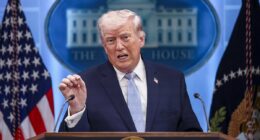
“I’m demanding that these countries come in and protect their own territory, because it is their own territory,” Trump stated to reporters aboard Air Force One during his return journey to Washington from Florida. While he did not specify the nations involved, he has previously appealed to countries such as China, France, Japan, South Korea, and Britain.
Iran’s Foreign Minister Abbas Araghchi called claims that his country may be seeking a negotiated end to the war “delusional”, saying in a social media post early on Monday that his country was seeking neither “truce nor talks”.
“Our Powerful Armed Forces will keep firing until POTUS realizes that illegal war he’s imposing on both Americans and Iranians is wrong and must never be repeated,” he wrote on X.
Iran hits Dubai airport, forcing temporary closure
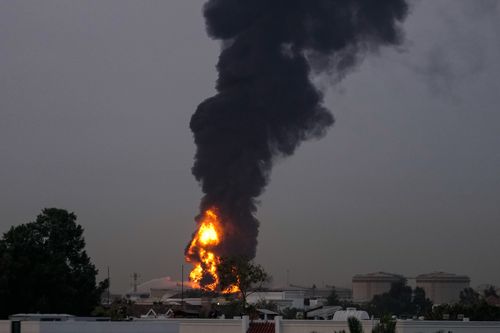
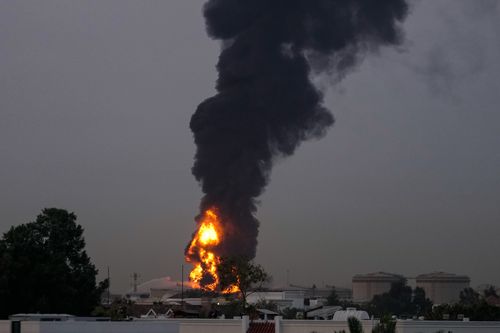
As morning broke on Monday, a drone hit a fuel tank near Dubai International Airport, the world’s busiest for international passenger traffic, causing a large fire.
Firefighters were able to contain the blaze and there were no injuries reported but the airport temporarily suspended all flights before resuming them a few hours later.
Later, a person was killed in the capital when an Iranian missile hit a vehicle, the Abu Dhabi media office said. Fire also broke out at an oil facility in Fujairah, one of the UAE’s seven emirates, following a drone attack.
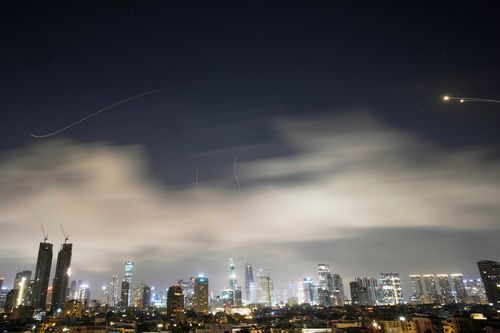
Iran has fired hundreds of missiles and drones toward Gulf countries hosting US military assets since the war began. Emirati authorities say most have been intercepted by air defences, though debris and some drones have fallen inside the country.
Iranian officials have recently accused the UAE of allowing its territory to be used for attacks against Iran. Emirati officials have rejected the allegations as misleading and said the country’s actions have been defensive.
Saudi Arabia, meantime, said it had intercepted a wave of 35 Iranian drones sent at its eastern region, home to major oil installations.
Israel’s military said early on Monday that Iran launched missiles toward Israel as well.
Israel’s military says Iran is firing cluster bombs that can evade some air defences and scatter submunitions across multiple locations.
Israel hits Beirut and launches new attacks on Tehran
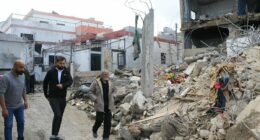
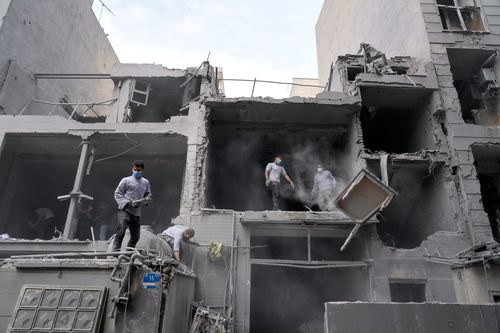
Massive explosions were heard in Beirut as Israel launched new attacks on the Lebanese capital before dawn, saying it was striking infrastructure related to the Iran-linked Hezbollah militia group.
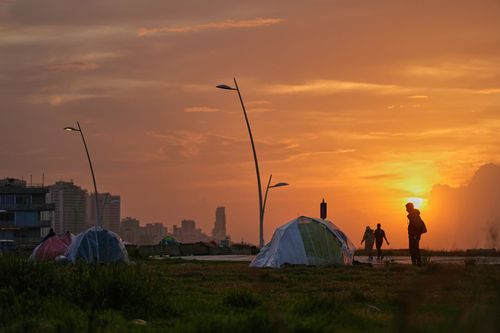
The Israeli army has issued evacuation orders for many neighbourhoods in Beirut as well as southern Lebanon. To date, more than 800,000 people have been displaced by Israel’s campaign in Lebanon.
At least 850 people have been killed by Israeli strikes so far, including 107 children and 66 women.
Not long after Israel’s military announced it had launched new strikes on Tehran targeting infrastructure, explosions were heard in the Iranian capital and outlying areas.
More than 1300 people have been killed in Iran so far, according to the Red Cross.
In Israel, 12 people have been killed by Iranian missile fire and more have been injured, including three on Sunday. At least 13 US military members have been killed, six in a plane crash in Iraq last week.
Trump threatens to ‘remember’ which allies do not help
On Air Force One, Trump wouldn’t say which countries could be part of the coalition he wants to police the Strait of Hormuz to provide security for oil tankers and other commercial ships passing through.
But he said he won’t forget the countries that decline to help. He named British Prime Minister Keir Starmer, who he said initially declined to put British aircraft carriers “into harm’s way”.
“Whether we get support or not, but I can say this, and I said to them: We will remember,” Trump said.
Ahead of a meeting in Brussels, the European Union’s foreign policy chief Kaja Kallas said the bloc’s foreign ministers would discuss possibly extending its Aspides naval mission, which protects ships in the Red Sea, to the Strait of Hormuz, without giving any details on how such a mission would work or how long it would take to decide on it.
Europeans have been critical of the US and Israel for failing to provide clarity on their objectives in the war, and German Foreign Minister Johann Wadephul on Sunday questioned EU involvement, saying security for the Strait of Hormuz can only come “if there is a negotiated solution”.
“Europe always gives constructive support when it comes to securing sea routes, but I see neither an immediate necessity nor above all Germany participating,” he said on ARD television.
On Monday Japanese Prime Minister Sanae Takaichi told parliament that her government “has not heard anything” from Washington about Trump’s call help protecting the Strait of Hormuz.
Japan imports more than 90 per cent of its crude oil from the Middle East, however, and she said there had been discussions about what could be done to protect Japanese ships “regardless of a US request”.
Japan on Monday began releasing its oil reserves to address concerns about supply shortages and rising prices.
Trump has speculated that prices would fall, but wouldn’t directly answer whether his administration is talking about selling oil futures as a way to cap surging oil prices, something his interior secretary had mentioned as a possibility.
“The prices are going to come tumbling down as soon as it’s over. And it’s going to be over pretty quickly,” he told reporters.
NEVER MISS A STORY: Get your breaking news and exclusive stories first by following us across all platforms.