
Share this @internewscast.com
Recently released materials have unveiled a collection of photographs, call logs, grand jury testimony, and several documents, many of which were previously accessible to the public.

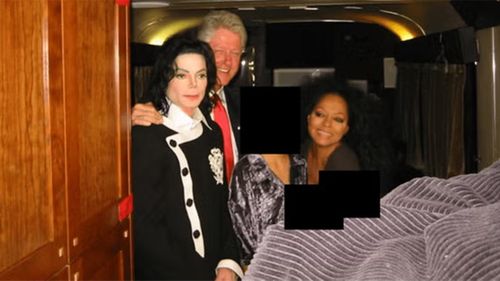
Among these materials are images of Bill Clinton aboard a private aircraft, including one where an unidentified woman’s face is obscured as she sits on his lap. Another photograph captures Clinton in a swimming pool alongside Ghislaine Maxwell and another person whose face is also concealed.
Additional images depict Clinton in a hot tub with a woman whose identity has been redacted.
The documents do not specify the dates when these photos were taken.
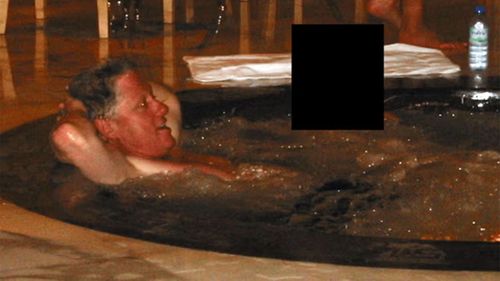
It is important to note that Clinton has never been accused of any misconduct in relation to Jeffrey Epstein, and the presence of an individual’s name or image in the investigation files does not suggest any implication of wrongdoing.
Clinton has downplayed his association with Epstein, admitting to having flown on Epstein’s private jet but asserting through a representative that he was unaware of Epstein’s criminal activities.
Clinton minimised his relationship with Epstein, acknowledging that he traveled on Epstein’s private jet but saying through a spokesperson that he had no knowledge of the late financier’s crimes.
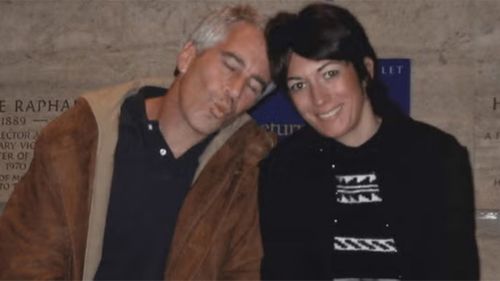
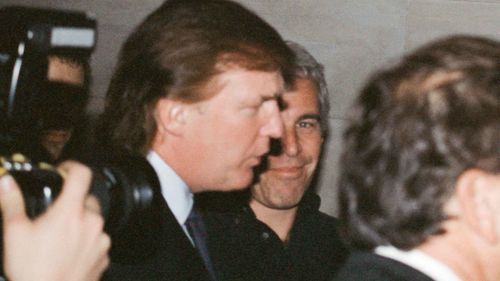
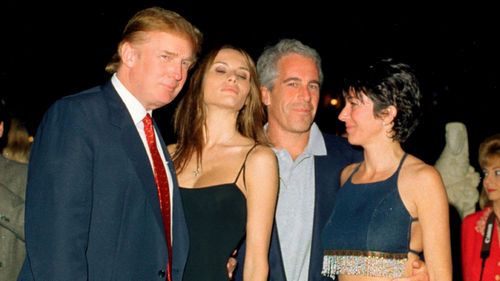
The released files include a small number of photos of Trump which appear to have been in the public domain for decades, including two in which the president and Epstein are posing with now-first lady Melania Trump.
The photo was taken in February 2000 at an event at Trump’s Palm Beach club, Mar-a-Lago, before the pair’s friendship ruptured.
DOJ ‘must set out timeline for full release’: Democrats
Democratic Rep. Ro Khanna of California said the release so far has been “disappointing”.
Khanna, who worked in Congress with Republican Rep. Thomas Massie of Kentucky on legislation to force the release the files, said they will explore “all options” to ensure compliance with the law.
If Justice Department officials need more time to review, he said, they need to publicly explain their timeline for release.
Meanwhile Democratic Senate Leader Chuck Schumer decried how much of the files had been completely blacked out.
“The law Congress passed calls for the complete release of the Epstein files so that there can be full transparency,” Schumer said in a statement.
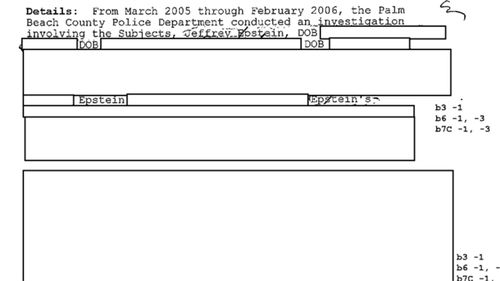
“Simply releasing a mountain of blacked out pages violates the spirit of transparency and the letter of the law. For example, all 119 pages of one document were completely blacked out. We need answers as to why.”
What Democrats could do to force complete release
Democrats in Congress say they are reviewing all their legal options as they assess the Department of Justice’s release of the Epstein files, which they say is not a full release of documents.
Lawmakers could go to court to force the Justice Department to comply with the law passed earlier this year forcing the release, but that would almost certainly be a lengthy process that plays out while the Justice Department releases more files.
Separately, the House Oversight Committee has issued a subpoena for the Epstein files. That could give Congress another avenue to force the release of more information to the committee, but it would require Democrats to convince Republicans to join them in contempt of Congress proceedings. It would be highly unusual for GOP politicians to take such a move against a Republican administration.
Democratic senator vows to use ‘all avenues and legal tools’ for full release of documents
Democratic Sen. Jeff Merkley of Oregon expressed frustration that the Trump administration had not taken steps to “appropriately redact the Epstein Files to prepare them for release” of their own accord over the last year.
“Instead of meeting the legally required deadline today to release all of the files, they have chosen to illegally disregard the law I led the fight in the Senate to pass,” Merkley said. “By failing to comply, the Administration is openly denying ‘equal justice under the law’ to all of Jeffrey Epstein’s victims.”
Merkley continued: “I’ll keep fighting to release all the Epstein Files and am exploring all avenues and legal tools to get justice for the victims and transparency for the American people.”
Files appear online after a waiting room-like queue
High interest led the Justice Department to regulate access to its Epstein files website for a time.
The webpage went live Friday afternoon with a waiting room-type queue akin to what concertgoers sometimes see when they go online to purchase tickets.
Visitors were greeted with the message: “You are in line for Department of Justice web content. When it is your turn, you will have 10 minutes to enter the website.”
The webpage then refreshed to reveal a landing page with various categories of documents, including court records and other disclosures.
The records could contain the most detailed look yet at nearly two decades worth of government investigations into Epstein’s sexual abuse of young women and underage girls.
Their release has long been demanded by a public hungry to learn whether any of Epstein’s rich and powerful associates knew about â or participated in â the abuse. Epstein’s accusers have also long sought answers about why federal authorities shut down their initial investigation into the allegations in 2008.
Bowing to political pressure from fellow Republicans, Trump on November 19 signed a bill giving the Justice Department 30 days to release most of its files and communications related to Epstein, including information about the investigation into his death in a federal jail. The law’s passage was a remarkable display of bipartisanship that overcame months of opposition from Trump and Republican leadership.

That law allows for redactions about the victims or ongoing investigations but makes clear no records shall be withheld or redacted due to “embarrassment, reputational harm, or political sensitivity.”
Attorney General Pam Bondi said on November 14 that she had ordered a top federal prosecutor to investigate Epstein’s ties to Trump’s political foes, including former President Bill Clinton. Bondi acted after Trump pressed for such an inquiry, though he did not explain what supposed crimes he wanted the Justice Department to investigate. None of the men Trump mentioned in a social media post demanding the investigation has been accused of sexual misconduct by any of Epstein’s victims.
In July, Trump dismissed some of his own supporters as “weaklings” for falling for “the Jeffrey Epstein hoax.” But both Trump and House Speaker Mike Johnson, R-La., failed to prevent the legislation from coming to a vote.
Trump did a U-turn on the files once it became clear that congressional action was inevitable. He insisted that the Epstein matter had become a distraction to the Republican agenda and that releasing the records was the best way to move on.
The Epstein investigations
Police in Palm Beach, Florida, began investigating Epstein in 2005 after the family of a 14-year-old girl reported she had been molested at his mansion. The FBI joined the investigation, and authorities gathered testimony from multiple underage girls who said they had been hired to give Epstein sexual massages.
Ultimately, though, prosecutors gave Epstein a deal that allowed him to avoid federal prosecution. He pleaded guilty to state prostitution charges involving someone under age 18 and was sentenced to 18 months in jail.
Epstein’s accusers then spent years in civil litigation trying to get that plea deal set aside. One of those women, Virginia Giuffre, accused Epstein of arranging for her to have sexual encounters, starting at age 17, with numerous other men, including billionaires, famous academics, US politicians and Andrew Mountbatten-Windsor, then known as Britain’s Prince Andrew.
All of those men denied the allegations. Prosecutors never brought charges in connection with Giuffre’s claims, but her account fuelled conspiracy theories about supposed government plots to protect the powerful. Giuffre died by suicide at her farm in Western Australia in April at age 41.
Federal prosecutors in New York brought new sex trafficking charges against Epstein in 2019, but he killed himself in jail a month after his arrest. Prosecutors then charged Epstein’s longtime confidant, British socialite Ghislaine Maxwell, with recruiting underage girls for Epstein to abuse.
Maxwell was convicted in late 2021 and is serving a 20-year prison sentence, though she was moved from a low-security federal prison in Florida to a minimum-security prison camp in Texas after she was interviewed over the summer by Deputy Attorney General Todd Blanche. Her lawyers argued that she never should have been tried or convicted.
The Justice Department in July said it had not found any information that could support prosecuting anyone else.
Lots of Epstein records were already public
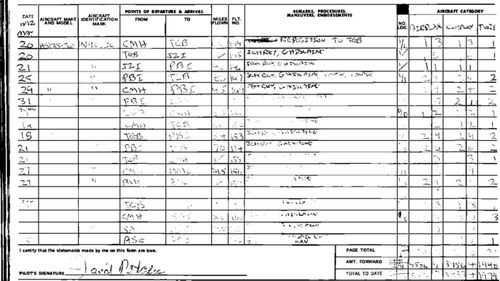
After nearly two decades of court action and prying by reporters, a voluminous number of records related to Epstein is already public, including flight logs, address books, email correspondence, police reports, grand jury records, courtroom testimony and transcripts of depositions of his accusers, his staffers and others.
Yet, the public’s appetite for more records has been insatiable, particularly for anything related to Epstein’s associations with famous people including Trump, Mountbatten-Windsor and Clinton.
Trump was friends with Epstein for years before the two had a falling out. Neither he nor Clinton has ever been accused of wrongdoing in connection with Epstein, and the mere inclusion of someone’s name in files from the investigation does not imply otherwise.
Mountbatten-Windsor denied ever having sex with Giuffre, but King Charles III stripped him of his royal titles this year after Giuffre’s memoir was published after she died.