Share this @internewscast.com
In Brief
- Afghans have gathered around a mass grave to bury villagers who died in overnight air strikes by Pakistan.
- A Pakistani security source said the he strikes killed “more than 80” militants, adding the death toll was expected to rise.
In a somber gathering, Afghans convened at a mass grave to lay to rest villagers who perished in a series of nighttime air raids conducted by Pakistan. The Pakistani military claims these operations resulted in the deaths of dozens of militants.
The strikes, which took place under the cover of darkness, claimed at least 18 lives, including those of children, according to Afghan authorities. These raids are considered the most significant since the border skirmishes in October, which resulted in over 70 fatalities on both sides and left hundreds injured.
Nezakat, a 35-year-old farmer from the Bihsud district, shared his anguish: “The house was completely demolished. My family, including my children, father, and sons, were inside. They were all killed,” he recounted, providing only his first name.
Pakistan reported targeting seven locations along the border, aiming at militant groups based in Afghanistan, as a retaliatory measure following suicide bombings within its borders.
A Pakistani security source reported to AFP on Sunday that the strikes had eliminated “more than 80” militants, suggesting that the death toll might increase. However, AFP journalists in Afghanistan could not independently verify these figures, which were contested by an Afghan security source.
AFP journalists in Afghanistan were not able to verify the toll, which was rejected by an Afghan security source.
“The figure of 80 martyrs given by the Pakistan regime is false and imaginary,” the source told AFP on condition of anonymity.
Islamabad said its military targeted the Pakistani Taliban and its associates, as well as an affiliate of the Islamic State group, an information ministry statement said.
Afghan authorities have previously denied harbouring militants.
Taliban government spokesperson Zabihullah Mujahid said “people’s homes have been destroyed, they have targeted civilians, they have committed this criminal act” with the bombardment of eastern Nangarhar and Paktika provinces.
Residents from around the remote Bihsud district in Nangarhar joined searchers to look for bodies under the rubble using shovels and a digger, an AFP journalist said.
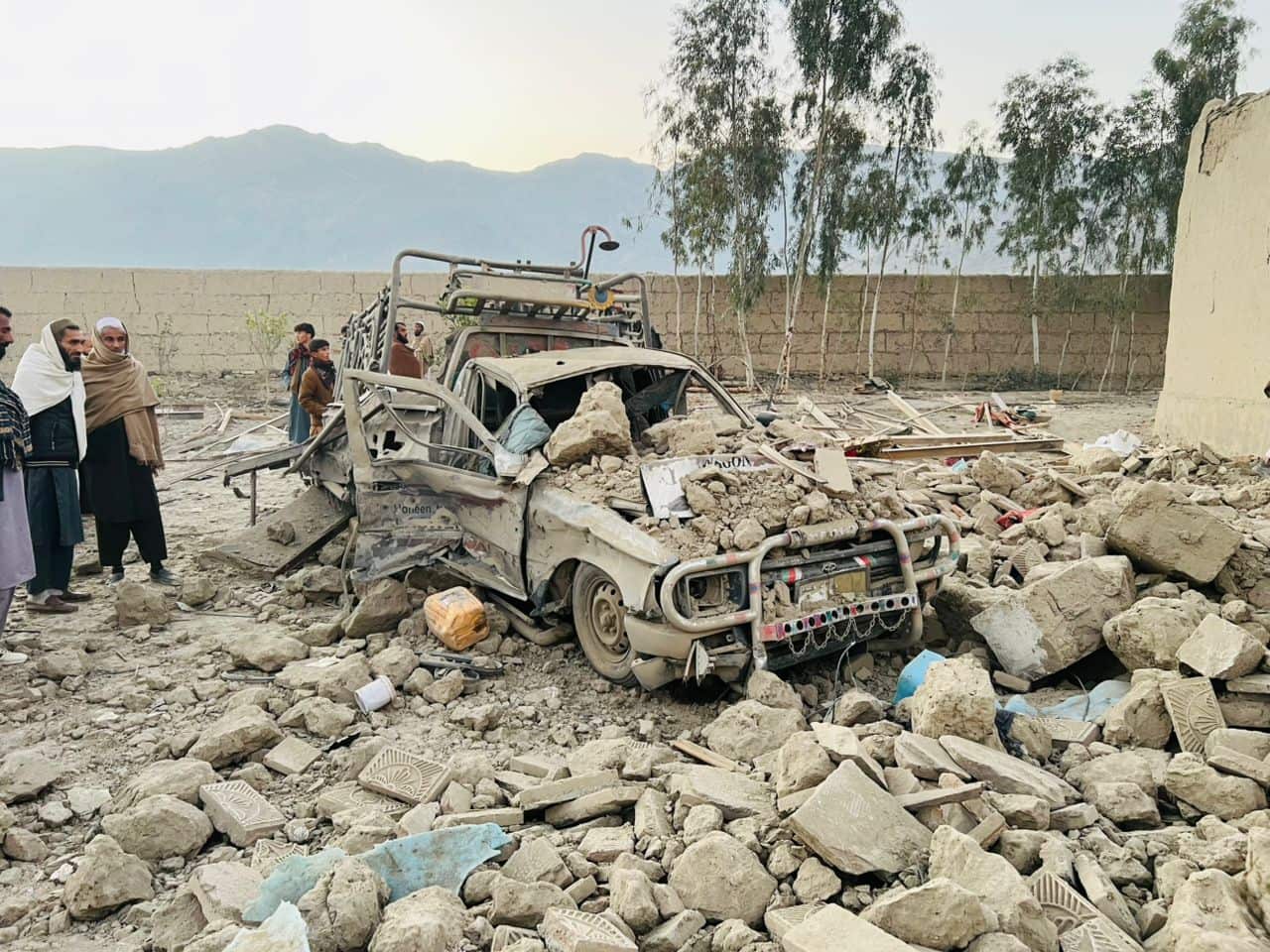
“People here are ordinary people. The residents of this village are our relatives. When the bombing happened, one person who survived was shouting for help,” said neighbour Amin Gul Amin, 37.
Nangarhar police told AFP the bombardment started at around midnight and hit three districts, with those killed all in a civilian’s house.
“Twenty-three members of his family were buried under the rubble, of whom 18 were killed and five wounded,” said police spokesperson Sayed Tayeeb Hammad.
Strikes elsewhere in Nangarhar wounded two others, while in Paktika, an AFP journalist saw a destroyed guesthouse but there were no immediate reports of casualties.
‘Calculated response’
Afghanistan’s defence ministry said it will “deliver an appropriate and calculated response” to the Pakistani strikes.
The two countries have been locked in an increasingly bitter dispute since the Taliban authorities retook control of Afghanistan in 2021 as foreign forces withdrew.
Pakistani military action killed 70 Afghan civilians between October and December, according to the UN mission in Afghanistan.
Several rounds of negotiations followed an initial ceasefire brokered by Qatar and Turkey, but the efforts have failed to produce a lasting agreement.
Saudi Arabia intervened this month, mediating the release of three Pakistani soldiers captured by Afghanistan in October.
The deteriorating relationship has impacted people in both countries, with land border crossings — crucial gateways for trade — largely shut for months.
Islamabad said on Sunday that despite repeated requests, Taliban authorities have failed to act against militant groups using Afghan territory to carry out attacks in Pakistan, which Kabul denies.
Islamabad launched the strikes after a suicide blast at a Shiite mosque in Islamabad two weeks ago and other attacks more recently in northwestern Pakistan.
The Islamic State group had claimed responsibility for the mosque bombing, which killed at least 40 people and wounded more than 160 in the deadliest attack in Islamabad since 2008.
The militant group’s regional chapter, Islamic State-Khorasan, also claimed a deadly suicide bombing at a restaurant in Kabul last month.
For the latest from SBS News, download our app and subscribe to our newsletter.