Share this @internewscast.com
Former prime minister John Howard was cautioned against deploying Australian Special Forces in combat roles to Afghanistan due to the risks, including potential “casualties” and the treatment of Afghan prisoners of war, according to newly declassified documents.
Cabinet papers from 2005, released on Thursday, include secret National Security Committee (NSC) submissions that outlined options for the role Australian troops could play in fighting a resurgent Taliban.
NSC documents contain details about national security issues and are often not included alongside cabinet papers, which are curated and made public after 20 years.

This year’s release of 212 documents sheds light on Howard’s pivotal decision to redeploy 150 of Australia’s top-tier special forces to Afghanistan. Although initially slated for a 12-month mission, many remained until as late as 2021.

Among the outlined risks were the potential for casualties and the responsibility for managing and detaining Afghan prisoners.

The Australian Defence Force (ADF) was initially deployed to Afghanistan for the United States-led Operation Enduring Freedom following the September 11 attacks in 2001, with the primary goal of destroying Al-Qaeda. The elite Special Air Service (SAS) task force was withdrawn in 2002.
By the middle of 2005, the Taliban resurgence put pressure on the Howard government to redeploy special forces, with requests from the US as well as the Afghan government.
Tabled five days before Howard’s official announcement, a submission written by then-defence minister Robert Hill and then-foreign minister Alexander Downer warned against deploying the elite soldiers in combat roles, due to “significant” risks.

Australian Special Forces extended their presence in Afghanistan far beyond the original timeframe.
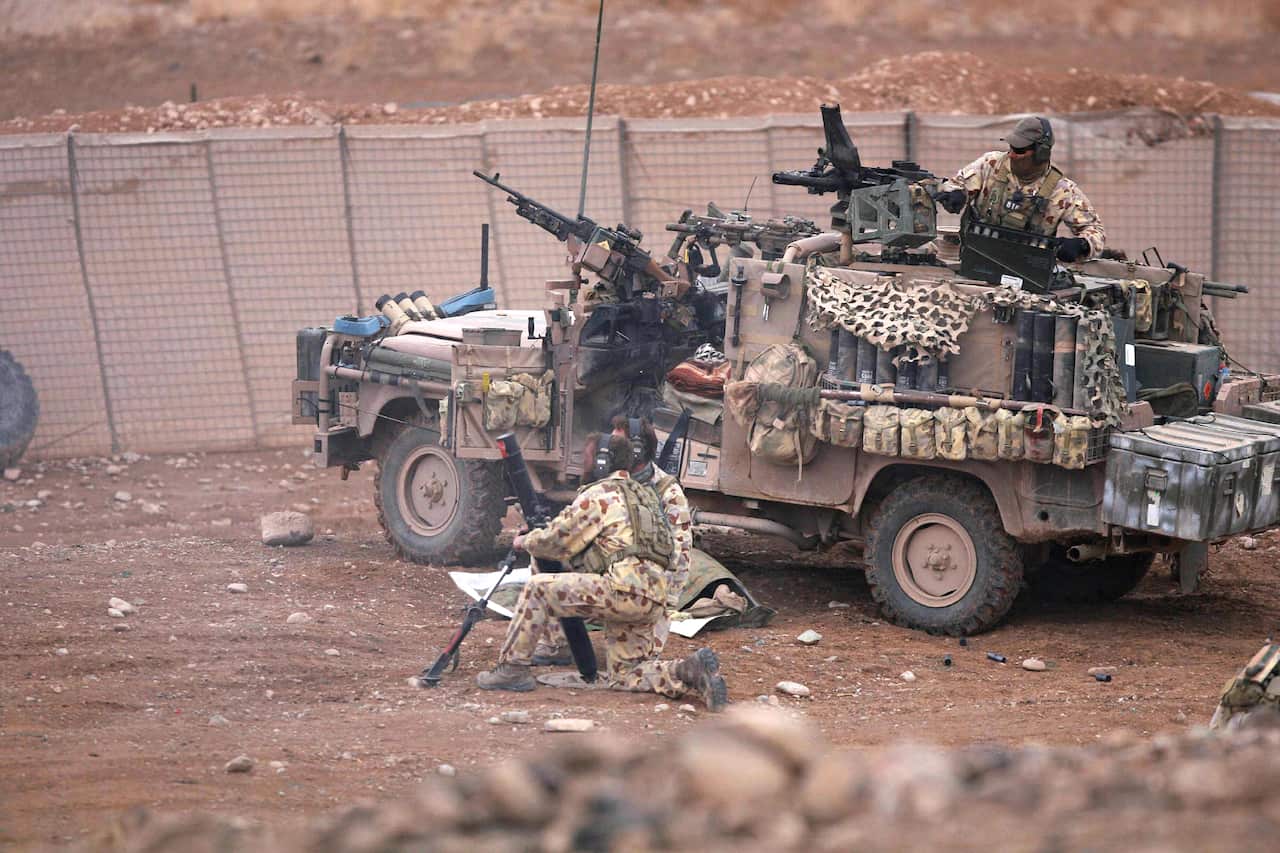
Soldiers standing on and around an army vehicle.

Soldiers standing on and around an army vehicle

The submission advised against assigning the special forces to a dedicated combat role in Afghanistan.

It was argued that engaging Australia’s elite soldiers in such a role would neither fulfill security goals nor aid reconstruction efforts.

The advice warned combat operations would be conducted in potentially high-threat environments against “determined and dangerous adversaries” and that “casualties should be anticipated”.
In addition, the advice said a special forces combat deployment should be avoided without potential US air support and other protections, as the Americans had “commitments” in Iraq.
“There are risks of casualties, some of which can be mitigated through appropriate training, equipment and security procedures, but which cannot be eliminated,” the advice read.

At the time, one Australian soldier had been killed in the line of duty. Australia would ultimately lose 41 soldiers to the war in Afghanistan — the nation’s longest ever.

Warnings around prisoners of war

The ministers’ submission included warnings about the risks to Australia at the policy level of being associated with the actions of other militaries within the coalition.
It was also warned about the risk of being associated with the treatment of Afghan prisoners in custody.
“A combat unit … might find itself taking custody of detainees, and would be associated with their subsequent treatment,” the advice read.
The treatment of Afghan prisoners in custody would later form a major part of the 2020 landmark Brereton report, which said there was credible information of 23 incidents in which one or more non-combatants were unlawfully killed by, or at the direction of Australian Special Forces, and which, if accepted by a jury, may constitute the war crime of murder.
It’s against the Geneva Conventions, of which Australia is party to, to commit murder or cruel treatment against detained combatants, or non-combatants such as civilians.
On 13 July 2005, Howard announced that a 150-strong special forces task group, including SAS troops and elite commandos, would be deployed to Afghanistan.
The elite soldiers were tasked with combat patrols in remote areas, and reconnaissance and surveillance operations working with coalition forces.
One day before the announcement, the national security committee had agreed to a deployment of 12 months, noting it would be “unlikely” the deployment “could be extended beyond” a year, with no plans to increase the contribution.
“The complexity of the situation in Afghanistan may make it difficult to identify a suitable end point for any Australian contribution, and it may be a difficult and costly to disengage from operations once we were committed,” the ministerial submission had stated.
Newly declassified documents reveal that four months after the July announcement, the NSC agreed to extend the Special Forces unit by providing an aviation element to better “enhance protection” and mobility.

The SAS would stay for years in what became 20 rotations, involving 3,000 personnel, while Australia’s mission also grew with a ‘Reconstruction Task Force’ deployed in 2006 to Uruzgan province.
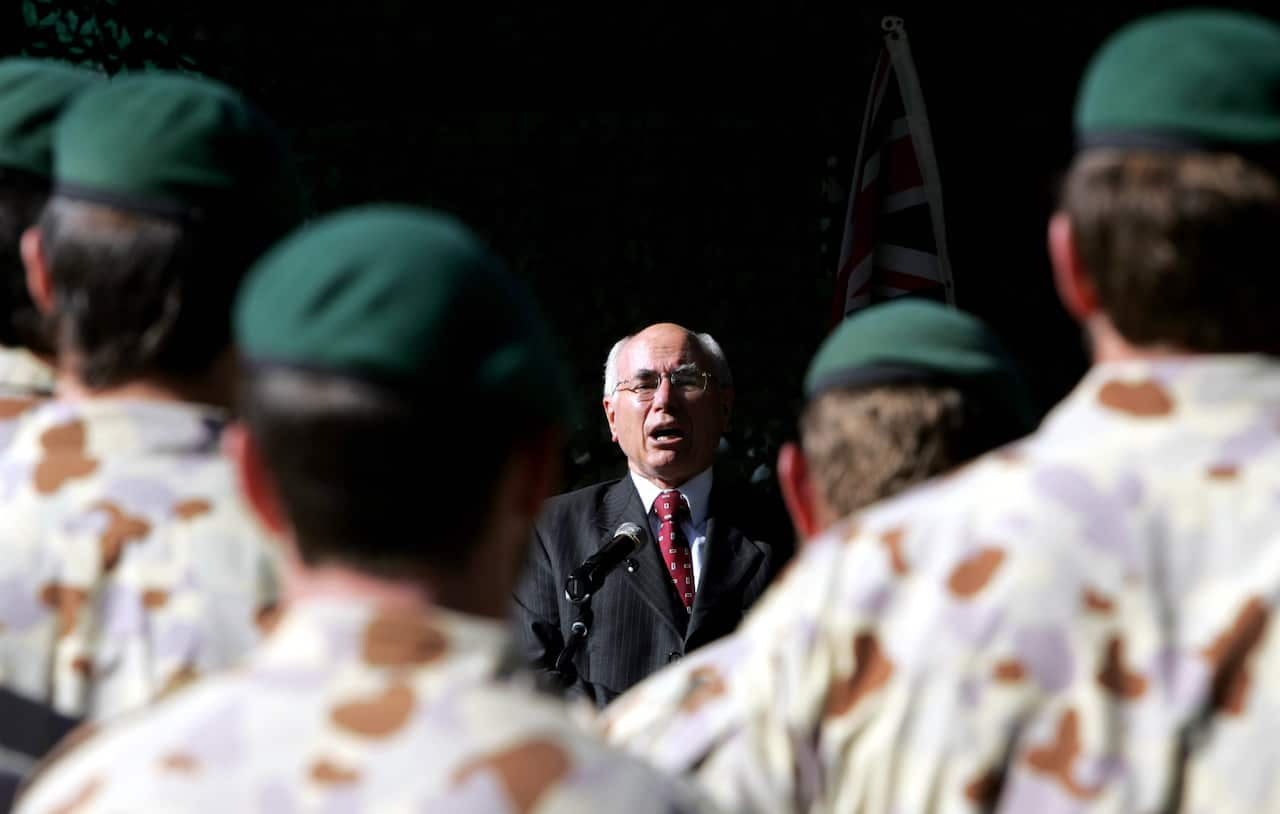
A man in a suit is addressing military personnel.

Then-prime minister John Howard announced a 150-strong special forces deployment to Afghanistan in 2005. Credit: AAP

However, the submission about the reconstruction team and the information about the decision to deploy them are among eight files that are fully closed from this year’s release.

The National Archives of Australia exempted its disclosure as the item relates to defence strategy and could potentially affect relations with a foreign government.

Defending Australia’s role in Afghanistan

It also found credible information that junior soldiers were ordered by seniors to shoot a prisoner, as part of their first kills, in a practice described as “blooding”.

It also detailed a practice known as “throwdowns” where weapons and radios would be placed next to bodies as a cover.

‘Widest possible context’

Reflecting on the 2005 redeployment of special forces two decades on, Philip Ruddock — who was attorney-general at the time — said the decision should be looked at “in the widest possible context”.

“I think it’s important that we’re seen to be responsibly playing our part, and you do so with allies,” he told SBS News in December.
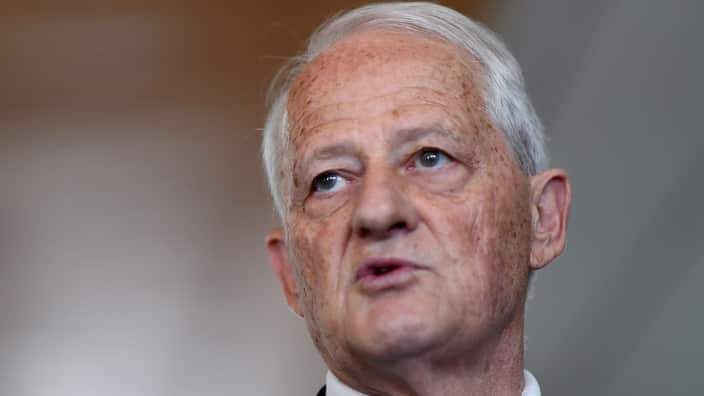
An elderly man is speaking.

Former attorney-general Philip Ruddock says deployments to Iraq and Afghanistan need to be viewed in context. Source: AAP

Pressed on whether it was the wrong call, he defended Australia’s role in Afghanistan.

“I think we need to be seen to be playing our part. And part of our part was assisting … one of our allies, Japan, in keeping troops in place and protecting them,” Ruddock said.

“I have seen what the Taliban have done, and there is no way that I think we should be turning a blind eye to some of the very significant human rights abuses that occur in a situation like that.”

“The contribution that we made, which was originally at the sharp end of the operation, morphed into something a little different, but nonetheless, it was very much about securing the anti-Taliban forces in Afghanistan and the Australian forces fought very professionally, very bravely.”
— With additional reporting by Rashida Yosufzai.

Share this @internewscast.com
You May Also Like
Wendell Sailor leaving court.

Football Icon Cleared of Drunken Incident Charges Due to Mental Health Considerations

Cross-code legend Wendell Sailor has kept a clean criminal record after three…
Debit cards from the big four banks - Commonwealth Bank, NAB, Westpac, ANZ

Major Banks Increase Interest Rates, Yet Some Customers May Not Experience Immediate Effects

The Reserve Bank of Australia recently increased the official cash rate target…
The Big Red Bash, the self-proclaimed world's most remote music festival, is scrambling to find another venue after a rare deluge hit outback Queensland.

Flooded Out: Iconic Big Red Bash Outback Music Festival Faces Unprecedented Cancellation

Queensland‘s iconic Big Red Bash music festival has been cancelled due to…

Australia Braces for Impact: Understanding the Implications of a Potential ‘Super’ El Niño Event

In brief Current forecasts suggest El Niño or strong El Niño conditions…

Debunked: The Truth Behind Iran’s False Claims on Australia’s Fuel Reserves

In brief A graphic originally published by SBS News was edited to…
Tropical Cyclone Narelle

Brace for Impact: Cyclone Narelle Strengthens on Collision Course with Western Australia

Severe Tropical Cyclone Narelle intensifies as it approaches WA coast as category…
Service stations introduce 50L caps as supply shock continues

Fuel Stations Impose 50L Limit Amid Ongoing Supply Challenges

Initially, rural and regional areas were the first to feel the pinch…
Two fuel tanks on Sarah Thomson's  Ruffy property were siphoned.

Devastation in the Outback: Bushfire-Ravaged Farmers Face Heartless Fuel Theft Crisis

In a disheartening turn of events, farmers in bushfire-affected regions of Victoria…
Radio host Kyle Sandilands leaves  is home in, Vaucluse, 17 March 2026. Image 2

Kyle Sandilands Faces Legal Battle Over $100 Million Contract Dispute

Controversial radio host Kyle Sandilands is gearing up for his initial court…
Businessman Adrian Portelli (centre) arrives at the Adelaide Magistrates Court, in Adelaide, Friday, September 5, 2025.

Lambo Guy Exonerated in Illegal Lottery Case; Company Faces Financial Penalties

Prominent entrepreneur Adrian Portelli has been exonerated from charges of operating illegal…
Pupils from Stamford School celebrate winning the Under-18s Vase trophy back in 2024, after coming out on top in a field of 220 schools

Step Off the Bus to a New World: Inside the Epic Schools Rugby Tournament Shaping Future Stars and Shaking Up Traditions

In South Africa, the annual Craven Week is a significant event where…
Fines for dodgy petrol pricing doubled as fuel crisis continues

Record Fines for Shady Fuel Pricing Amid Ongoing Fuel Crisis: What You Need to Know

Petrol companies caught ripping off Australian drivers will now face fines of…