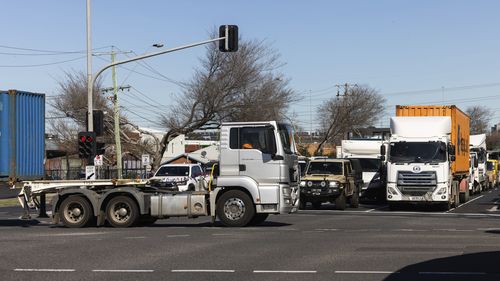

Australian trucking firms are reaching a critical juncture, with recent data indicating that approximately one in every twelve has shuttered operations in recent months, according to a new report.
The industry is grappling with a trifecta of challenges: escalating fuel and labor expenses, persistently high-interest rates, and intense marketplace competition, as detailed in research by CreditorWatch.
Smaller, family-operated carriers, crucial to regional and interstate transportation, are particularly at risk. These enterprises often lack the financial buffers and bargaining power that larger logistics firms possess, making them more susceptible to financial strain.
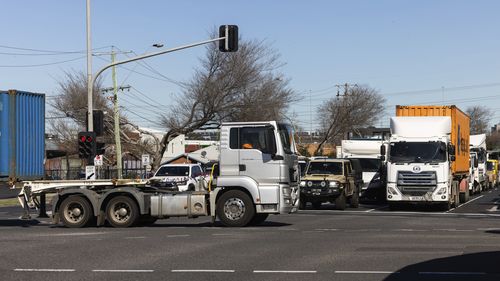
The road transport sector is also contending with additional significant hurdles.
A driver shortage is inflating labor costs, exacerbated by the lack of younger individuals entering the profession, leaving companies with an aging driver base.
Additionally, the cost of second-hand trucks, which soared during the pandemic, has plummeted by over 60 percent, adding another layer of complexity to the industry’s challenges.
Added to these are volatile fuel prices, higher insurance premiums and rentals and the demands of environmental compliance.
CreditorWatch data shows the closure rate for road transport businesses during the past 12 months was 8.46 per cent, or one in 12 businesses.
This was an increase of 40 per cent year-on-year and a 26 per cent rise since this January.
The closure rate for transport companies has rocketed and now rivals that of the hospitality sector, traditionally one of Australia’s most failure-prone industries.
There are some bright prospects for trucking firms, particularly in the mining and commodities sectors.
But the benefits are unlikely to compensate for the industry’s current dire condition, according to CreditorWatch chief economist Ivan Colhoun.
“Elevated cost bases, stretched balance sheets, and soft freight demand from retail and manufacturing mean insolvency pressures are set to remain high through 2026,” he said.