

Reginal Arthurell, infamously known for the brutal murder of his fiancée Venet Mulhall in 1995, committed the crime while on parole in Coonabarabran. His criminal history also includes the killings of his stepfather in the 1970s and a sailor in the 1980s. Despite this, Arthurell was released on parole in 2020.

On 2GB’s Ben Fordham Live, concerns were raised by Washington regarding the Department of Communities and Justice’s (DCJ) oversight. She revealed that the department was informed late last year about a decision that allowed children to reside with Arthurell, but the report was inadequately addressed.
“The case was closed based on assumptions about Arthurell’s physical limitations—his age, use of a wheelchair, and reliance on a full-time caregiver,” Washington explained. “These factors were unverified, and the closure defied department protocols.”
Washington criticized the lack of investigation, highlighting it as a breach of departmental standards. The decision was attributed to a single department member, who has since been suspended while a misconduct inquiry is underway.
“It just wasn’t investigated, and that was contrary to policies and procedures in the department.”
She said the decision was made by one individual within the department, who has now been suspended pending a misconduct process.
There was a second instance of the department being made aware of a child entering the house where Arthurell last month, where Washington admitted the previous report from the December incident was not followed up.
“A simple check of DCJ’s system would have revealed that Arthurell was in that house. Instead, approval was given, and again, it was against department policies and procedures,” she said.
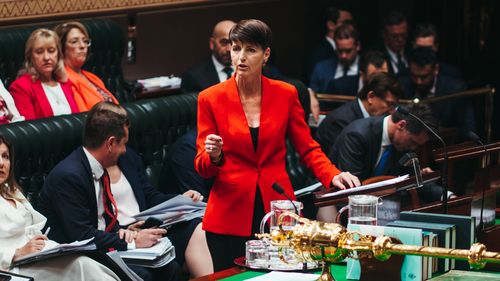
“A simple check on our system would have shown that report from December.”
Washington said the person responsible for that decision had also been suspended.
While she admitted the decisions made fell short of the standards expected and of the DCJ’s policies and procedures, she insisted it was not the result of institutional issues, and defended the work of her department overall.
“They are working in very difficult, complex environments,” she said.
“Our DCJ child protection caseworkers see the worst of the worst in our society. They walk into homes where parents are harming their children.
“There are difficult decisions made daily by our caseworkers, but we do expect them to follow department policies and procedures.”
Arthurell is no longer living with the children.
NEVER MISS A STORY: Get your breaking news and exclusive stories first by following us across all platforms.