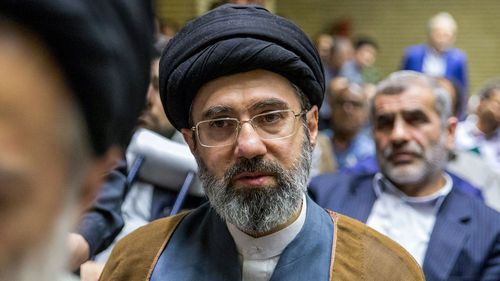
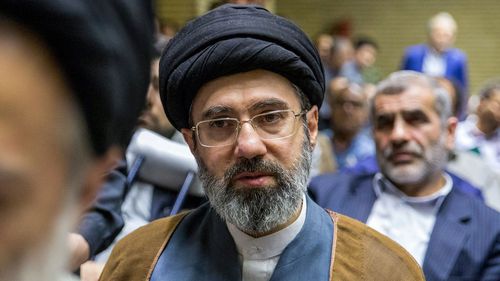
In a significant development, an Israeli analysis suggests that Khamenei was injured during the initial attacks of the ongoing conflict, which also claimed the life of his father, Ali Khamenei, along with numerous other prominent figures within the regime. Notably, Khamenei has not been seen on camera since the incident.
In response to escalating tensions, Foreign Minister Penny Wong announced last night that the Australian government has ordered the evacuation of “non-essential” officials from the region due to a “deteriorating security situation.”
“Essential Australian officials will remain in the area to provide necessary assistance to Australians in need,” Wong affirmed.
She further advised, “We continue to discourage Australians from traveling to Israel and the UAE. If you are in the Middle East, we strongly recommend leaving if it is safe and possible to do so.”
Wong emphasized the urgency, stating, “Do not delay your departure. This may be the last opportunity for some time.”
Prior to these developments, the Australian government had already instructed the families of diplomats to leave Israel, the UAE, and Lebanon. This decision follows recent strikes on Iran, which have sparked debates among international law experts regarding their legality.
Thursday’s major developments included Iran’s attacks against commercial ships around the Strait of Hormuz and Iraq’s port of Basra.
They were an escalation of Tehran’s defence strategy of pressuring the US by squeezing the oil-rich Gulf region to threaten global economic stability.
The first week of the war cost the United States $US11.3 billion, according to the Pentagon.
The price of Brent crude oil, the international standard, spiked back over $US100 ($142) on Thursday as the war showed no signs of slowing.
The Israeli military also was striking Iran and moving troops to fight Iran’s militant ally Hezbollah in Lebanon, where more than 800,000 people have been displaced by the fighting.
The UN refugee agency on Thursday said up to 3.2 million people in Iran had been displaced by the ongoing war.
– Reported with Associated Press