
Share this @internewscast.com
Israel continues its strategic offensive against Iran’s leadership, recently resulting in the assassination of Iran’s intelligence minister. This marks another significant escalation in the ongoing conflict between the two nations.
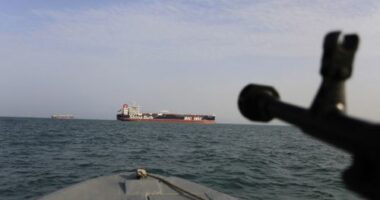
In a related development, an offshore natural gas field in Iran was struck, highlighting the increasing strain on the region’s essential energy resources. This comes amidst Iran’s intensified efforts to target the energy infrastructures of its Gulf Arab neighbors since the conflict’s onset on February 28. The situation has rendered the critical Strait of Hormuz, a passageway for a fifth of the world’s oil supply, nearly impassable.
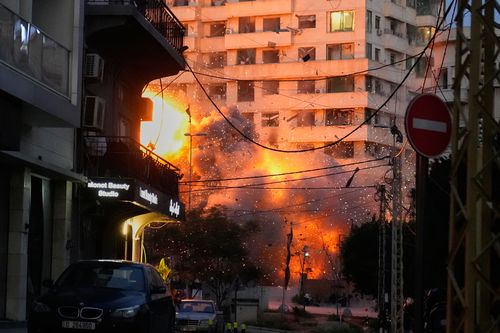
In Lebanon, Israeli airstrikes have inflicted severe casualties. According to the country’s Health Ministry, ten people lost their lives in central Beirut due to these attacks. Additionally, two more fatalities were reported following an airstrike in the western Bekaa Valley.
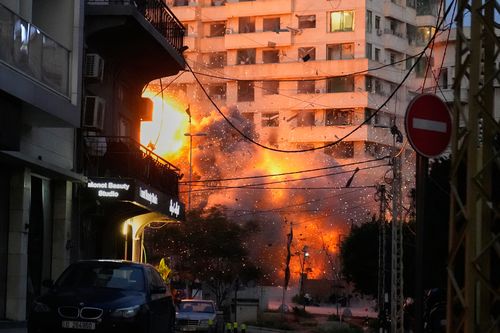
Among the deceased in Beirut was Mohammed Sherri, a journalist for Hezbollah’s Al-Manar TV, who was killed alongside his wife. The broadcaster reported that his children and grandchildren were injured in the assault.
The impact of the Israeli strikes has been profound, displacing over one million Lebanese—approximately 20% of the population—as reported by the Lebanese government. The toll stands at 912 dead and 2,221 wounded, painting a grim picture of the conflict’s human cost.
Israeli strikes have displaced more than 1 million Lebanese — roughly 20 per cent of the population — according to the Lebanese government, which says 912 people have been killed and 2221 wounded.
In Israel, 14 people have been killed by Iranian missile fire. At least 13 US military members have been killed.
NEVER MISS A STORY: Get your breaking news and exclusive stories first by following us across all platforms.