
Share this @internewscast.com
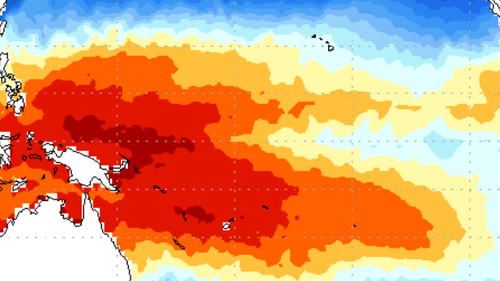
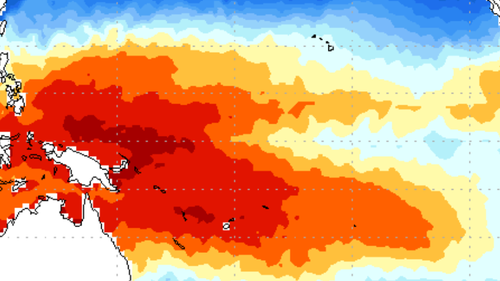
El Niño and La Niña are integral components of the El Niño–Southern Oscillation, a natural climatic cycle that influences weather patterns globally. According to the Bureau of Meteorology, this cycle involves alternating phases of neutral, warming, or cooling conditions in the central and eastern tropical Pacific Ocean.
El Niño typically brings warmer weather, while La Niña is known for its cooling effects. These shifts in ocean temperatures significantly impact global weather, triggering events that can range from droughts to floods in various regions.
The cycle of El Niño–Southern Oscillation usually spans one to eight years, with each phase bringing its own set of weather disruptions. During El Niño events, sea surface temperatures in the central and eastern tropical Pacific become significantly warmer than usual, leading to widespread climatic changes.
To illustrate, Watkins likens the phenomenon to “steam off a kettle,” emphasizing the dramatic shifts in atmospheric conditions. “El Niño represents a buildup of warm water off South America,” he explains. “Meanwhile, cooler water persists near us. As a result, clouds form over the warm waters in South America, much like steam rising from a hot kettle.”
In simple terms, Watkins describes it as like “steam off a kettle”.
“The El Niño really is a building up of warm water off South America, and we have cooler water near us, so the clouds form like white steam off a kettle, the clouds form over the warm water in South America,” he said.
“When we get La Niña, the warm water is near us and the cool water is near South America and so we tend to get the clouds forming in our part of the world and it’s wetter.
“The moisture follows the warm water.”
NEVER MISS A STORY: Get your breaking news and exclusive stories first by following us across all platforms.