
Pugapia and her daughters, Aiga and Babawru, have long been the last living ties to the Akuntsu, an Indigenous group that suffered devastating losses due to aggressive development initiatives in the Amazon rainforest, supported by the government. For years, these three women were the only remnants of a once-thriving community.
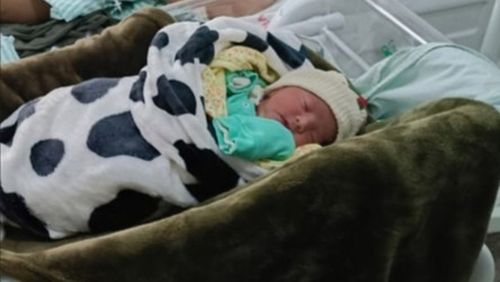
With no children on the horizon to continue their lineage, it seemed inevitable that the Akuntsu would fade into history upon the passing of these women. However, a glimmer of hope appeared in December when Babawru, the youngest at around 40 years old, gave birth to a son, breathing new life into the Akuntsu lineage.
This development comes at a time when deforestation remains a pressing concern, with experts highlighting its potential to expedite global warming. A study conducted in 2022 by MapBiomas, a coalition of NGOs monitoring land usage, revealed that Indigenous territories in Brazil have retained nearly all their native vegetation over the past three decades, contrasting sharply with the 20 percent loss witnessed on private lands across the country.
In Rondonia state, where the Akuntsu reside, approximately 40 percent of the natural forest has been destroyed. The remaining untouched areas are primarily within conservation reserves and Indigenous lands. In satellite imagery, the Akuntsu’s territory is distinguishable as a green oasis amidst expanses of cattle pastures and fields of soy and corn.
This wave of deforestation in Rondonia dates back to the 1970s when Brazil’s military regime spearheaded efforts to colonize the rainforest. Today, the Akuntsu’s land remains a testament to resilience, standing as a vital ecological refuge within a rapidly changing landscape.
In the 1980s, deforestation pushed attacks in Rondonia
Rondonia’s deforestation traces back to a government-backed push to occupy the rainforest during Brazil’s military regime in the 1970s.
Around the same time, an infrastructure program financed in part by the World Bank promoted domestic migration to the Amazon, including the paving of a highway across the state.
In the 1980s, Rondonia’s population more than doubled, according to census data. Settlers were promised land titles if they cleared the forest for agriculture and risked losing claims if Indigenous people were present, fuelling violent attacks by hired gunmen on Indigenous groups such as the Akuntsu.
Funai made first contact with the Akuntsu in 1995, finding seven survivors. Experts believe they had numbered about 20 a decade earlier, when they were attacked by ranchers seeking to occupy the area.
Funai agents found evidence of the assault, and when they contacted the Akuntsu, the survivors recounted what happened. Some still bore gunshot wounds.
The last Akuntsu man died in 2017. Since then, Babawru lived with her mother, Pugapia, and Aiga, her sister. The women, whose ages aren’t known for certain, have chosen to remain isolated from the non-Indigenous world, showing little interest in it.
In 2006, Funai granted territorial protection to the Akuntsu, establishing the Rio Omere Indigenous Land, which they have since shared with the Kanoe people. The two groups, once enemies, began maintaining contact, usually mediated by officials. The relationship is complex, with cooperation but also cultural differences and language barriers.
The Associated Press requested a facilitated interview with the women through Funai, but the agency didn’t respond.
Amanda Villa, an anthropologist with the Observatory of Isolated Peoples, said Akuntsu women depend on Kanoe men for tasks considered masculine, such as hunting and clearing fields. The two groups have also exchanged spiritual knowledge — the current Kanoe spiritual leader, for example, learned from the late Akuntsu patriarch.
But the most consequential development for the future of the Akuntsu may have occurred last year, when Babawru became pregnant by a Kanoe man.
Linguist Carolina Aragon is the only outsider able to communicate with the three women after years studying and documenting their language. She works closely with Funai, translating conversations almost daily through video calls. Aragon also supported Babawru remotely during her labour and was with her during an ultrasound exam that confirmed the pregnancy.
Aragon said Babawru was stunned by the news. “She said, ‘How can I be pregnant?’” Aragon recalled. Babawru had always taken precautions to avoid becoming pregnant.
Social collapse shaped the Akuntsu’s choices
The surviving Akuntsu women had decided they would not become mothers. The decision was driven not only by the absence of other men in their community, but also by the belief that their world was disorganised — conditions they felt were not suitable for raising a child.
“You can trace this decision directly to the violent context they lived through,” said Villa, the anthropologist.
“They have this somewhat catastrophic understanding.”
The Akuntsu believed they could not bring new life into a world without Akuntsu men who could not only perform but also teach tasks the group considers male responsibilities, such as hunting and shamanism.
“A breakdown of social relations that followed the genocide shaped their lives and deepened over the years. That does lead people to think — and rethink — the future,” Aragon said. “But the future can surprise everyone. A baby boy was born.”
Aragon said the women were embarking on a “new chapter,” choosing to welcome the child and adapt their traditions with support from the Kanoe and Funai. Villa said the fact that the newborn is a boy creates the possibility of restoring male roles like hunter.
Researchers and officials who have long worked with the three women understood that protecting the territory depended on the Akuntsu’s survival as a people. They sought to avoid a repeat of what happened to Tanaru, an Indigenous man who was discovered after living alone and without contact for decades.
After the discovery, authorities struggled to protect Tanaru’s territory. After he died in 2022, non-Indigenous groups began disputing the land. Late last year, the federal government finally secured the area, turning it into a protected conservation unit.
Funai’s Wapichana said Babawru’s child “is a hope that this next generation will indeed include an Indigenous person, an Akuntsu, ensuring the continuity of this people.”
Through years of careful work, Funai secured territorial protection for the Akuntsu and helped foster ties with the Kanoe. The agency also arranged spiritual support from an allied shaman, allowing the women to feel safe bringing new life into the world after decades of fear and loss.
The Akuntsu form emotional bonds with the forest and with the birds. Now, they are strengthening those bonds with a new human life in their world.
“What kind of relationship will this boy have with his own territory?” Aragon said.
“I hope it will be the best possible, because he has everything he needs there.”
NEVER MISS A STORY: Get your breaking news and exclusive stories first by following us across all platforms.