
Share this @internewscast.com
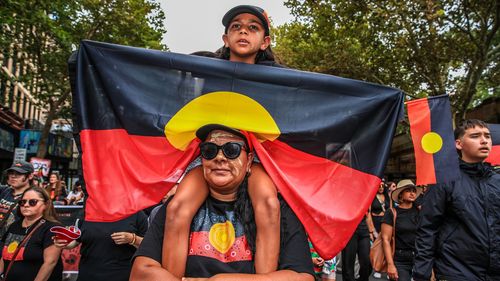
Today, a multitude of Australians are expected to gather in cities nationwide for Invasion Day demonstrations. These events will take place across the country as people come together to reflect on this significant day.
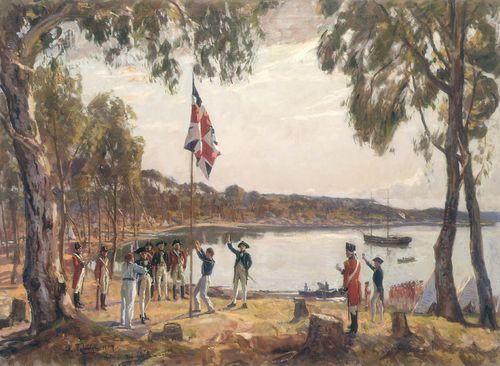
January 26 is recognized officially as Australia Day, commemorating the day Governor Arthur Phillip raised the British flag at Sydney Cove. However, for many Australians, this date symbolizes “Invasion Day,” acknowledging the historical dispossession faced by Indigenous Australians.
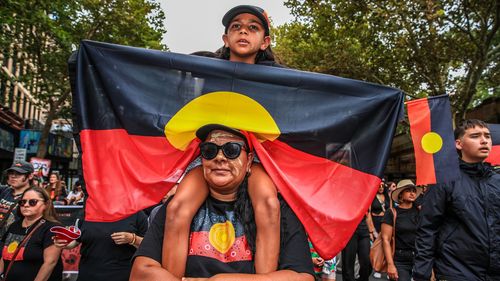
In Melbourne, authorities have decided not to enforce the exclusion zone that was previously implemented in the CBD following the Bondi incident. Instead, the city will see other measures in place to manage the day’s activities.
“There will be a highly visible police presence throughout the CBD, with several traffic management points established,” stated Victoria Police Deputy Commissioner Bob Hill in an interview with 9news.com.au. He emphasized that the police have been engaging “constructively” with the organizers of the protests to ensure a safe and peaceful day.
In addition to the main rallies, a number of counter-marches are also expected to take place, adding to the diverse expressions and voices surrounding this pivotal occasion.
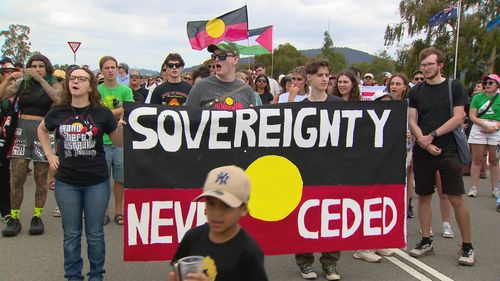
Some counter-marches are also anticipated.
Recent polls, including from Resolve and Roy Morgan, indicate that support for keeping Australia Day on January 26 is rising.
Roy Morgan found that 72 per cent of respondents agreed Australia Day should retain its current name and date, compared to 28 per cent who disagreed.
“This is the highest support for Australia Day recorded by Roy Morgan,” chief executive Michele Levine said.
“There is majority support for Australia Day retaining its name and date across all age groups, genders, and all states.”
However, there remains a political divide, with most Labor and Greens voters saying the date should be changed, while Liberal, National, and One Nation voters hugely supported it.