Share this @internewscast.com
IN BRIEF
- Ousted Venezuelan president Nicolás Maduro wants his case for drug trafficking charges dismissed.
- He says he can’t pay for his fees unless the US removes its block on accessing Venezuelan government funds.
A U.S. judge recently scrutinized the reasoning presented by the federal government for preventing deposed Venezuelan leader Nicolás Maduro from accessing his nation’s finances to fund his defense in a drug trafficking case. Despite raising questions, the judge opted not to dismiss the charges on these grounds.
During a court session in Manhattan’s federal court on Thursday, Maduro and his wife, Cilia Flores, appeared in beige prison attire. This appearance came over two months after they were unexpectedly captured by U.S. military forces in Caracas and subsequently transported to New York.
The 63-year-old Maduro and 69-year-old Flores have entered pleas of not guilty to accusations that include conspiracy to commit narcoterrorism. They remain in custody in Brooklyn as they await trial.
The couple had appealed to U.S. District Judge Alvin Hellerstein to throw out the charges, arguing that the inability to use Venezuelan public funds was impairing their Sixth Amendment right to select legal counsel of their choice.
Their legal team has emphasized that Maduro and Flores lack the personal financial means to cover their defense expenses.
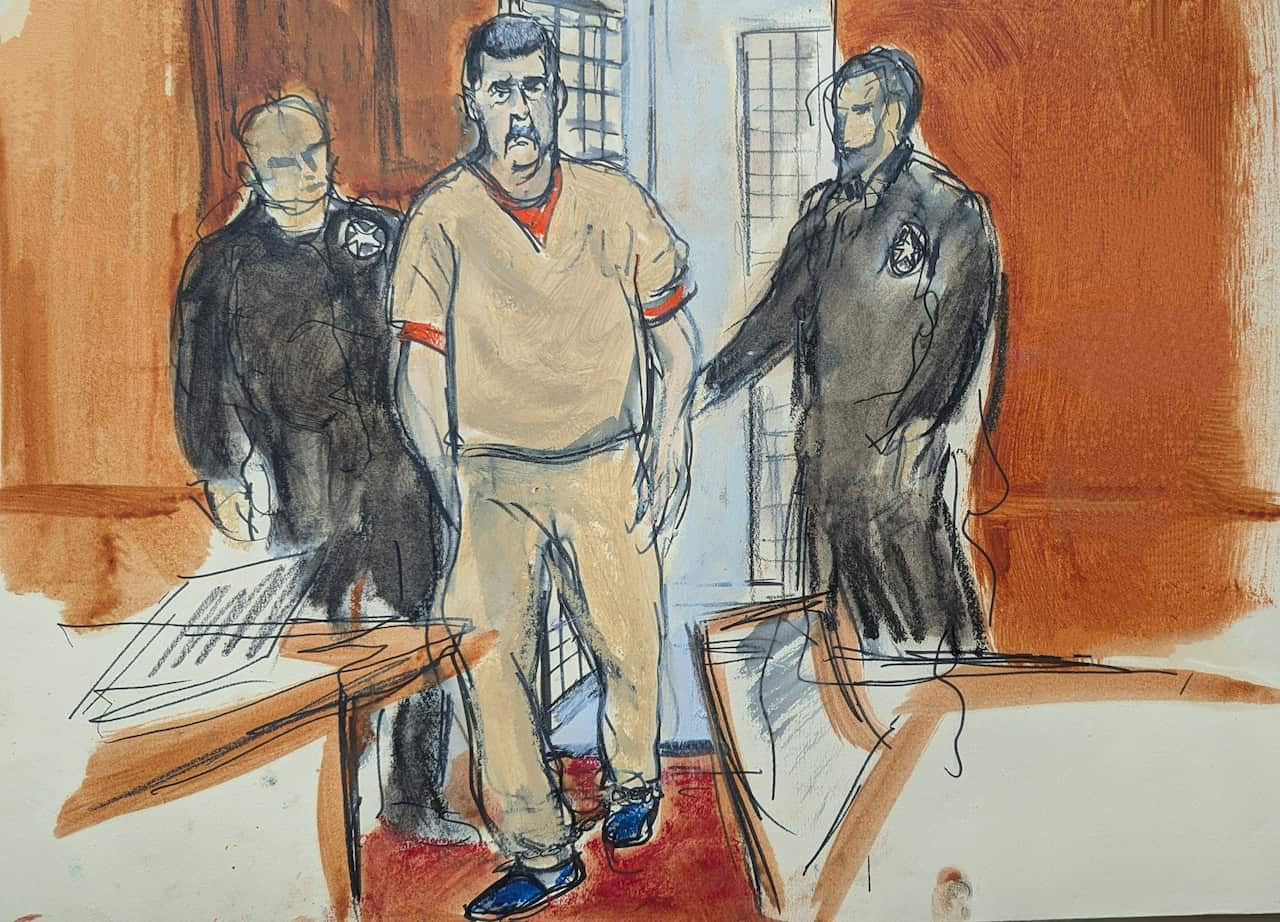
Their lawyers have said Maduro and Flores cannot afford to pay their defence fees on their own.
Prosecutor Kyle Wirshba said the US sanctions blocking the payments were based on existing national security and foreign policy interests.
Hellerstein appeared sceptical of that argument, noting that the US had relaxed sanctions on Venezuela since Maduro’s capture.
“The defendant is here, Flores is here. They present no further national security threat,” Hellerstein, a judicial appointee of Democratic president Bill Clinton, said.
“The right that’s implicated, paramount over other rights, is the right to constitutional counsel.”
Maduro lawyer Barry Pollack, who represented WikiLeaks founder Julian Assange, has said he wanted to withdraw from the case if Hellerstein did not dismiss the charges and the Venezuelan government could not pay his fees.
It was unclear how much Pollack is charging Maduro for his services.
‘Additional cases’
On Thursday, US President Donald Trump told reporters that additional cases would be brought against Maduro, without offering details.
US special forces captured Maduro and Flores in a surprise 3 January raid on their Caracas residence and flew them to New York to face drug trafficking charges.
Maduro was transported from the Metropolitan Detention Center in Brooklyn to the federal courthouse in lower Manhattan early on Thursday.
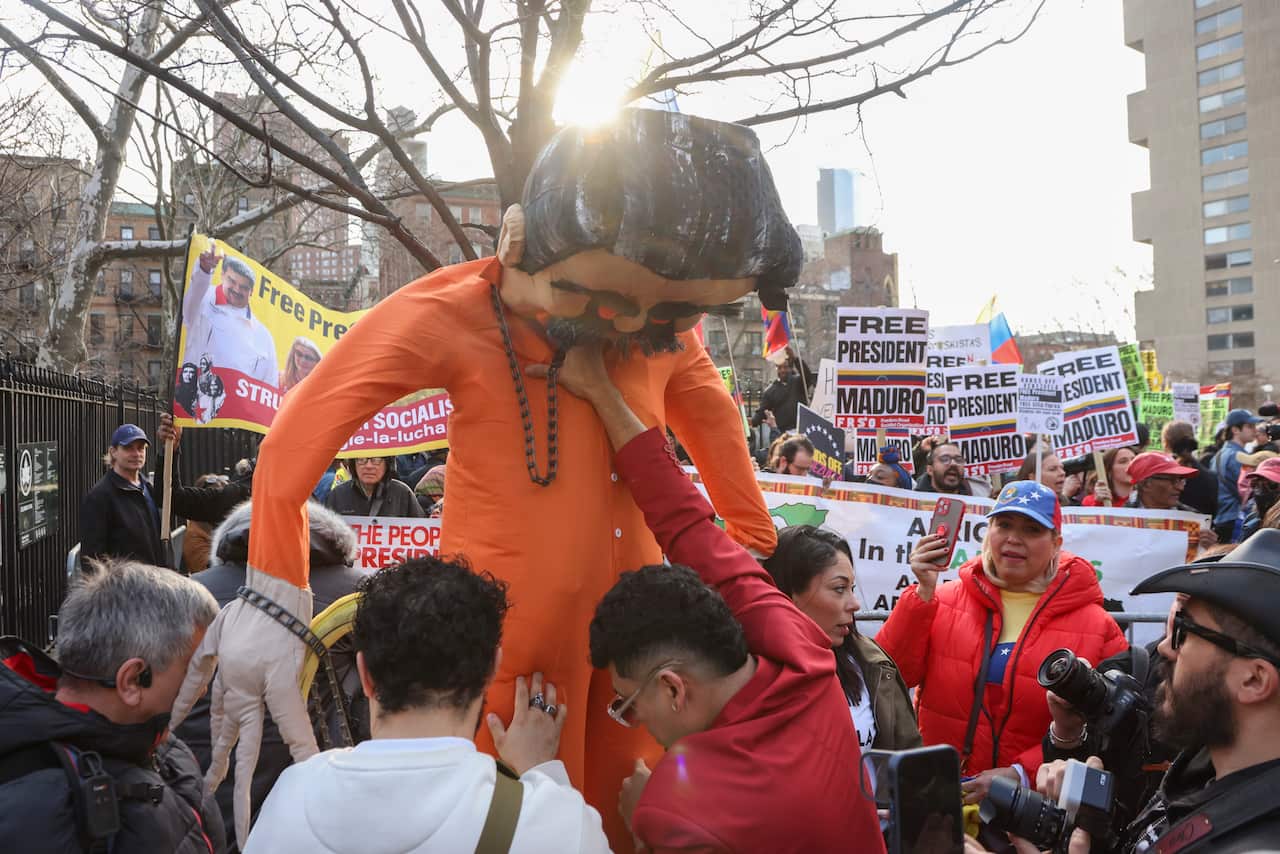
Outside the courthouse, police separated dozens of Maduro opponents — one holding an effigy of Maduro in an orange jumpsuit — from dozens of pro-Maduro demonstrators holding signs reading “Free President Maduro”.
Maduro and his wife said that under Venezuelan law and custom, the government paid the expenses of the president and first lady.
Prosecutors argued that because the US has not recognised Maduro as Venezuela’s legitimate president since 2019, he and Flores should not expect the US government to allow Venezuela to pay their legal fees.
The prosecutors said Maduro and Flores could be assigned public defenders if they could not afford their own lawyers.
Maduro faces four felony charges including narcoterrorism conspiracy, which criminalises drug trafficking to help finance activities the United States considers terrorism.
The statute has rarely been tested at trial, and two of four trial convictions have been overturned over issues stemming from witness credibility, a Reuters analysis of court records found.
Relations between Venezuela and the US have improved since Delcy Rodríguez, Maduro’s former vice president, became interim president after his capture.
For the latest from SBS News, download our app and subscribe to our newsletter.