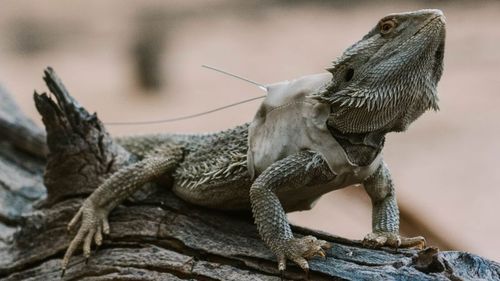
When it comes to survival in the animal world, many people would assume the faster animals fare better.
A recent study spearheaded by a University of Melbourne researcher challenges the common belief, showing that excessive speed might increase the risk of predation for Australian central bearded dragons.
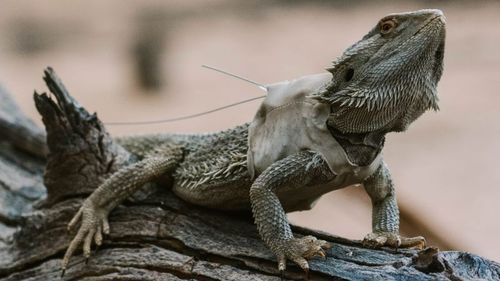
In the investigation, Wild mentioned that the team examined the ideal temperature for the dragons to achieve maximum speed and how this speed influenced their chances of survival.
“Our hypothesis is that faster lizards tend to display riskier behavior, such as moving more openly and frequently, thus exposing them to predators like birds and cats,” Wild explained.
“We found that increased risk was especially pronounced during spring, so this would make sense with dragons moving around a lot more looking for mates.
“These findings highlight an important ecological reality, what is measured in controlled lab environments doesn’t always reflect what is happening in real-world environments.
“This research reminds us that in the wild, survival isn’t just about physiology, but is deeply intertwined in the interplay with behaviour, predation risk and environmental variability.”