
Share this @internewscast.com
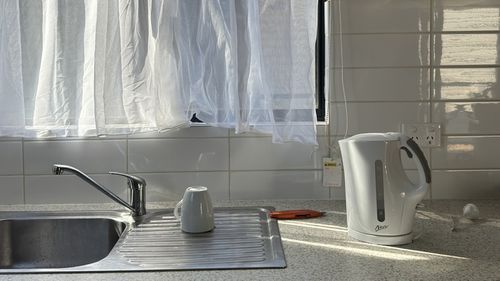
Researchers at the University of Queensland have discovered that plastic kettles are releasing microplastics into our drinking water during the boiling process. This unsettling revelation highlights a potential health risk posed by a common household item.
The study revealed that the highest concentration of nano and microplastics is released during the initial uses of a new kettle. However, even after being boiled 150 times, these kettles continue to emit millions of particles. This indicates that the issue persists long after the kettle has been broken in.
Dr. Elvis Okoffo, one of the researchers leading the study, emphasized the need for consumer awareness regarding the potential hazards associated with plastic kettles. He advocates for warning labels to be placed on these products to inform users of the possible risks involved in their everyday tea or coffee-making routine.
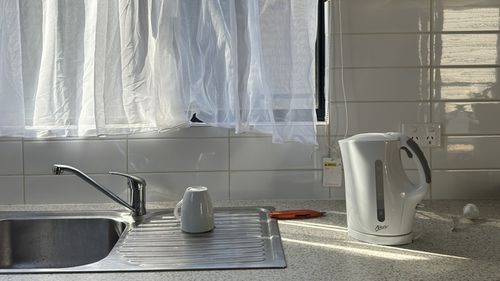
“This study provides compelling evidence that plastic kettles are a significant source of daily exposure to nanoplastics and microplastics,” stated Dr. Okoffo. He further explained that new plastic kettles, in particular, release considerable amounts of these particles into the water during boiling.
The research quantified these findings, revealing that a new plastic kettle’s first boil can release nearly 12 million nanoparticles per milliliter. This translates to almost 3 billion particles in a standard 250ml cup of tea. Even after 150 uses, the study found that approximately 820,000 nanoparticles per milliliter remained, equating to 205 million particles per cup.
After 150 boils, there were still 820,000 nanoparticles detected per millilitre, or 205 million per cup.
Simply rinsing a kettle before use did not achieve the same result as repeat boiling and discarding.
“Many people may overlook or skip this step, highlighting the need for clearer product labelling and instructions,” he said.
“I would call on manufacturers, policymakers and regulators to inform consumers with safety guidelines or product labels warning about plastic particle release.
“Although particle concentrations drop with repeated use, our research shows there is a continuous, low-level exposure risk.”
He said further investigation was needed to better understand the human health implications of the exposure.
“The study fills an important knowledge gap about how plastic products used in homes can contribute to daily plastic exposure and how small, practical changes in everyday routines can reduce exposure to plastics.
“By combining better product design, improved labelling, and public awareness, we can help limit the amount of plastic entering both our bodies and the environment.”