
A Soviet-era spacecraft has plunged to Earth, more than a half-century after its failed launch to Venus.
Its uncontrolled entry was confirmed by both the Russian Space Agency and European Union Space Surveillance and Tracking.
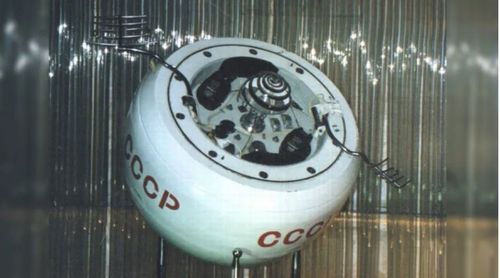
Unable to continue defying gravity’s pull as its orbit deteriorated, the round lander—measuring about 3 feet (1 meter) in diameter—was the final segment of the spacecraft to descend. Experts noted that the lander was encased in titanium and had a weight exceeding 1000 pounds (495 kilograms).
Any surviving wreckage will belong to Russia under a United Nations treaty.
After monitoring the spacecraft’s gradual descent, scientists, military personnel, and other experts were unable to accurately predict the exact timing or location of the spacecraft’s reentry.
Solar activity added to the uncertainty as well as the spacecraft’s deteriorating condition after so long in space.
After so much anticipation, some observers were disappointed by the lingering uncertainty over the exact whereabouts of the spacecraft’s grave.
“If it was over the Indian Ocean, only the whales saw it,” Dutch scientist Marco Langbroek said via X.
As of Saturday afternoon, the US Space Command had yet to confirm the spacecraft’s demise as it collected and analysed data from orbit.
The US Space Command routinely monitors dozens of reentries each month.
Kosmos 482 stood out from other objects entering the Earth’s atmosphere—and drew heightened attention from both governmental and private space tracking entities—due to its increased likelihood of surviving reentry, according to officials.
It was also coming in uncontrolled, without any intervention by flight controllers who normally target the Pacific and other vast expanses of water for old satellites and other space debris.