Share this @internewscast.com
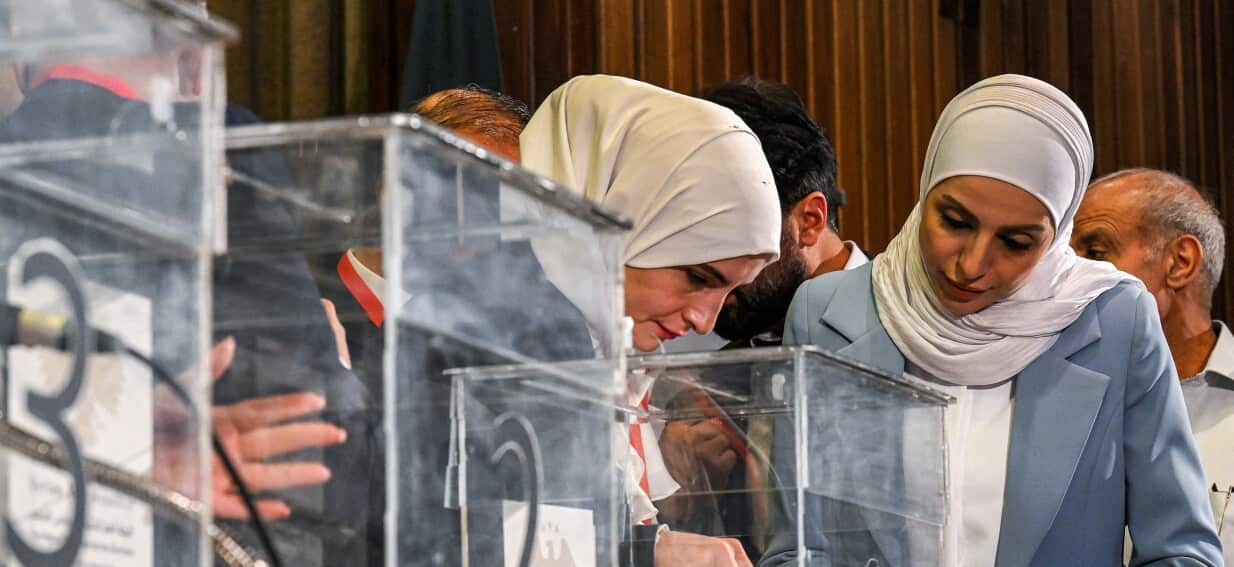
Syrian authorities published preliminary results of their indirect vote for the first parliament since Bashar al-Assad’s historic toppling last year, with election officials acknowledging a low success rate for women and religious minorities.
The vote resulted in around 6,000 members of regional electoral colleges choosing candidates from pre-approved lists, part of a process to produce nearly two-thirds of the new 210-seat body.
Interim President Ahmed al-Sharaa will later select the remaining third.
In the days leading up to the vote, analysts and some Syrians had voiced concerns it was too centrally managed and that suspending elections in areas outside government control meant that not all communities were being fairly represented.
According to initial reports, Syria’s electoral committee announced that 119 officials have been chosen, though it did not disclose the number of votes each candidate garnered.
Concerns over representation, short appeals window
Six new members are women, according to a Reuters news agency count verified by election observers. The observers said 10 seats in total went to religious and ethnic minorities, including Kurds, Christians and two Alawites, the sect to which Assad belongs.
One of the election observers described the new parliament as overwhelmingly Sunni Muslim and male.
Nawar Najma, spokesperson for Syria’s higher electoral committee, was asked at a press conference specifically about the representation of women and Christians.
“Among the most significant shortcomings of the electoral process were the unsatisfactory results for Syrian women’s representation, and the fact that Christian representation was limited to two seats, a weak representation relative to the number of Christians in Syria,” he said.
Najma said he believed Sharaa would try to address any shortcomings in his own appointment of the remaining 70 members.
The authorities say they resorted to an indirect system rather than universal suffrage due to a lack of reliable population data following the war, which killed hundreds of thousands of Syrians and displaced millions.
The postponements left 21 seats empty.
Najma informed the press that conducting elections in the Kurdish-controlled regions depended on progress in talks aimed at incorporating those areas, particularly the Kurdish-led Syrian Democratic Forces, into the state structure governed by Damascus.
Authorities remain “serious” about holding subsequent elections in those zones, Najma said.
Parliament was slightly larger under Assad, with 250 seats of which two-thirds were reserved for members of his Ba’ath Party. The last elections in July 2024 were labelled a farce by Assad’s opponents.
Female representation in parliament was also low under Assad and his father, Hafez al-Assad, before him. Women members made up only 6 per cent to 13 per cent of the legislature from 1981 until Bashar al-Assad was toppled, according to the Inter-Parliamentary Union, which collects data on national parliaments worldwide.