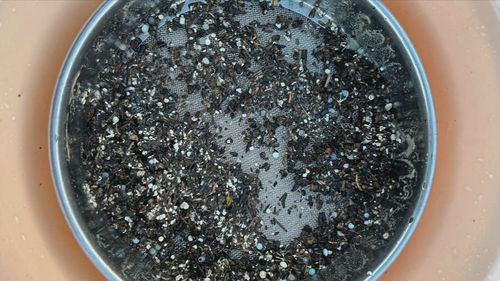

Agricultural soils now hold 23 times the microplastics the world’s oceans do – and humans could be gobbling them up.
The evaluation also found that soil plastics might be exposed to up to 10,000 chemical additives, most of which were unregulated in agriculture.
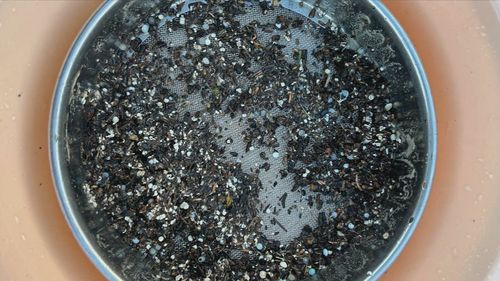
Many microplastics have been discovered to contain bisphenol-A (BPA), a chemical associated with health issues such as prostate and brain problems in infants and fetuses, as well as elevated blood pressure and heart disease.
But, Boctor claimed, “BPA-free does not equal risk-free”.
“Replacement chemicals like BPF (bisphenol-F) and BPS (bisphenol-S) show comparable or greater endocrine-disrupting activity.”
Boctor pointed out that government regulations are lagging behind both scientific discoveries and the rapid use of materials by the industry, noting a lack of transparency in the plastic industry regarding the additives it uses.
“This makes the plastic crisis unchecked, and human health exposed,” he said.
“This review tries to bring this creeping danger under the radar and shine a flashlight on regulators.”

In addition to endocrine disruptors, the review highlighted other soil additives like Phthalates, which are connected to reproductive problems, and PBDEs, which are neurotoxic flame retardants.
These additives have been linked with neurodegenerative disease, the authors said, increased risks of stroke and heart attack and early death.
“These are not distant possibilities – they are unfolding within biological systems – silently and systematically,” Boctor said.
Boctor is among a number of researchers at the Bioplastics Innovation Hub, launched by the CSIRO and Murdoch University, working on the development of a “green plastic” that decomposes properly in soil and water.
“This review highlights the urgent need for coordinated scientific and regulatory efforts,” Boctor said.
“Regulators, scientists and industry must collaborate to close the loopholes before plastic pollution further entrenches itself in the global food chain.”