Share this @internewscast.com
In July, Tim Abbott left Sydney for a remote property more than 700km from Brisbane.
Now, his workday starts at 5.30am and ends by late afternoon. He spends the day logging pine trees — a skill he picked up when he moved there — accompanied by only two other people.
The work, he says, is more physical and repetitive than the Zoom meetings and quarterly planning sessions he left behind when he quit his digital marketing role in Sydney. And for the next year, until he returns to Sydney, this will be his life.
The town? “It’s as small as you could possibly imagine,” he told the Feed. “There’s one of everything.”
One supermarket, one petrol station, one primary school. But Tim is enjoying the simplicity and the quiet, and the new lifestyle brings one big selling point.

“The money I earn used to go straight to bills, tolls, petrol, dining out, groceries, and so on,” says Tim, a 31-year-old who recently made a life-altering move to inland Queensland.
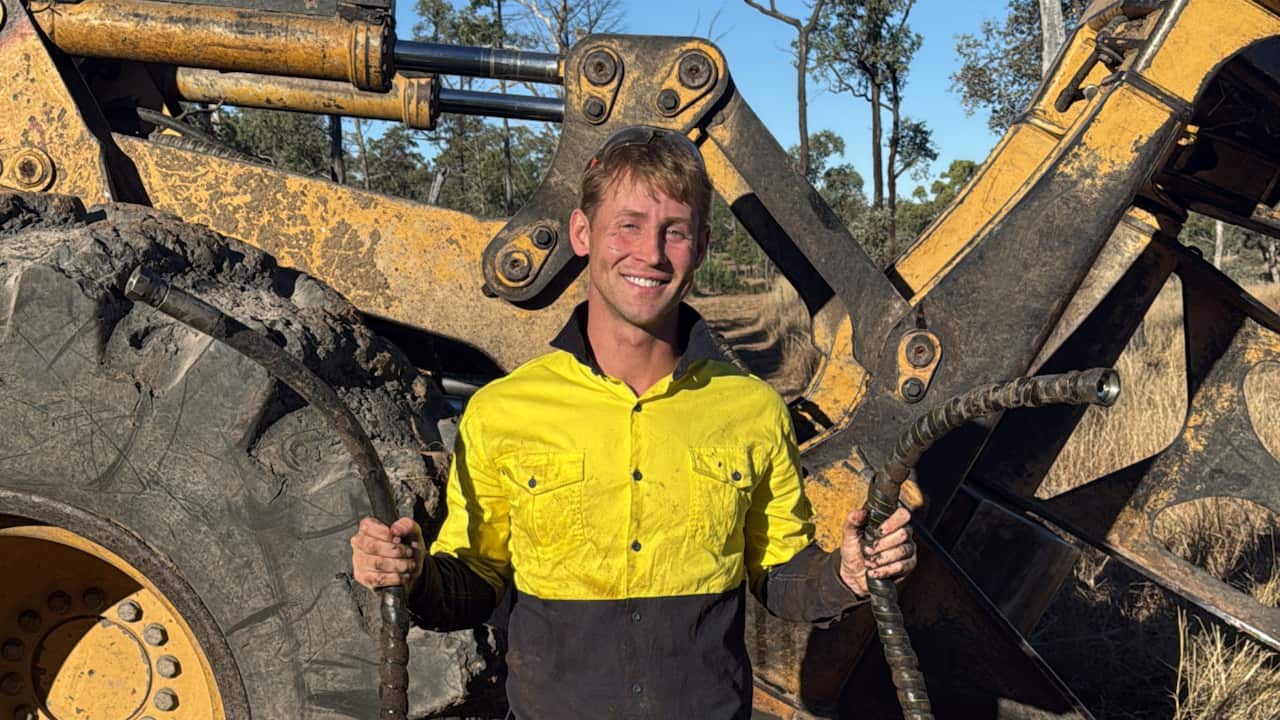
A smiling man wearing a yellow hi-vis shirt and holding a hose in each hand, standing in front of earth-moving machinery.

Since relocating, Tim has experienced an astounding 75 percent decrease in his living expenses. He notes with relief, “Now, when money comes in, I can actually keep it for myself,” appreciating the newfound financial freedom.

Tim shares a striking comparison of his rent expenses. In Sydney, he shelled out a hefty $600 weekly, whereas now, in western Queensland, he pays a mere $220 a month. This dramatic reduction has allowed him to rethink his financial priorities.

Abbott estimates that his living costs have dropped by more than 75 per cent, and his income has seen a modest increase.
His goal: to save $100,000 in a year and eventually buy a little, sustainable hobby farm with goats, ducks, a veggie garden. Somewhere warm, quiet, and just out of reach of the city.
“I feel like it’s delayed gratification. I feel like instead of missing out, I feel like I’m excited to build something for the future,” he says.
“It’s the first time in probably pre-COVID that I’m really excited for the future again.”
Four months into the gap year, Tim shared an update on Instagram, describing the outcome as “mixed.”
He said he’d managed to save roughly $30,000. While he’s happy with the result, it’s less than he’d hoped for at this point.
Tim explained that in 2022, he used his life savings to purchase a one-bedroom apartment. This quarter, he was hit with an $8,500 strata bill in special levies for building works.
“A bill like that would have been catastrophic for me if I were still living in Sydney,” he said.
But he said the financial gap year has softened the blow, and he’s been able to absorb it more easily.

Despite the significant savings, Tim candidly admits, “I’m trying to stay positive about the change, but it’s a bit of a struggle,” he chuckles. Nevertheless, he acknowledges that the decision to move is proving financially rewarding in the long run.

‘Regional cities holding onto more people’

KPMG urban economist Terry Rawnsley says the trend of younger Australians moving to regional areas has accelerated since the pandemic — driven by remote work opportunities, housing affordability and changing local economies.

“We’ve always had people shifting around the country for short-term contracts, spending a couple of years in a regional town. So that’s definitely continuous, people churn from the big cities and then back,” Rawnsley says.

“While we’ve always seen this, I think those regional cities are probably holding onto more people than they did in the past.”
Trends change depending on the location, he says, but overall, people in their late 20s and early 30s are the big cohort leaving cities like Sydney and Melbourne for “affordability and livability”.
The latest Regional Movers Index (RMI), which tracks migration from capital cities to regional areas, found a 10.5 per cent increase in the March quarter of 2025.
This is in line with an overall trend out of Australia’s capitals and into the regions after the onset of the pandemic. Current figures are 20.5 per cent higher than the pre-COVID average level of quarterly migration.

“Housing affordability is going to be more of a barrier going back into the big cities,” Rawnsley says.

Along with affordability in the regions, Rawnsley says white-collar workers are increasingly taking advantage of the ability to work remotely.
“Architects, engineers who previously were really tied to the CBDs in Sydney and Melbourne, they’re now able to live and work remotely and dial into those major meetings.”
But while rents and mortgages remain significantly cheaper outside the capitals, housing supply in many regional centres has tightened in the past few years with the boom.
“Pre-COVID vacancy rates might’ve been three or 4 per cent … now they’re kind of one and a half, 1 per cent,” he says.
Even though some places are churning out housing supply, he says others just aren’t.

“While they’ve had this big influx of people, they’ve also brought the big city housing problems with them, and everyone’s trying to work out how do we get more supply coming out of the ground.”

Looking forward without financial anxiety

For Sarah Brown, 29, and her partner, Will Ridley, 30, the move from Sydney to Forster wasn’t a leap of faith — it was planned in a spreadsheet.
After the pair bought a property in the NSW mid-north coast town, which they had initially planned to keep as an investment, they decided to move into it for a “financial gap year”.

Now, the pair are saving the rent they’d have spent in Sydney, saved on stamp duty with first home buyer assistance, and have cut down on their living expenses. When the year is up, they’ll make an assessment based on finances about what they’ll do next.
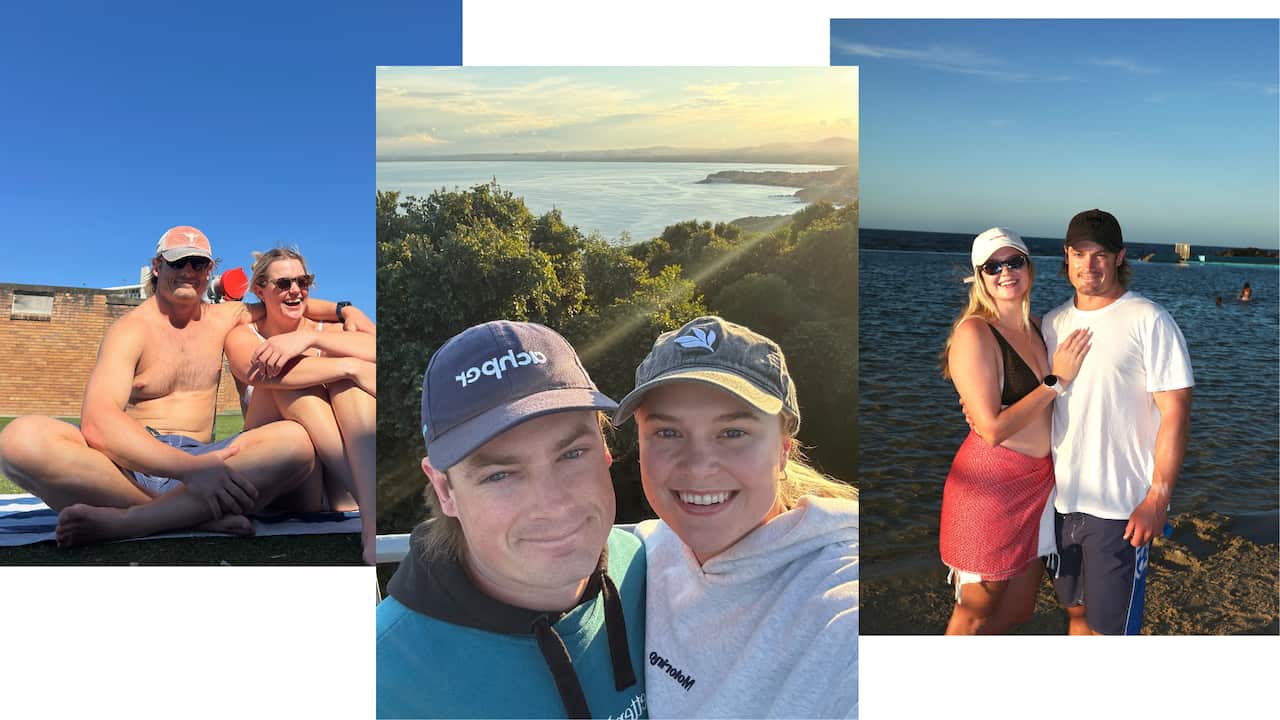
A collage of a couple in front of a beach.

Will and Sarah made the move from Sydney to the coastal NSW town of Forster earlier this year. They say when their “financial gap year” is up, they will reassess their options. Source: Supplied

“We were paying $820 a week [in rent] in Sydney — all of that has gone into savings,” she said.

The move has made them “the most financially secure we’ve ever been,” Brown said, describing a new ease in their relationship and more freedom to imagine milestones down the line without financial anxiety.
The trade-offs, though, are real. Friends are a four-hour drive away, and she spends a lot of time shuttling between Forster and Sydney for work, which still requires her to be on location for half of her working days.
But for now, the benefits are outweighing the sacrifices.
“I just wish I could pick all my friends up and dump them here and then I would never leave.”

[This article was originally published in August 2025]

Share this @internewscast.com
You May Also Like
NSW Police announce new armed response command in the wake of Bondi terror attack

NSW Police Launch Specialized Armed Response Unit Following Bondi Incident

In response to the recent terror attack at Bondi Beach, a new…
Aussie tech giant set to cut up to 2000 jobs for AI 'efficiency'

Australian Tech Leader Announces 2,000 Job Cuts in Strategic Shift Towards AI Efficiency

Australian company WiseTech Global is set to cut 2000 jobs as part…

Evelyn Araluen Honored with Victoria’s Premier Literary Award for Her ‘Uncompromising’ Poetry Collection

In brief Araluen’s work, The Rot, was described as “formally bold, emotionally…

Heartbroken Parents Urgently Seek Help in Search for Missing Son, Gus Lamont

In Brief Gus was last seen by his grandmother playing at the…
Commonwealth Bank generics today. Picture by Wayne Taylor 10th August 2025

Union Condemns CBA’s Proposal to Slash 300 Jobs, Calling It ‘Totally Unacceptable

The Commonwealth Bank is expected to cut 300 jobs, a move slammed…
Police headed to the city's northeast after midday, where multiple schools are located close together.

Adelaide Schools on Lockdown: Frightening Moments for Students and Staff

Students at three Adelaide schools have been forced to hide in cupboards…
A testosterone cream has offered new hope for women with low libido.

Breaking Ground: Revolutionary Australian Trial Offers New Hope for Boosting Women’s Libido

In a groundbreaking Australian study, researchers are testing a testosterone cream on…
The photo on the left is a stock image of a woman posing for a selfie; the right is the professional headshot Google Gemini generated based on the selfie.

How a Simple Photo Could Sabotage Your Job Prospects: What Employers Are Really Looking For

Australians who use AI to generate more professional headshots, cover letters or…
faceless hooded hacker showing silence gesture. Hacker attack. Dangerous Hooded Hacker Breaks into Government Data Servers. Cybersecurity, computer hacker with hoodie. Hacking and malware concept.

Australian National Sentenced to 7 Years in U.S. Prison for Illicit Trade Secrets Scheme

Peter Williams, aged 39, confessed to exchanging eight vital pieces of software…
Troy Maskell, 47, faced a retrial in Melbourne's Supreme Court after successfully appealing his conviction last year.

Justice Served: Melbourne Man Convicted in Retrial for Deadly Service Station Assault

A jury has once again found a man guilty of manslaughter after…
'First truly global scandal': More Andrew files are coming

Unveiling a Worldwide Controversy: New Andrew Documents to be Released

The UK government has approved the release of papers related to former…
Flood warnings for half of Australia

Major Flood Alerts Issued Across Wide Regions of Australia

Nearly half of Australia is under a flood watch as several states…