
Share this @internewscast.com
For many people in the UK, sampling the local cuisine is a top priority when exploring a new destination.
Diving into culinary traditions offers a unique glimpse into a nation’s culture, particularly when savoring dishes that are absent from familiar menus back home.
However, some travelers find it difficult to envision a meal without the presence of meat.
Countries like Spain are celebrated for their delectable cuts of meat from mature, grass-fed cattle, while goat meat remains a dietary cornerstone in the Canary Islands.
Yet, there is an increasing appetite for vegan and plant-based alternatives at popular vacation spots.
This trend aligns with insights from the Vegan Society, highlighting locations where veganism is on the rise.
The new Veganism Around the World report highlights the best destinations for vegan travellers in 2026.
Whether you’re reluctant to give up pork or curious to try out plant-based food, read on to find out which countries topped the ranking.

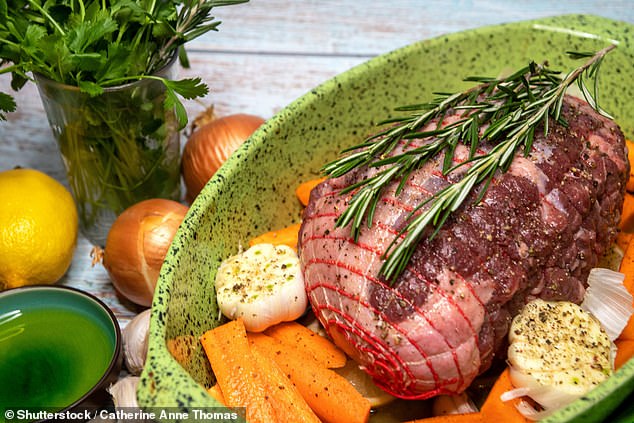
New Zealand is known for its high-quality lamb and beef. A fresh raw boneless New Zealand spring lamb roast is pictured
New Zealand
Though New Zealand is known for its pasture-based farming and high-quality lamb and beef, there is a growing vegan scene with many cafes and restaurants offering diverse plant-based options.
The Vegan Society’s latest report found that New Zealand has the most dining options for vegans globally per capita (344.81 restaurants per million people).
This is made up of vegan restaurants and non- vegan/non-vegetarian restaurants which have vegan options on the menu.
Taiwan

Ximending street market in Wanhua District, Taipei, Taiwan, is pictured
Taiwan is the world leader in dedicated vegan restaurants (14.8 per million people).
Though meat plays a key role in many rice, soups and noodle dishes, the country has been dubbed a ‘vegan paradise’ for its many dedicated vegetarian/vegan restaurants.
The character ‘Su’ (素) means vegetarian/vegan; ‘Quan Su’ (全素) means strictly vegan.
Portugal

Seafood is pictured in the Bolhao market hall in Porto, Portugal
While known for its fresh, flavourful cuisine centred on Atlantic seafood, the Vegan Society found that Portugal has the second greatest number of vegan restaurants per capita.
However, it also has the third-highest fish/seafood consumption per capita in the world.
The good news is that ‘vegano’ in Portuguese is very similar to the English spelling, so restaurants will be easy to distinguish.
Iceland
Iceland has Europe’s highest proportion of restaurants with at least one vegan dish (more than 43 per cent).
However, these restaurant offerings do not translate into a lower consumption of meat and animal products.
Iceland has one of the highest rates of consumption of meat and animal products of about 394 kg per capita per year, the same rate as the USA.
India

India has diverse culinary traditions, meaning meat consumption varies depending on the region
In India, many meals are naturally vegan, focusing on legumes, vegetables, grains, and spices, with staples like Dal, Chana Masala (chickpea curry) and Aloo Gobi (potato & cauliflower).
Consumers in India are nearly twice as likely as those in the USA to say they are ‘very or extremely likely’ to buy plant-based meat.
The country has diverse culinary traditions, meaning meat consumption varies depending on the region. Chicken and goat are staples across the country and in some regions, pork and beef are also popular.
Singapore
Singapore is home to the most vegetarian restaurants per capita globally, with many offering vegan menus influenced by Indian and Chinese flavours.
The country’s food is a vibrant fusion of Chinese, Malay, Indian, and Peranakan cultures, famous for its rich flavours found in affordable hawker centres.
Other countries with rich Buddhist traditions, such as Vietnam and Japan, have shaped a strong and diverse presence of vegan and vegetarian dining experiences.