
Share this @internewscast.com
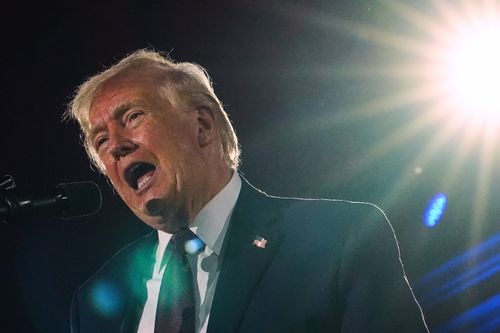
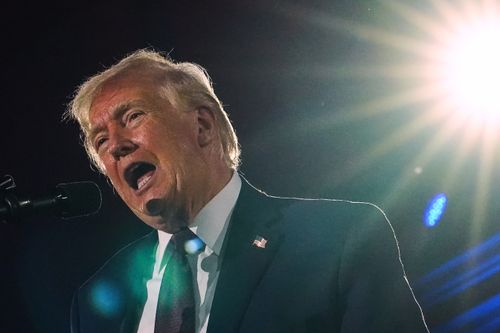
President Donald Trump has issued a stern warning to Iran, urging its leaders to engage in negotiations to bring an end to the ongoing conflict. In a social media post on Thursday, Trump cautioned Tehran to “get serious soon” about talks, stressing the urgency with a foreboding message that if they delay, “there is NO TURNING BACK, and it won’t be pretty!”
While Trump did not provide specific details in his post, he asserted that Iran should be more open to discussions, citing that the country has been “militarily obliterated, with zero chance of a comeback.” This statement underscores his belief that Iran is in a weakened position and should consider negotiations as a viable path forward.
This social media declaration followed Trump’s earlier comments, suggesting that a resolution to the conflict was within reach. Despite this optimism, Tehran has dismissed his 15-point ceasefire proposal, signaling a significant disconnect between the two nations’ diplomatic efforts.
Responding to Trump’s overtures, Iran’s Foreign Minister, Abbas Araghchi, made it clear in a state TV interview that his government has not entered into discussions to end the war and has no intention to do so. He emphasized that while the US has attempted to relay messages via other countries, these do not constitute genuine conversations or negotiations.
Iran’s Foreign Minister Abbas Araghchi said in an interview on state TV that his government has not engaged in talks to end the war and does not plan to.
Araghchi said the US had tried to send messages to Iran through other nations, “but that is not a conversation nor a negotiation”.
Pakistan says it’s actively working to bring the US and Iran to the negotiating table. But Pakistan’s Foreign Ministry did not confirm whether direct talks would take place in Islamabad later this week.
At a weekly news briefing, ministry spokesperson Tahir Andrabi said details on the timing, venue and itinerary would be shared in due course.
Asked whether Iranian or US delegations were expected to hold talks in Islamabad later this week, he said, “We will let you know when these developments take place”.
He added that Pakistan’s diplomatic efforts are aimed at ending the conflict and emphasised that the initiative is not directed against any country.
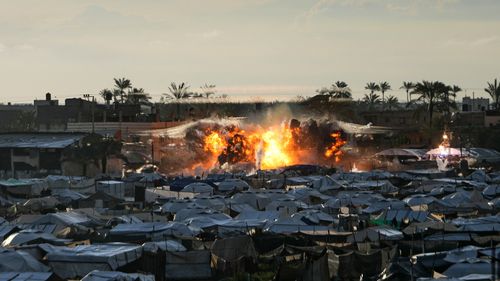
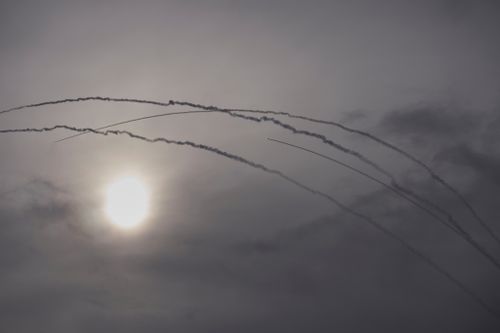
On Thursday the conflict continued, with Israel’s military saying it had killed the Iranian navy intelligence chief, labelling Behnam Rezaei a “central knowledge authority in maritime intelligence”.
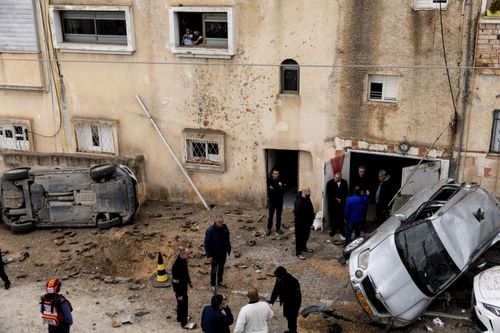
Earlier on Thursday, Israel said it had killed the commander of Iran’s navy, Alireza Tangsiri, in an overnight airstrike in Bandar Abbas.
Israel said Tangsiri had been responsible for bombing operations that blocked the Strait of Hormuz.
Iran has been blocking ships it perceives as linked to the US and Israeli war effort from the Strait of Hormuz, but it is letting through a trickle of others through the crucial waterway.
Jasem Mohamed al-Budaiwi, of the Gulf Cooperation Council, a bloc of six Gulf Arab nations, said Iran was charging for safe passage through the strait.

Meanwhile, the US was preparing for the arrival of thousands of troops that could be used on the ground in Iran.
The death toll from the war has risen to more than 1900 people in Iran and nearly 1100 people in Lebanon, with dozens more killed in Israel and elsewhere in the region. Thirteen US military members have died. Millions of people in Lebanon and Iran have been displaced.
Further entanglement in Iran could frustrate Trump’s supporters
Trump still has deep support among Republicans, but a new poll from The Associated Press-NORC Center for Public Affairs Research indicates that the president risks frustrating his voters during a midterm election year if the United States gets involved in the kind of prolonged war in the Middle East that he promised to avoid.
The vast majority of Republicans in the AP-NORC poll, 81 per cent, say it’s “extremely” or “very” important for the US to prevent Iran from obtaining a nuclear weapon, lending support to one of the goals Trump has articulated since the war began.
But only about half of Republicans see replacing Iran’s government with leaders who are more friendly to the US as a high priority.
Stephen Hauss, 40, is a state Agriculture Department employee in Camden, Delaware, where he manages environmental programs. Hauss described his political views as libertarian-leaning, and he voted for Trump in 2024. But the start of the Iran war has changed his views about the president.
“Before the war I was just kind of like, ‘OK, like, I voted for him. I got to give him, like, some benefit of the doubt,’” he said.
Now, Hauss said he can’t support the US trying to change the leadership of another country. He added, “I don’t think I am on board with this anymore.”
Trust in Trump remains high among Republicans, AP-NORC poll shows
About three-quarters of Republicans approve of Trump’s handling of the presidency, and a similar 70 per cent approve of how he’s handling Iran.
Many Republicans continue to have “a great deal” or “quite a bit” of trust in the president to make the right decisions on foreign issues.
About half place a high level of trust in him when it comes to the use of military force outside the US. Roughly the same percentage of Republicans have a high level of trust in his dealings with adversaries and allies.
Sharon Fuller, 68, is a firm backer of the president and approves of his handling of the job, as well as the war in Iran.
A retired hospital analyst from Ocklawaha, Florida, Fuller expressed some reservations about the war but called Trump a “huge patriot” and said she’s been impressed with how the stock market has done since he became president again.
“I don’t really agree with the war, but on the other hand, I think it’s a necessity at this point,” she said.
NEVER MISS A STORY: Get your breaking news and exclusive stories first by following us across all platforms.