
Share this @internewscast.com
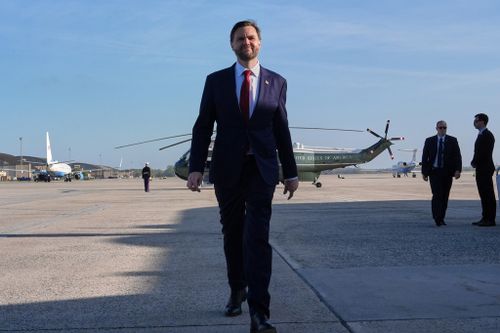
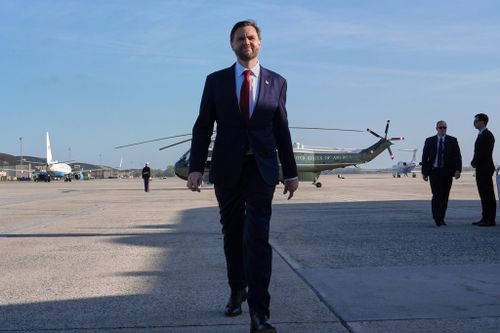
Vance, known for his skepticism towards foreign military interventions and reluctance to commit troops to prolonged conflicts, embarked on a mission to lead mediated discussions with Iran in Islamabad, Pakistan, on Friday.
The White House has countered claims that Iran requested Vance’s involvement in the talks, suggesting that such assertions are merely attempts to undermine the negotiations.
While the White House has not disclosed the full list of participants in the discussions aside from Vance, Witkoff, and Kushner, Kelly mentioned that representatives from the National Security Council, State Department, and Pentagon will contribute support.
In earlier indirect nuclear discussions with Iran prior to the conflict, some Democrats and nuclear specialists questioned the technical expertise of Kushner and Witkoff.
The White House has not clarified whether these two, who have been entrusted by Trump with some of his most challenging negotiations since his return to office, were accompanied by a nuclear expert during those talks.
Negotiating peace is a tall order for any vice president
Joel Goldstein, a law professor at Saint Louis University and an authority on vice-presidential history, noted that it is not uncommon for vice presidents to undertake significant negotiation responsibilities on behalf of the president.
But, he said, “I don’t recall a situation where a vice president has been sent to negotiate a ceasefire or peace in connection with a war the United States was involved with.”
Vance and Rubio are seen as the Republican Party’s strongest potential 2028 presidential contenders, though neither has given a clear answer about whether he intends to run.
The vice president’s team is not thinking about the negotiations with an eye to future political considerations, according to a person familiar with discussions who was not authorised to speak publicly and spoke on the condition of anonymity.
As vice president, Vance inherently would carry any baggage of the administration if he eventually does run for president, Goldstein said. But stepping in to lead negotiations even further identifies him with the conflict.
“The fact that he’s involved in the negotiations in a very visible way, that means that, if things go south, that people will be pointing fingers at him,” Goldstein said.
At the same time, Goldstein said, “If things go well, then it will be something that he could point to.”
NEVER MISS A STORY: Get your breaking news and exclusive stories first by following us across all platforms.