
Share this @internewscast.com
When United States President Donald Trump said there was an association between mothers taking Tylenol (paracetamol) and “a very increased risk of autism” in children, he added fuel to a fire of mis- and disinformation that has been raging for years.
Trump, flanked by his health secretary Robert F Kennedy Jr and TV-physician-turned-healthcare-administrator Mehmet Oz, said taking paracetamol was “not good” and suggested without evidence that autism does not appear in communities where it was not widely used.
Trump’s comments came just a few months after Kennedy, who is widely considered a vaccine sceptic though has disputed he is “anti-vaccine”, had vowed to find the “cause” of autism by September. That pledge took many by surprise, given that decades of research have not established a singular cause for the neurodevelopmental condition.

Unsurprisingly, Trump’s comments were met with strong pushback from doctors and other members of the medical community. The World Health Organization (WHO) said on Wednesday there was no conclusive scientific evidence that confirmed a possible link between autism and the use of paracetamol during pregnancy.
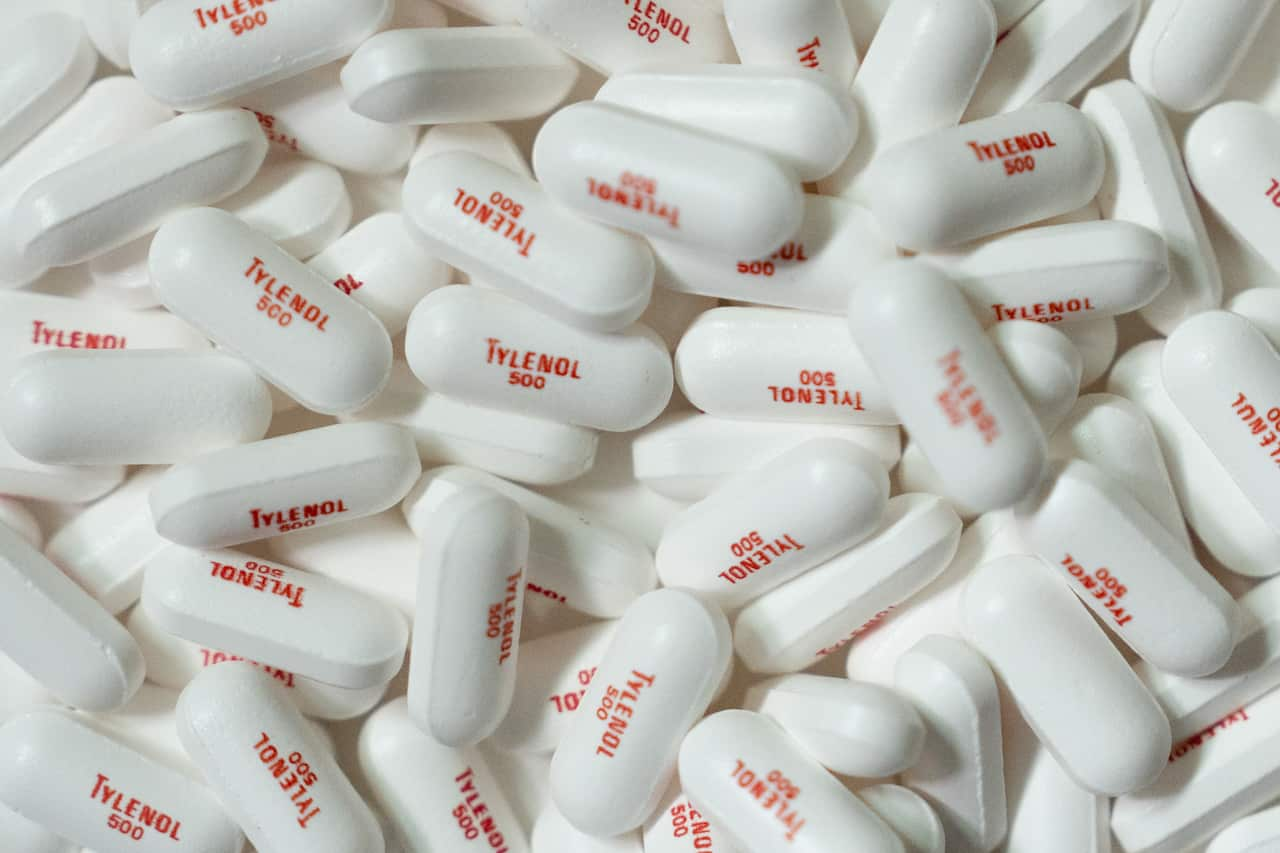
A large pile of white pills that have "Tylenol" marked on them in red.

There is no evidence of a causal link between the use of paracetamol in pregnancy and the development of autism or ADHD in children. Source: AAP / AP / Jae C. Hong

In Australia, the link was firmly rejected by the Therapeutic Goods Administration and chief medical officer Michael Kidd.

“Robust scientific evidence shows no causal link between the use of paracetamol in pregnancy and autism or ADHD, with several large and reliable studies directly contradicting these claims,” the medicines regulator said in a statement on Tuesday.
The US Federal Drug Administration guidance that Trump was announcing was also more restrained in its language than that of the US president. It said it was alerting physicians about studies suggesting a correlation between acetaminophen use during pregnancy and subsequent diagnosis of conditions like autism and ADHD (attention deficit hyperactivity disorder).
But it noted that while an association between acetaminophen and neurological disorders had been described in studies, a causal relationship had not been established, and there were contrary studies.
Andrew Whitehouse, the deputy director of research and a professor of autism research at The Kids Research Institute Australia, said Trump’s claims were “at best, a misreading of science” and “at worst, a total misuse of science”.
“There are absolutely studies out there that have shown that taking paracetamol during pregnancy is associated with an increased chance of the offspring of that pregnancy and being diagnosed with autism. But there are also studies that show no association, and even studies that show the opposite,” he told SBS News.

“But what not a single one of those studies have shown is any kind of causal link in any way, shape or form.”

A major 2024 Swedish study, considered one of the most high-quality on the matter, found no association between use of paracetamol in pregnancy and risk of autism, ADHD or intellectual disability. The study looked at nearly 2.5 million children born in the country between 1995 and 2019, with nearly 186,000 children exposed to paracetamol during pregnancy.

Why are non-evidence-based claims about autism so common?

Trump is far from the first person to push an unproven causal link for autism, a neurodevelopmental condition that affects how a person’s brain develops and functions, and is often characterised by atypical patterns of activities and behaviours and differences in processing and communicating sensory information.
According to the WHO, people with autism can experience some degree of difficulty with social interaction, and the abilities and needs of autistic people vary and can evolve over time. It said that while some people with autism live independently, others experience severe disability and require lifelong care and support.
For decades, there have been attempts to find a simplistic answer for why some people experience autism, despite the widespread acceptance in the scientific and medical community that a complex, multi-factoral combination of genetic and environmental factors contributes.

The 1950s gave rise to the since widely discredited ‘refrigerator mother’ theory: that a lack of warmth from one’s parents — and in particular their mothers — could explain an autism diagnosis. Such a theory has been largely abandoned since the 1970s, with subsequent studies linking diagnosis to genetics.

More recently, anti-vaccine activists have spread disinformation falsely linking autism with vaccination in an attempt to discourage their use, or suggest without evidence that they have a nefarious use.
Both Trump and Kennedy are among the public figures who have promoted the theory — contrary to scientific evidence — that childhood vaccines are a cause of autism. That idea stems from a since-debunked study from British researcher Andrew Wakefield in the late 1990s that connected a rise in autism diagnoses with widespread use of the measles vaccine.
No rigorous studies have found links between autism and vaccines or medications, or their components such as thimerosal or formaldehyde.
The causes of autism are still relatively unclear, but there is widespread speculation among scientists that its neurological characteristics may develop in utero.
Research suggests genetic factors account for up to 80 per cent of the likelihood of developing autism, and a growing area of investigation focuses on epigenetics — the interactions between genetic and environmental factors.
So why does autism appear so susceptible — perhaps more than any other condition — to claims about its causes that are not grounded in concrete evidence? Why do some reach for easy answers about a condition that is, in many ways, still a mystery to us?
Whitehouse says there are two reasons. First is the “sheer high emotion” surrounding autism, particularly when it comes to children.

“There’s a much-wanted, much-loved, much-valued and cherished child. The parents watch that child develop differently, and there’s no very simple reason to describe and explain why that has happened,” he said.
A man wearing a white shirt, standing in front of green bushes.

Andrew Whitehouse said an “information void” had allowed non-evidence-based claims and conspiracy theories around autism to flourish. Source: Supplied

That provides ample room, Whitehouse said, for people to push misinformation that attributes a single cause for the development of autism — some well-meaning, others who are “out-and-out charlatans”.

“The second reason is because we’ve allowed it to happen. There is no other area of health and medicine that would allow such low-standard claims to not just exist but flourish without a very strong push against it,” he said.
“But in the area of autism, there historically have not been the high standards of evidence required to make such claims. It’s only going to get better if we expect and not only accept higher levels of standard science in the area of autism.”
Whitehouse said a lack of proven, simplistic explanation, paired with a generally low standard for evidence, had created an “information void” that allowed non-evidence-based claims and conspiracy theories to flourish.
Stephen Robson, an honorary professor at the ANU School of Medicine and Psychology, similarly said autism is a condition we still “don’t completely understand”, leading people to try and fill in gaps.

“The conspiracy theorist looks at the gap and [sees] some mal-intent or something nasty going on,” he said. “The researcher sees the gap and says, can I find out what it is? I think that’s the fundamental difference.”

‘Nothing wrong’ with being autistic

Among the rhetoric that surrounds autism and its causes, it’s important to keep in mind that autism is not an abstract concept, but a condition that impacts the lives of tens of millions of people around the world, their families and supporters.
Trump’s latest remarks recall in some part the ‘refrigerator mother’ theories of decades ago — that autism is not a developmental condition but a parental, and specifically maternal, misstep.

That kind of framing is “inherently sexist”, David Tonge, CEO of support organisation Amaze, told SBS News earlier this week, ahead of Trump’s announcement. “This is an insidious line of discussion that is hurtful to mums,” he said.

Robson said Trump’s comments had “amplified” two layers of stigmatisation: first, the notion that parents of children who had been diagnosed with a neurodevelopmental condition like autism had “done something wrong” in their parenting.
Whitehouse noted mothers in particular often had “a whole layer of societal guilt placed around that early developmental phase”.
Any attempts to validate that guilt without evidence were “horrifying”, Whitehouse said, adding that in the days since Trump’s comments, he had been contacted by multiple families who were very distressed by the remarks.
The other level of stigmatisation that comes with attempts to find a singular reasoning or “cure” for autism is the perception that there is anything inherently wrong with being autistic.

That notion is one many in the autism community reject: that it is not their condition that is disabling, but the neurotypical societal structures and harmful attitudes that surround them.

“When you hear the president say, ‘I’d fight like hell not to take [paracetamol]’, it suggests that autism in itself is a bad thing, and that it’s something you have to fight,” Robson said.
“I think for the community of people affected by autism, for those who love them and care for them, this is yet another stigmatisation. You have one of the most powerful people in the world saying that what you have is something that should be fought against, and that is awful for people.”
Australian activist Grace Tame, who is autistic, responded to Trump’s comments in a video posted to Instagram shortly after they were made.
“[Autism] can’t be prevented, augmented or cured, and it doesn’t need to be. There’s nothing inherently wrong with being autistic.
“It is a difference in receiving, processing and communicating sensory information that can be disabling depending on external factors.
“Whilst we can’t change an autistic person, we can change their environment to better support their needs.”
With additional reporting by Reuters.

Share this @internewscast.com
You May Also Like

Surge in Rodent Population Poses New Challenges for Australian Farmers

in brief Mouse numbers are thought to have hit plague proportions in…
Charlotte MacInnes

Actor’s Emotional Court Testimony Involving Rebel Stirs Controversy

A young actress recently fought back tears while recounting her experiences with…
Lee Lovell (right) has opened up about life without his beloved wife Emma (left), who was stabbed to death on Boxing Day 2022

Emma Lovell’s Tragic Stabbing: Lee Lovell Reflects on Wife’s Death at North Lakes Residence and the Two Words That Altered Their Family’s Future

A heartbroken husband has spoken about the devastating moment his world was…
Dingoes attack young girl and mother at popular campsite

Shocking Dingo Encounter: Mother and Daughter Attacked at Beloved Campsite

A young girl and her mother are the latest in a string…

States Push Back on NDIS Changes Amid Concerns Over Financial Burden

In brief: The federal health minister has announced a raft of changes…
The rugby community in Waikato, New Zealand has been thrown into mourning by the sudden death of sportswoman Courtney Johansen (pictured)

Football Community Honors Cherished 29-Year-Old Coach Following Tragic Loss of Her and Unborn Child Due to Undiagnosed Health Issue

Heartfelt tributes have emerged for a New Zealand athlete who tragically passed…
The Budget is setting aside $90.6million to boost the number of skilled workers in the construction sector (pictured are construction workers at Parramatta in Sydney's west)

Federal Budget 2024: Critics Label It as Vote-Buying Strategy, While PM Remains Tight-Lipped on Election Date

Anthony Albanese is sidestepping inquiries about the possibility of an early election,…
Disney + informed Australian customers of the price change in an email today.

Disney+ Shakes Up Streaming with Another Price Hike: What Subscribers Need to Know

Australian Disney+ subscribers are set to pay more for their streaming plans…

Major Gaming Companies Under Scrutiny for Rising Child Safety Concerns

Major video game companies could face fines approaching $50 million if they…

Iranian Gunboat Engages Container Ship Near Oman; Another Vessel Attacked Near Iran

In brief: Iran has fired at a container ship transiting the Strait…
Richard Pusey

Richard Pusey Files Lawsuit Against Victoria Police Over Fatal Eastern Freeway Incident

Victoria Police will defend itself in court after Porsche driver Richard Pusey…

NASA’s Revolutionary Telescope Set to Map the Universe: A New Era in Cosmic Exploration

In brief: NASA has announced a powerful new space telescope called Roman.…