
Share this @internewscast.com
To most people, $80 billion is an extraordinary amount of money. Where the GST is concerned, though, experts say it’s not enough.
The introduction of the goods and services tax by the Howard government 25 years ago was not well-received, which explains why politicians today are hesitant to discuss increasing it from the current 10 percent.
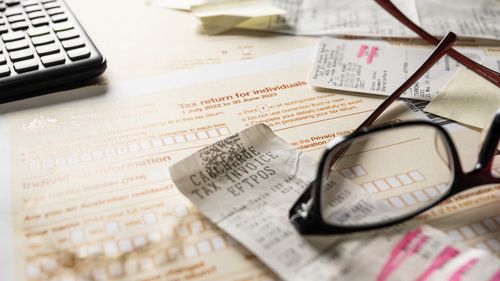
Why are there calls to change the GST?
Currently, the government heavily depends on individual income tax, which makes up more than half of all tax revenue. Treasurer Jim Chalmers has expressed a desire to lessen the tax burden on personal earnings.
If the government aims to lower income tax, it has limited alternatives for replacing that revenue, especially while trying to achieve a budget surplus.
Winding back negative gearing and capital gains concessions have been ruled out, and a carbon tax â something proposed by former Treasury secretary Ken Henry â has proven political suicide in the past.
At the same time, consumption taxes like the GST cause very little economic damage compared to other options like excises and stamp duties.
“The GST and taxes like it are a much more efficient way of raising revenue,” Professor Richard Holden from the University of NSW told 9News last week.
“They create less distortions, they do less damage to productivity and the economy.”
Against the backdrop of this economic picture is the government’s upcoming productivity roundtable.
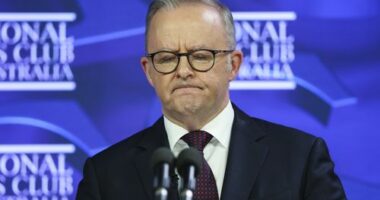
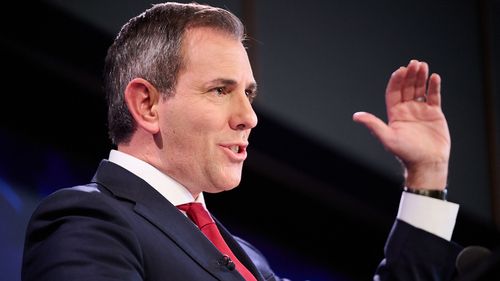
To be held next month, Chalmers flagged in a Press Club speech that the roundtable could pave the way for a much-needed overhaul of the tax system â a speech that was quite quickly followed by calls to reform the GST.
How does Australia’s GST compare to the rest of the world?
While the United States doesn’t have a federal consumption tax (it instead has state-based sales taxes) and Canada has a lower rate of 5 per cent, Australia’s 10 per cent GST is on the lower end of the global scale.
It’s on par with the consumption taxes levelled in Japan and South Korea, but short of the GST in New Zealand (15 per cent) and of comparative value added taxes (VATs) in the likes of Germany (19 per cent), the United Kingdom (20 per cent) and Ireland (23 per cent).
It’s also below the OECD average of 19.4 per cent.
Little surprise, then, that the amount of consumption tax Australia collects as a proportion of total revenue is far less than the global average.
What could a change look like?
Exactly what a reformed GST could look like differs from economist to economist, but a common suggestion has been raising it to 15 per cent.
That’s what Holden’s proposal is, while at the same time cutting personal income tax and giving every worker a $12,500 GST-free threshold to make sure low earners are better off.
The point about shielding low-income earners from any ill effects of a GST increase has been made by several economists.
”The GST is one of the most effective ways to tax those on higher incomes, but it affects lower-income earners more,” Dr Venkat Narayanan from RMIT University said.
“Why not talk about a 10.5 per cent GST for the next few years and increase it by 0.5 per cent until we get to 15, rather than just straight to a higher percentage?
“Any reform should consider income taxation… so that any increases to the GST do not disproportionately affect low-income earners.”
Another option flagged by think tank the Australia Institute, which has found the government has so far collected $231 billion less in GST than what was originally intended, is broadening the tax to remove some exemptions.
“Higher-income households don’t have to pay GST on private schools and private health and can find other ways of avoiding the tax,” executive director Richard Denniss said.
“On the other hand, lower-income households are spending more on rent and mortgages, which means they have less money to spend on the things that would generate GST revenue.
“If the Australian government wants to fill this tax blackhole without hurting low-income households, it could broaden the GST so that it applies to private school fees and private health insurance.”
So will the government actually increase the GST?
“I think often an increase in the GST is spent three or four times over by the time people are finished with all of the things that they want to do with it,” Chalmers said when taking questions following his Press Club address.
And while the treasurer also called to an end to what he called the “rule-in, rule-out game”, Prime Minister Anthony Albanese couldn’t help himself last week.
“Consumption taxes by definition are regressive in their nature, so that’s something that doesn’t fit with the agenda,” he said.