
Share this @internewscast.com
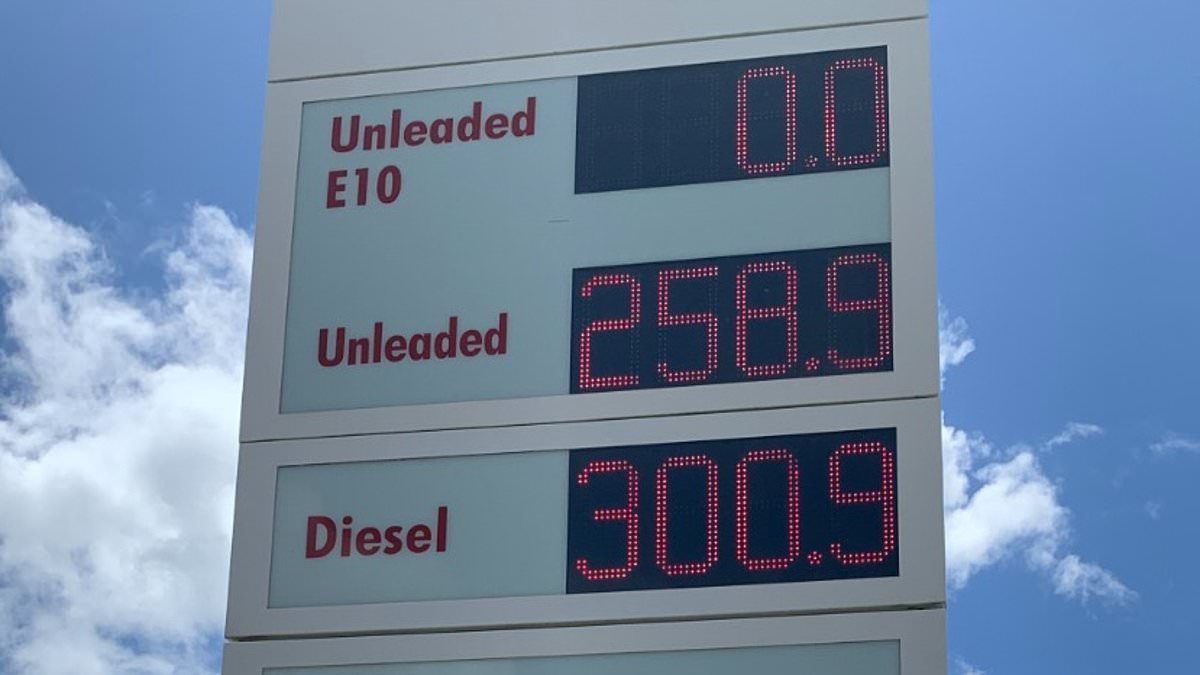
In a surprising development, a small town in North Queensland has become one of the first non-remote areas in Australia to experience diesel prices reaching $3 per litre.
This notable price hike occurred at the NightOwl Shell service station on Queen Street in Ayr, where prices were adjusted on Monday, coinciding with a shortage of standard E10 fuel. This situation has led to significant dissatisfaction among the local community.
The increase comes amid growing concerns that petrol prices could potentially exceed $4 per litre, as the ongoing conflict involving the US, Israel, and Iran enters its fourth week. Assistant Trade Minister Matt Thistlethwaite has not dismissed this possibility.
A resident of Ayr expressed her frustration to the Daily Mail, attributing the rising costs to the current government’s policies.
“Three dollars a litre for diesel. I’ve been here my entire life and have never witnessed anything like this,” she shared.
“Every rise in diesel prices translates directly to higher costs for delivering food to city residents—ironically, the same individuals supporting the government responsible for this situation.”
‘We’re not just paying for our own fuel. We’re paying for their greeny bulls***.’
She argued that regional communities were being left behind and would suffer the most.

Diesel at the Nightown Shell station in Ayr broke $3-a-litre, with no E10 fuel available
‘Everything comes by truck up here. Groceries, medicines. Everyone in town pays for it.
‘And the economy up here relies on diesel. What about the tradies and people out at the mines who drive in and drive out… how is this sustainable?’
Fuel costs have climbed sharply since coordinated US‑Israeli strikes on Iran triggered the closure of the Strait of Hormuz, a key chokepoint through which 20 per cent of global oil supply flows.
Diesel prices in parts of Sydney and Melbourne are already nearing $3 a litre, while unleaded 91 is averaging about $2.45.
Assistant Minister Thistlethwaite, when asked whether Australians could soon pay $4 a litre, said he could not offer certainty.
‘I can’t speculate on what’s going to happen with prices, but obviously, the longer the conflict goes on, the more potential it has to restrict supplies and push up prices,’ he told Sky News.
‘This conflict is having an effect, and the longer that it goes on, the more destabilising it could be.
‘That’s why the Prime Minister and our government has been calling on the Trump administration and the Netanyahu administration to try and negotiate a ceasefire.’

The Albanese Government was unable to comment on whether fuel will hit $4-a-litre
Thistlethwaite said the government was working to protect Australia’s fuel security.
‘The Prime Minister is negotiating with our Asian neighbours and counterparts to try and maximise the amount of fuel that is available in Australia,’ he said.
‘But at the moment, people should take what they need and no more, and we’ll continue to work through this situation.’
The $4-a-litre price threat comes as International Energy Agency executive director Dr Fatih Birol revealed the world is losing more barrels of oil each day than during the two 1970s oil crises combined.
He described the ongoing situation in the Middle East as ‘very serious’, and worse than two oil crises in 1973 and 1979.
‘At that time, in each of the crises, the world has lost about five million barrels per day, both of them together, 10 million barrels per day,’ Dr Birol told the National Press Club in Canberra on Monday.
‘And after that we all know that there was major economic problems around the world, and today, we lost 11 million barrels per day. So more than two major oil shocks put together.’
Gas markets have also been heavily impacted during the ongoing Iranian conflict – almost double that during Russia’s invasion of Ukraine.
‘So the situation is if we want to put in a context, this crisis, as it stands now, two oil crisis and one gas crash put all together,’ Dr Birol said.
Energy Minister Chris Bowen at the weekend admitted it would be ‘sensible’ for Australians to work from home more often during the fuel crisis.
Queensland Premier David Crisafulli has expressed concern that the Albanese government did not act urgently enough in response to the fuel supply crisis.
State Treasurer and Energy Minister David Janetski also wrote to the federal government as early as March 10, calling for stronger guarantees to protect fuel supplies in regional areas.