
Share this @internewscast.com
Despite a looming crisis in the Middle East affecting global supplies, Indonesia has assured Australia of continued deliveries of fertiliser and urea, critical components for agriculture.
Rahmad Pribadi, who leads Pupuk Indonesia, the nation’s state-owned fertiliser company, confirmed ongoing shipments to Rod Brazier, the Australian ambassador in Jakarta.
“Food security is a collective responsibility due to our interconnected value chain,” Mr. Pribadi explained to The Australian.
He emphasized, “It benefits Indonesia for Australia to thrive as a key agricultural producer and exporter, as we also rely on Australian commodities. Our economies are tightly linked.”
Mr. Pribadi noted, “Australia is a crucial market for us and a friendly nation. In challenging times like these, maintaining strong alliances is essential.”
He assured, “With wheat planting season approaching, Australia will need fertiliser, and we are committed to ensuring that certain quantities are delivered to meet this demand.”
Australia buys between 300,000 and 700,000 tonnes of urea from Indonesia annually.
China stopped fertiliser shipments in March, telling exporters to halt outgoing loads of urea and urea-ammonium nitrate (UAN) in order to protect its domestic market and food supply.

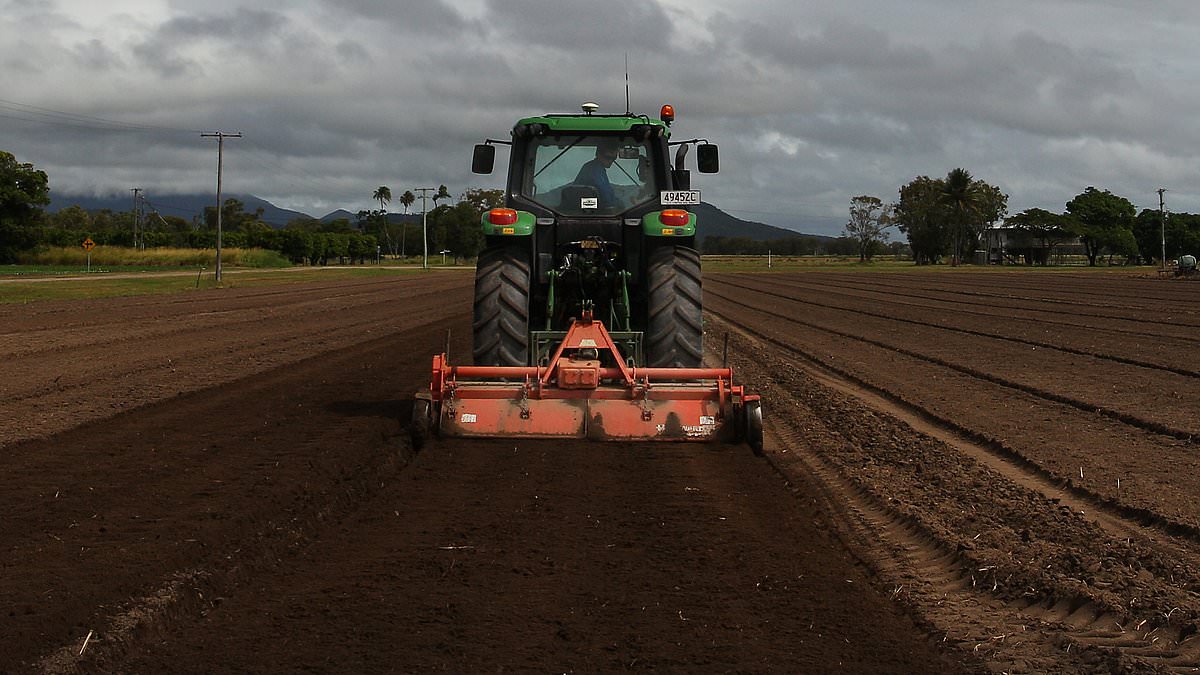
Australia will continue to be supplied with fertiliser and urea by Indonesia as a critical shortage due to the Middle East crisis threatened crops
China is one of the largest exporters of urea and UAN, sending out more than $13billion worth of the minerals last year.
The nutrients are used by Australian farmers to boost plant growth and crop yields, and the absence of such fertilisers could significantly affect food supplies.
‘We know the needs of Australian farmers. Indonesia needs to function as a stabiliser to friendly countries, and not let speculators take control,’ Mr Pribadi added.
‘We would like to make clear, not just to Australia but to the world that we will be a reliable supplier and not let fertiliser be used as a political tool.’
In response to China’s export halt, Perth-based conglomerate Wesfarmers sent representatives from CSBP, one of its chemical manufacturing companies, to China.
‘We haven’t let them (Chinese suppliers) off the hook,’ CSBP general manager Ryan Lamp told The Australian.
‘We expect them to explain to us what mitigating factors they’re taking to meet their obligations, and to provide clarity on the mitigating actions.
Mr Lamp added that they are working with industry bodies and the federal government to restore access to China and improve the supply chain.

In response to China’s halting of fertiliser shipments, Perth-based conglomerate Wesfarmers sent representatives from CSBP, one of its chemical manufacturing companies, to China
The conglomerate and others in the farming sector have also reportedly considered importing ammonium nitrate from Russia – but this would require the federal government to relax trade restrictions.
It comes after the ongoing conflict in the Middle East saw Iran effectively close the Strait of Hormuz, a narrow gateway for global shipments including oil and fertiliser.
More than 60 per cent of the urea blends imported into Australia travel through the passageway, according to Fertilizer Australia.
‘We are aware there are shipments stranded and cancellations of future shipments in the Persian Gulf,’ CEO Stephen Annells said on March 25.
‘Fertilizer Australia member companies are actively seeking to access increased quantities of urea from other manufacturing and supply regions, as well as sourcing alternative nitrogen products for farmers. We cannot guarantee these efforts will fully meet the needs of farmers in the medium term.’
A spokesperson for the Department of Foreign Affairs and Trade said the government is ‘engaging directly with trading partners’ on fertiliser access.