
Share this @internewscast.com
An academic has cautioned that Australia is on the brink of transforming into an Orwellian society, where every action is scrutinized with the integration of artificial intelligence into surveillance systems.
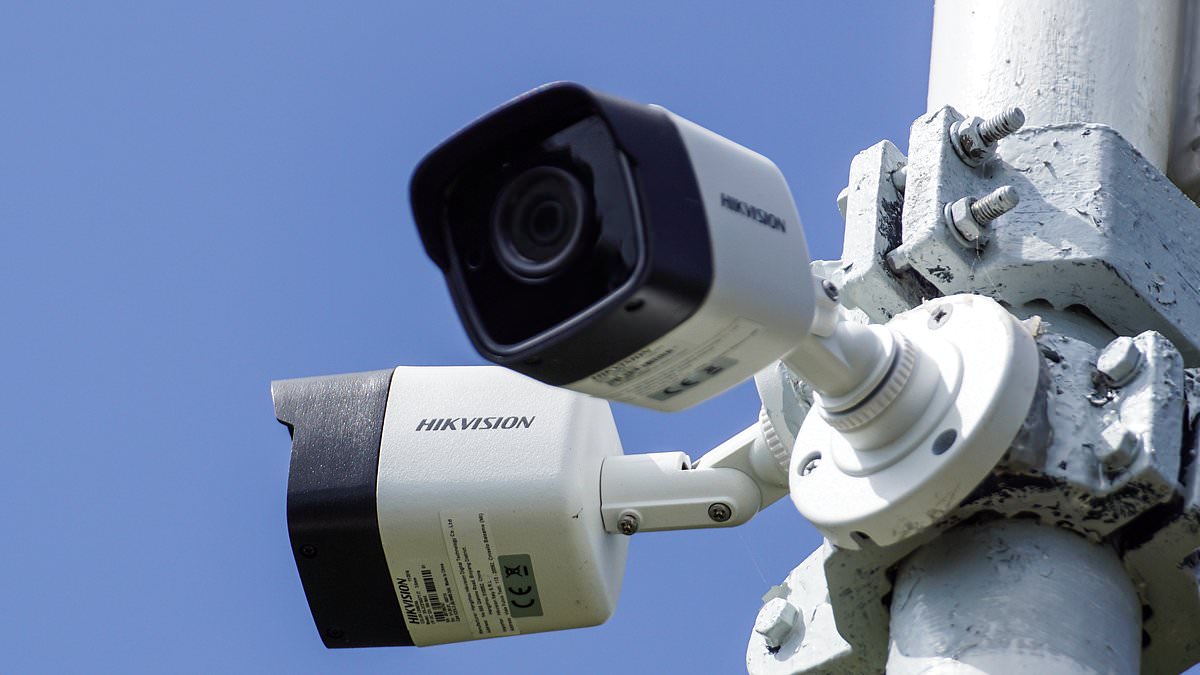
Dr. Raffaele Ciriello, a senior lecturer at the University of Sydney, expressed to the Daily Mail that surveillance cameras are already omnipresent, and the addition of AI will enhance this monitoring capability.
“Surveillance is already quite prevalent, but within the next three to five years—or at most a decade—I predict it will become the standard,” Dr. Ciriello stated.
He noted that Australia’s surveillance infrastructure closely mirrors that of China, though he pointed out the absence of a cohesive national strategy in both nations.
“Our system isn’t fundamentally different from China’s,” he remarked.
“They enforce various legal frameworks using surveillance that impose penalties on lawbreakers, similar to what we see in Western countries. However, this is more at a regional or state level rather than being a unified national approach.”
A Queensland Audit Office report, published in September, revealed the state government has limited oversight over the ethical use of AI.
Looking at the implementation of AI image-recognition technology that detects phone and seatbelt offences in cars, it found officials ‘have limited visibility on AI use and emerging ethical risks’.

More officials in Australia are exploring the use of AI surveillance in day-to-day life
The report also suggested the scheme could be breaching Queenslanders’ privacy.
The City of Melbourne Council has also debated plans this year to introduce a privately operated camera and 3D mapping sensor system to monitor crowds on New Year’s Eve – and is considering making the technology permanent.
Both policies have raised broader questions about what risks come with surveillance, including technology run by AI, and how it could spread across Australia.
Dr Ciriello offered a bleak prediction of Australia’s future if the trends continue to escalate.
‘What it looks like is some form of Orwellian dystopia where we have that large-scale technology in every public sphere,’ he said.
‘People just get used to it, but because of the way these AI systems are inherently biased, it’s probably going to disproportionately target minorities and underserved populations.
‘It’s going to lead to increased scrutiny towards racial and ethnic minorities. They are going to be particularly hard hit.’
A separate issue Dr Ciriello raised was the way some people react to the knowledge they are under surveillance, citing observations made by a colleague who specialises in performative crime.

Surveillance will be the norm for Australians in the next three to five years, Dr Raffaele Ciriello, a senior lecturer at the University of Sydney, has warned
‘Apparently, there’s a huge trend in NSW where teenagers deliberately exploit surveillance cameras to get filmed and then they put it on TikTok as an attention contest,’ he said.
‘Some people exploit that attention and deliberately commit crimes. Others shift the activity elsewhere, where it’s less transparent.
‘Every street you’re walking, you’re being monitored and tracked and that changes your entire behaviour.
‘There’s no real public space and no real private space anymore because everywhere, someone is watching and something is being tracked.’
The Queensland government and Melbourne City Council are not the first to implement AI surveillance, with Dr Ciriello adding that major retailers like Kmart and Bunnings have brought in technology to detect theft.
‘We’ve used it in the Australian Open with facial recognition technology and now we’re using image recognition in traffic on streets,’ he said.
But, when asked whether there is a risk of over-surveillance, he confirmed it is a serious issue from his perspective.
‘With a European background, I’m routinely shocked at the things that are happening here (Australia), because that would lead to a huge outcry in Europe,’ he said.

Dr Ciriello said the level of surveillance in Australia is similar to that in China (pictured visitors being filmed by AI cameras with facial recognition technology in Beijing in 2018)
Dr Ciriello said he spent the first 20 years of his life in Germany where ‘people have extremely strong privacy concerns for historical reasons’.
‘They have first-hand experience, first during the Nazi regime and then in Eastern Germany as part of the Soviet Union, there’s the history which makes Germans today extremely concerned about privacy.
‘I grew up in that environment, and surveillance infrastructure is definitely far more advanced here (in Australia).’
He added that policies like the Albanese government’s much-lauded social media ban for under-16s also normalise AI surveillance.
The ban was launched on December 10, with platforms and parents on the hook to keep kids off.
But Dr Ciriello explained that platforms will be reliant on AI algorithms to ascertain whether a user is underage by looking at their search history.
‘I think most people are already resigned to the fact we just live in a completely over-surveilled society,’ he said.
‘The surveillance is not only coming from the state but also from commercial providers at various levels (like social media platforms).

Dr Ciriello (pictured) warned increased surveillance could target minorities in Australia
‘The data is often repackaged and sold on. The technological infrastructure is there, but what is lacking in Australia are the democratic oversight mechanisms.’
Asked whether the rise in use of AI surveillance could encroach on Australians’ freedoms, Dr Ciriello asked: ‘What freedom?’
‘We’re not only at risk of losing that, we’ve already lost it in a way,’ he said.
‘There’s no such thing as privacy anymore. Everything is being monitored. Everything is online.
‘We’ve given up a lot already and the general tendency is towards further erosion of privacy.’