
Share this @internewscast.com
A former Australian Security Intelligence Organisation (ASIO) operative has revealed that he alerted authorities about Sajid Akram’s extremist leanings six years prior to the infamous Bondi Beach terrorist attack.
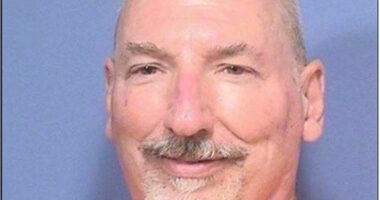
Sajid Akram, 50, was responsible for a brutal attack on December 14 that claimed 15 lives. His son, Naveed, who is alleged to have been an accomplice, is currently in custody facing 59 charges related to the incident.
Sajid was fatally shot by police during the attack, which shocked the nation.
Although ASIO initially stated that neither Sajid nor Naveed was on their radar, the former undercover operative, known only by the alias ‘Marcus’, has come forward to assert that he had previously provided ASIO with intelligence indicating the Akrams’ radicalization as far back as 2019.
Marcus disclosed to the ABC that he had informed ASIO of Naveed’s connections to an Islamic State (IS) cell in Australia, noting that IS sympathizers were attempting to indoctrinate him using propaganda videos.
Furthermore, Marcus claims that this group had been plotting terrorist activities in Sydney, which included plans to smuggle firearms from Lebanon.
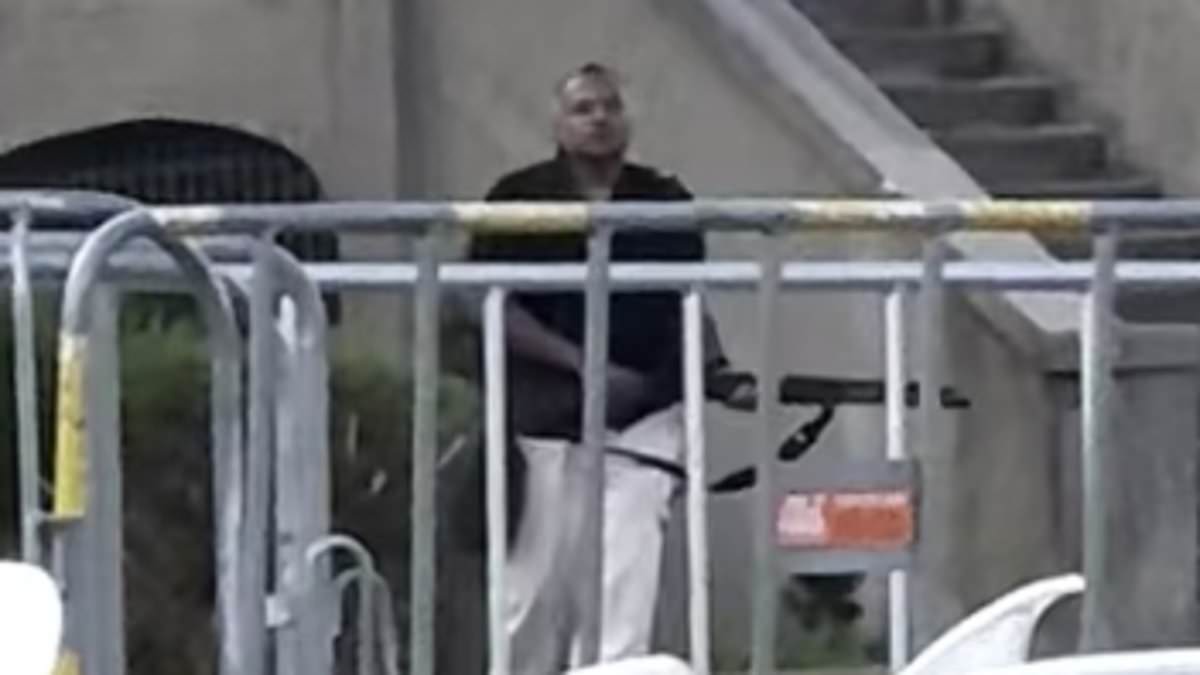
The agent, who was posing as a radical cleric inside a street-preaching group known as Bankstown Street Dawah, was invited to a retreat with Naveed and Sajid in May 2019.
Isaac El Matari, the self-declared leader of Islamic State in Australia, also attended the retreat.

A former ASIO agent has claimed Sajid Akram voiced support for Islamic State in 2019

Isaac El Matari, who is the leader of Islamic State’s cell in Australia, attended the same religious retreat with Sajid and Naveed Akram in May 2019

ASIO said court proceedings and the Royal Commission into Antisemitism ‘constrained’ them from responding to the ABC’s questions (pictured ASIO Director-General Mike Burgess)
El Matari was arrested just months later after attempting to travel to Afghanistan to join IS and was sentenced to seven years in jail for terror offences.
When ASIO began investigating the associates of El Matari later that year, including Naveed, Marcus claimed Sajid was furious.
‘He [Sajid] justified his [Isaac El Matari’s] plans as it’s required from us as Muslims — to support the Islamic State, to fight on behalf of them,’ Marcus told Four Corners on Monday night.
‘And if we couldn’t do that, we have to do hijrah — emigrate to join them.
‘After this conversation, I thought Sajid was more extremist than his son.’
Marcus told the program he reported to ASIO that he believed the pair were IS supporters.
Four Corners said it hadn’t independently verified the substance of Marcus’s specific conversations with ASIO or the Akrams.
Marcus, whose cover was later blown, said his relationship with ASIO began to fall apart in 2022.

Reporter Sean Rubinsztein-Dunlop on Four Corners’ ‘Bondi: Path to Terror’ episode on Monday
He left Australia in 2023 and is now in hiding overseas after receiving death threats.
Just hours before the ‘Bondi: Path to Terror’ episode aired, ASIO accused the ABC of relying on uncorroborated claims from a ‘single, unreliable and disgruntled source’ and warned the broadcaster it may take further action.
‘Four Corners’ claims contain significant errors of fact,’ ASIO said in a rare, preemptive statement on Sunday.
‘The ABC’s source mis-identified Naveed Akram. That is, the source claimed Naveed Akram said and did things that were actually said and done by an entirely different person. This source also has a track record of making statements that are untrue.’
The statement went on: ‘Tragically, ASIO did not know what the perpetrators of the Bondi attack were planning – or indeed that they were planning anything.
‘This is a matter of grave regret. It weighs on us heavily. But that does not mean additional resourcing would have prevented the attack or there was intelligence that was not acted on or that our officers made mistakes.’
However Marcus denied those claims.
‘The allegation I am unreliable does not withstand scrutiny,’ he told the ABC.
‘If I were… ASIO would not have tasked me with infiltrating dangerous local and international terror networks and gathering important intelligence on their members.’