
Trump’s Golden Age: An Era of Industrial Abundance
This week, America’s new economic doctrine came into focus thanks to a pair of speeches from Vice President JD Vance and Treasury Secretary Scott Bessent.
From a steel mill in South Carolina to a finance summit in Beverly Hills, Vance and Bessent delivered matching messages to two different audiences: the working men and women who build America, and the capital class that once wrote it off. What they said, in different language and to different rooms, was the same: the era of managed decline is over. We are entering the age of industrial abundance.
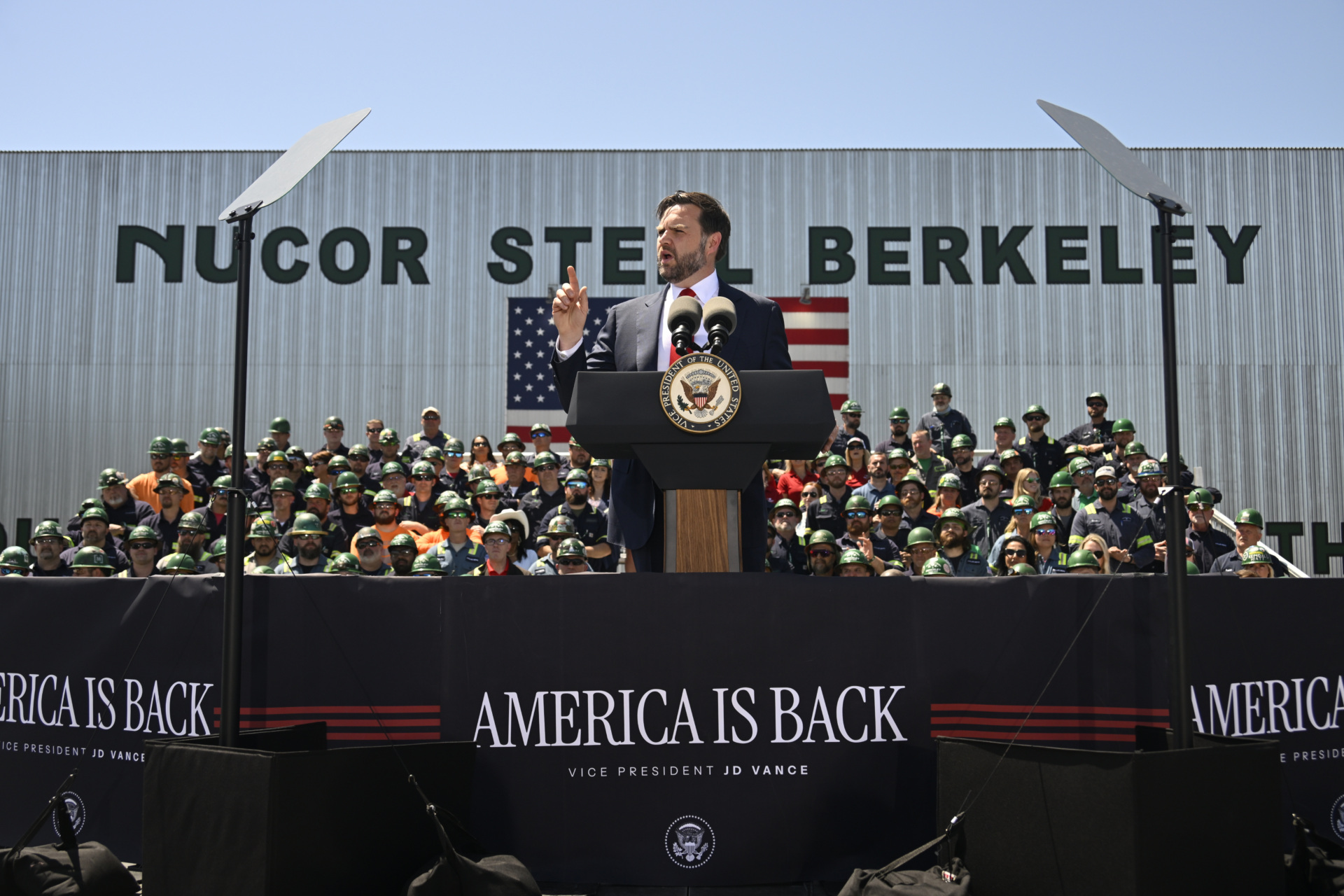
Vice President JD Vance speaks to steelworkers at Nucor Steel Berkeley in Huger, SC, about America’s manufacturing renaissance on May 1, 2025. (Peter Zay/Anadolu via Getty Images)
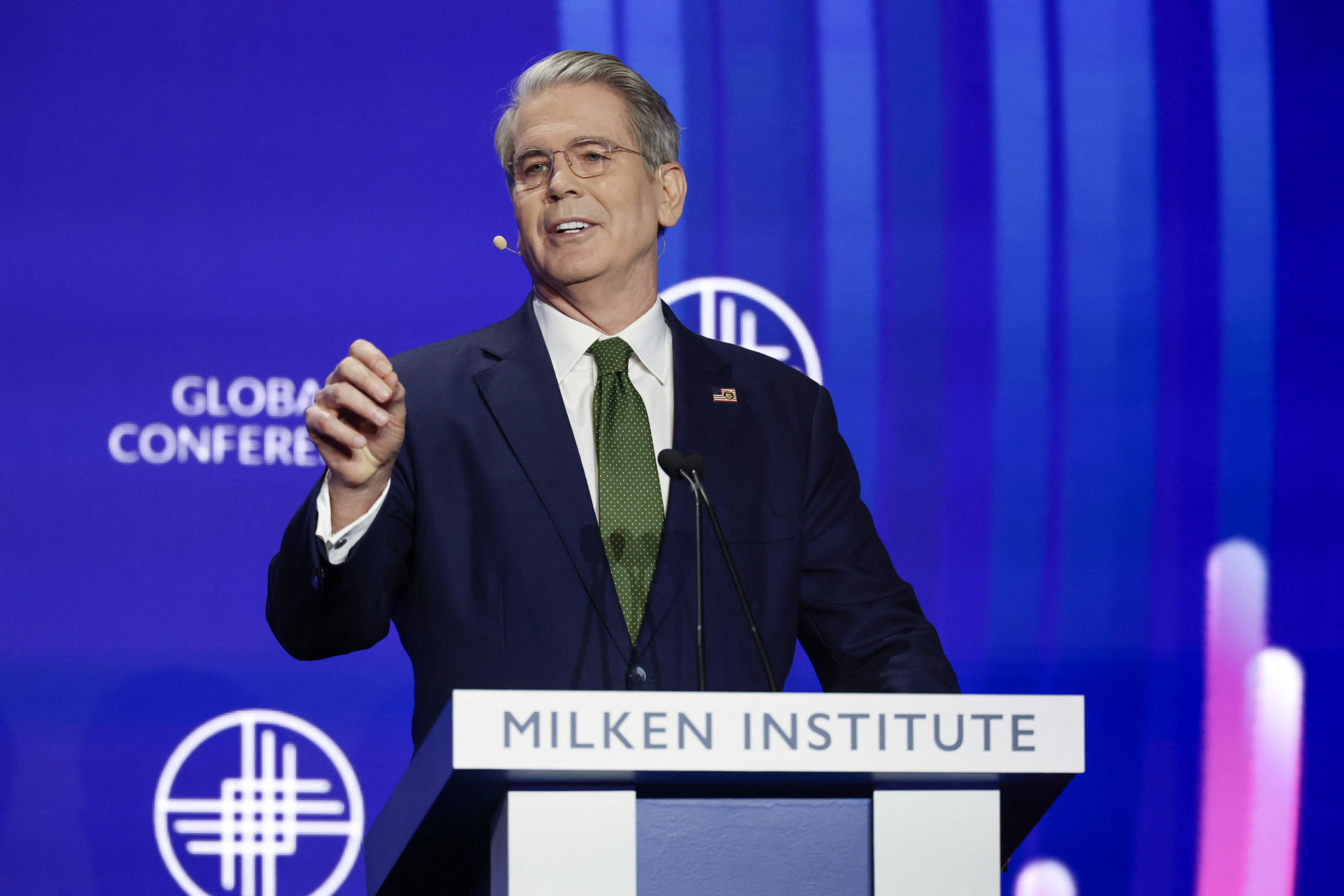
Secretary of the Treasury Scott Bessent speaks at the 28th annual Milken Institute Global Conference at the Beverly Hilton in Beverly Hills, California, on May 5, 2025. (PATRICK T. FALLON/AFP via Getty Images)
This is not branding. It’s not messaging. It’s policy—with sharp edges and real consequences for business, capital, and the global economy. Washington is no longer neutral about where things are made. It is picking a side. And for the first time in a generation, that side is American industry.
JD Vance: Man of Steel
Vance didn’t defend tariffs as a temporary disruption—he celebrated them as a deliberate, long-term tool to reshape global supply chains.
“We’re going to make it harder to manufacture in China,” Vance said at Nucor Steel. “Isn’t that bad? No. That’s exactly what we want to do.”
There was no ambiguity. No hedge. Tariffs, in Vance’s hands, are not tactical—they’re strategic. Their purpose is to redraw the map of global production around the U.S. industrial core. Not as a phase, not as a negotiating ploy, but as the new baseline.
But Vance didn’t stop at defense. He offered a rationale. He told the story of trying to fill a prescription for his child’s ear infection and finding the pharmacy shelves empty. No amoxicillin. The United States, inventor of the antibiotic era, couldn’t supply its own children with basic medicine. The COVID pandemic had revealed the same truth: masks, gowns, and ventilators all came from China. The consequence of offshoring wasn’t just economic decline—it was vulnerability.
If the United States is going to compete, it has to produce. That means restoring capacity industry by industry—steel, semiconductors, antibiotics, critical minerals. That’s what the tariffs are for. That’s what the tax credits are for. That’s what deregulation is for.
And it’s already happening.
Vance pointed to a 22 percent surge in business investment in the first quarter—an astonishing figure. Not mood-driven. Not speculative. “We are now 101 days into the industrial renaissance,” he said. “It’s real.”
Bessent Goes to Beverly Hills
Bessent, speaking at the Milken Institute’s Global Conference in Beverly Hills, gave the institutional mirror of Vance’s vision. He told the world’s financial elite that the United States is becoming the natural home for productive capital—not because it’s cheapest, but because it’s now the most secure, scalable, and policy-aligned.
He spoke of industrial abundance not as a political goal, but as architecture: a system where tariffs, tax reform, regulatory discipline, and energy policy work together to pull capital into the real economy. Not into spreadsheets. Not into buybacks. Into factories. Into capacity. Into things that last. His Treasury is working to make that structure durable and, in their words, permanent.
For decades, American executives were told that making things was obsolete. That design was enough. That software would carry us. Vance and Bessent are burying that delusion. In its place, they’re building something more grounded: a national economy defined by resilience, sovereignty, and scale.
During his Nucor tour, Vance pointed to the 14-monitor control panel and called it a spaceship. This wasn’t nostalgia; it was the future—high-tech manufacturing, driven by real skills, real people, and real assets. The message to corporate America is simple: if you want to lead the 21st century, you’d better be building in the United States.
What’s taking shape is not a tariff wall or a subsidy binge. It’s a strategic industrial base, backed by policy and financed by belief. Companies like Intel, Micron, Nucor, ExxonMobil, and Moderna are already adjusting—not to quarterly noise, but to structural change. Capital is flowing not to the cheapest labor, but to the most aligned geography. That geography is America.
This is the doctrine of industrial abundance: a fully integrated policy regime that takes America’s core strengths—cheap energy, deep capital markets, legal stability, labor force quality—and turns them into a magnet for global industry. We are no longer wondering whether the U.S. can compete in manufacturing. We are preparing to lead it.
Executives clinging to the playbook followed for the past three decades may not see it yet. But factories are rising. Permits are accelerating. Investment is climbing. Supply chains are realigning. And the White House isn’t watching passively. It’s driving the shift.
This isn’t just the end of globalization as we knew it. It’s the beginning of something better.
And this time, it’s being built in America.


