Share this @internewscast.com
Doctors used a chilling term after the accident: “internal decapitation.”
Six-year-old Alex was found motionless on a road in Ohio, his skull detached from his spine. A coroner was called to the scene, as the boy’s survival seemed improbable.
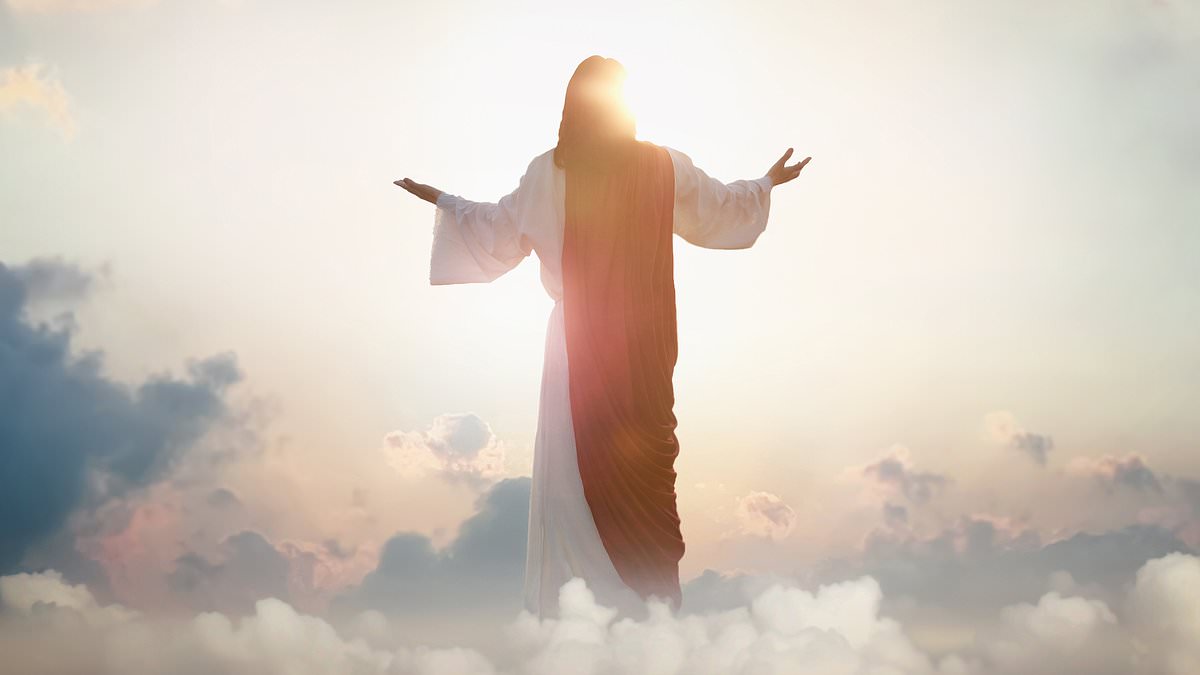
Against the odds, Alex pulled through and emerged from his coma with an extraordinary story. He claimed to have journeyed through a tunnel, encountered angels, conversed with Jesus, and even glimpsed a daunting figure he believed to be Satan.
This tale captured public imagination and was turned into a bestselling book by Alex’s father. However, years later, Alex retracted his story, admitting that he had neither died nor visited heaven.
Instances like these fuel our skepticism. If some near-death experiences (NDEs) are debunked, could others be questioned too?
Doctors and neuroscientists frequently offer rational explanations for these phenomena, suggesting that even the most convincing near-death visions can be attributed to factors such as oxygen deprivation, reactions to medication, dreams, or hallucinations.
Strange lights and sensations, they argue – sometimes empirically in top medical journals – reveal what happens when the brain begins to die.
Case closed. Except the cases keep coming, and some don’t fit the science.

After his accident, Alex claimed to have traveled through a tunnel, met angels and saw Satan. He also claimed to have spoken with Jesus – but he later recanted his tale
A phenomenon hiding in plain sight
People across the world report NDEs. They usually tell of specific events, not vague impressions. Many can recall them decades later with extraordinary clarity.
In the United States alone, one in 25 people say they’ve had an NDE. That’s millions. International surveys extrapolate to hundreds of millions.
It also means that nearly everyone knows someone who has had an NDE.
If these accounts reflect real experience, they point to a possibility long explored by philosophy and faith: We are more than our bodies.
In other words, afterlife. The body dies but we live on. Somewhere.
I wanted to know. Who doesn’t? So, as a lifelong social scientist, I took a deep dive into the NDE evidence. Years of analysis, guided by rigor and doubt.
Along the way my skepticism turned to surprise, as I describe in my new book, Evidence for Heaven. Here’s some of what I found.
A journey reported throughout history
Near-death experiences did not begin in modern hospitals. Ancient writings from Egypt, India, Greece, Rome, China and the Americas tell of journeys out of the body, passage from darkness into light, encounters with radiant beings and return to life.
Of course, different cultures interpreted the event through their own lenses. Yet the core narrative is strikingly consistent – and from people groups who had no communication with one another across continents.
This is cornerstone evidence in the case for an afterlife. If an out-of-body experience occurs at the edge of death, history surely would preserve traces of it everywhere.
In fact, it does.
A pattern too consistent to ignore
Today’s experiencers share storylines a bit more ornate, but with eerie similarity to one another.
They leave their bodies and watch from above. Pain vanishes. A tunneled transit toward a brilliant light of unconditional love. Celestial landscapes and pure bliss. Greetings from deceased loved ones. Sometimes a full life review. Eventually, a boundary they cannot cross.
Their return often brings disappointment, but it also extinguishes fear of death.
No two stories match perfectly, yet the shared elements are uncanny. When you do the math, the probability of this much consistency by chance is astronomically small.
The pattern is not proof, but it gave me probable cause to dig deeper. Then I discovered something harder to explain: cases that could be corroborated.

In the United States alone, 1 in 25 people say they’ve had an near death experience

As a lifelong social scientist, Michael Zigarelli took a deep dive into the NDE evidence
Details they should not have known
Many NDE accounts go beyond personal experience into verifiable observation. That resonates with me as a researcher.
One woman said she had floated near the ceiling during her surgery and memorized a long serial number atop a respirator. Another patient recalled a ‘1985 quarter’ face-up on a cardiac monitor. A third insisted she saw a red shoe on the hospital roof as she drifted skyward.
Staff checked.
They found the serial number exactly as recited. All 12 digits. The coin was there, the date spot on. The random red shoe lay on the roof.
These people had no normal sensory access at the time. But somehow, they knew.
An ER patient reported that during surgery he traveled upward one floor to an empty hospital wing. He claimed there were mannequins in the beds up there, attached to IVs. The stunned staff shot glances at one another. How had he seen the restricted training center on the next level?
In France, a woman woke up accurately describing her procedure and the simultaneous amputation in the adjacent room. Another French patient, lifeless enough for the doctor to begin preparing the death certificate, recounted word-for-word both sides of a private phone conversation down the hall.
And then there are the classics: the ‘Pam Reynolds’ case, the ‘Maria’s shoe’ case, the ‘dentures’ case. Look them up and judge for yourself. Many think they’re smoking gun evidence.
Researchers have published more than one hundred of these corroborated accounts. People come back with information they simply should not have.
It’s a serious challenge to any brain-based explanation of NDEs.
Testimony from toddlers
Then there are the children’s cases.
A surviving two-year-old told his mother: ‘When you die, it’s a tunnel.’
A three-year-old former patient asked whether his dying grandmother would have to pass through the tunnel to see God.
A four-year-old asked to return to the park through the tunnel – ‘the one I went to when I was in the hospital.’
Children that young rarely possess elaborate ideas about the afterlife. Yet their descriptions, well beyond tunnels, closely resemble adult reports.
Certain accounts include more specific details and with corroboration. One example: A five-year-old hospital patient in Holland returned to consciousness saying she just met a girl named ‘Rietje,’ an older sibling her parents had never mentioned.
Her wide-eyed mom and dad left the room to compose themselves.
Records later confirmed a child with that name had died shortly after birth.

People often talk about a tunneled transit toward a brilliant light of unconditional love
Seeing without sight
Here’s another line of evidence: NDE reports from people blind from birth.
Some claim to have seen for the first time, accurately describing people, surroundings and medical procedures from when they were clinically dead.
Most of these accounts also include the typical, otherworldly NDE elements, aligning closely with narratives from sighted individuals.
The cases are relatively rare – there are only a few dozen of them – but they’re truly baffling.
If sight can occur without functioning eyes, perhaps consciousness can occur without the body.
A case increasingly difficult to dismiss
More evidence emerged.
After serious study of NDEs, some medical experts have traded their agnosticism for acceptance of an afterlife.
Hospice workers worldwide report supernatural phenomena at the deathbed. Countless lives get reordered after an NDE: atheists have become pastors, a mobster became a social worker, people change radically – and permanently.
Dreams and hallucinations rarely transform us like that.
In total, my research uncovered seven lines of evidence for life after death. Individually, none of them may settle the question. Together, they present a case that’s increasingly difficult to dismiss.
A rational reason for hope
After 50 years of peer-reviewed research and thousands of documented testimonies, near-death experiences are no longer fringe anecdotes. They’re a global reality, possibly a glimpse of the next world as we begin to leave this one.
Something happens at that boundary unlike anything we’ve seen before. Something people describe as ‘more real than real life.’ Something science has yet to explain.
The findings are not beyond a reasonable doubt, but they’re quietly moving in that direction. There’s a mounting case that death does not erase us.
It releases us.
It may also reunite us, at least those who enter the blissful version of the afterlife. If you’ve ever wept at a hospital bed, knelt at a graveside, or faced an empty chair at the dinner table, consider this: The eyewitness accounts offer hope as old as humanity itself – that separation may someday become reunion.
Michael Zigarelli is a professor at Messiah University in Pennsylvania. His latest book is Evidence for Heaven: Near-Death Experiences and the Mounting Case for the Afterlife (published April 7, Baker Books, 2026).