
Share this @internewscast.com
The Bulletin of the Atomic Scientists has issued a stark warning that the world is on the brink of destruction, marking the “Doomsday Clock” at a mere 85 seconds to midnight.
This unsettling adjustment highlights the looming threats of nuclear conflict, climate change, the misuse of biotechnology, and the potential dangers posed by artificial intelligence, which collectively push the clock closer to midnight.
“Just a year ago, we cautioned that the globe was teetering on the edge of a disaster, and any procrastination in changing course heightened the risk of calamity. Instead of heeding this caution, major powers like Russia, China, and the United States have become more aggressive, adversarial, and nationalistic,” the organization’s 2026 Doomsday Clock statement declared.
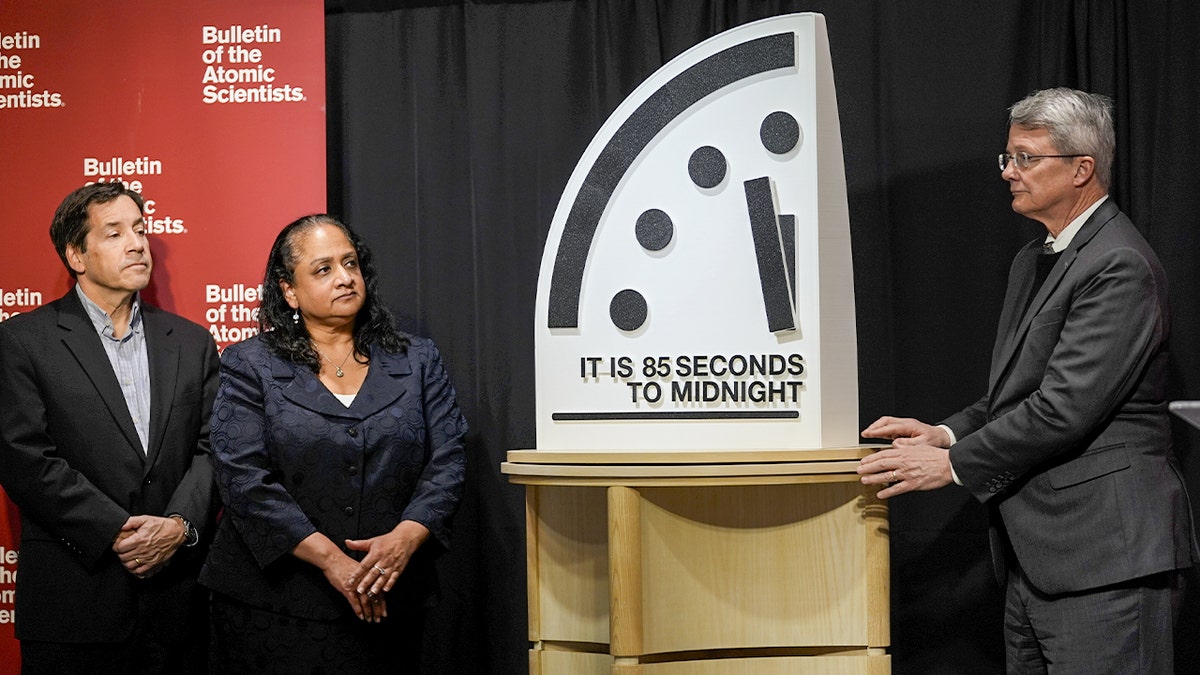
During a press conference at the Carnegie Endowment for International Peace in Washington on January 23, 2026, Bulletin members Jon B. Wolfsthal, Asha M. George, and Steve Fetter unveiled the clock’s new setting of 85 seconds to midnight. (Photo by Pablo Martinez Monsivais/AP)
The Bulletin criticized the erosion of critical global agreements and warned that the escalating “winner-takes-all” mentality among major powers is dangerous. They condemned world leaders for their complacency and indifference, noting that some have adopted rhetoric that only accelerates the journey to midnight.
Established in 1947, the Doomsday Clock symbolizes the proximity of humanity to a global catastrophe, with midnight representing the apocalypse. In 2025, the clock was set at 89 seconds to midnight. The furthest it has been from midnight was in 1991, following the Cold War’s conclusion, when it was set at 17 minutes to midnight.
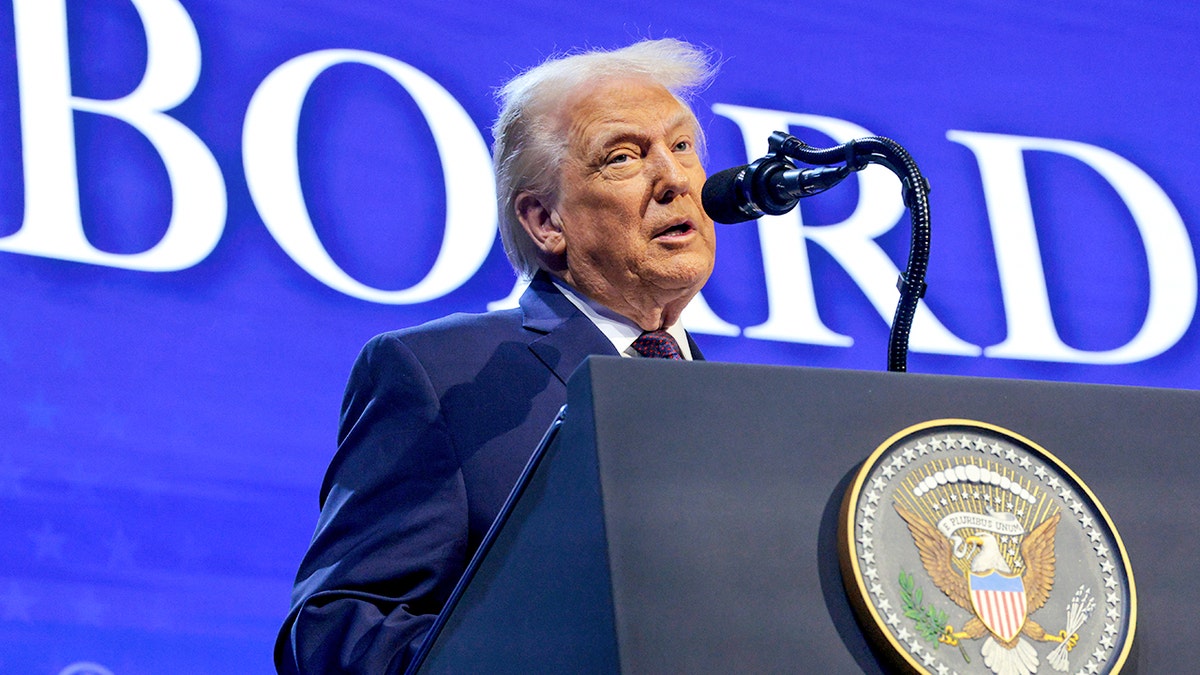
President Donald Trump speaks as he presents the “Board of Peace” onstage at the World Economic Forum (WEF) on Jan. 22, 2026, in Davos, Switzerland. (Chip Somodevilla/Getty Images)
“The Doomsday Clock’s message cannot be clearer. Catastrophic risks are on the rise, cooperation is on the decline, and we are running out of time. Change is both necessary and possible, but the global community must demand swift action from their leaders,” Alexandra Bell, president and CEO, Bulletin of the Atomic Scientists, said in a press release announcing the 2026 measurement.
Despite the group’s gloomy prediction, it admitted that 2025 kicked off with “a glimmer of hope” for the risk of nuclear war as then-incoming President Donald Trump “made efforts to halt the Russia-Ukraine war and even suggested that major powers pursue ‘denuclearization.’” However, it said that as the year went on “negative trends” grew.
“The dangerous trends in nuclear risk, climate change, disruptive technologies like AI, and biosecurity are accompanied by another frightening development: the rise of nationalistic autocracies in countries around the world,” Daniel Holz, chair of the group’s science and security board, said. “Our greatest challenges require international trust and cooperation, and a world splintering into ‘us versus them’ will leave all of humanity more vulnerable.”
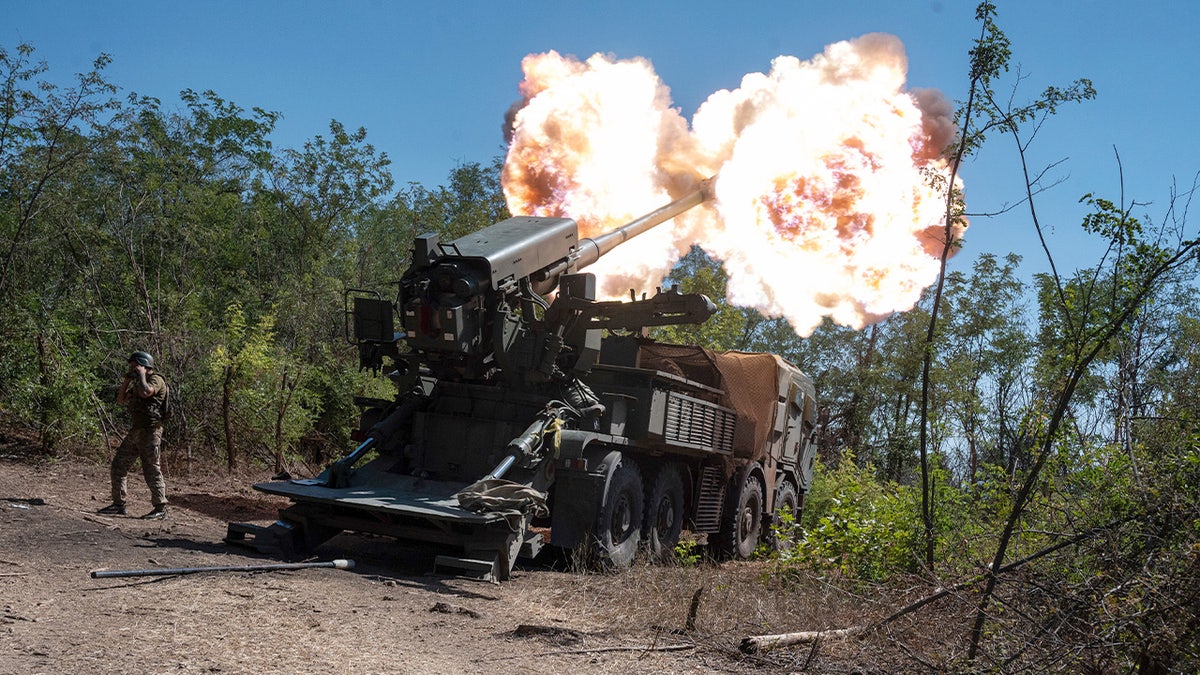
Ukrainian servicemen of the 44th artillery brigade fire a 2s22 Bohdana self-propelled howitzer towards Russian positions at the frontline in the Zaporizhzhia region, Ukraine, Wednesday, Aug. 20, 2025. (Danylo Antoniuk/AP Photo)
The Bulletin of the Atomic Scientists not only outlined the risks to humanity, but also concrete steps to move the clock’s hands away from midnight, including renewed U.S.-Russia nuclear talks, efforts to prevent AI-driven biological threats, a shift toward expanded U.S. renewable energy development and multilateral discussions among the U.S., Russia and China on limits for military use of artificial intelligence.
“Our current trajectory is unsustainable. National leaders — particularly those in the United States, Russia, and China — must take the lead in finding a path away from the brink. Citizens must insist they do so,” the group said.