
Share this @internewscast.com
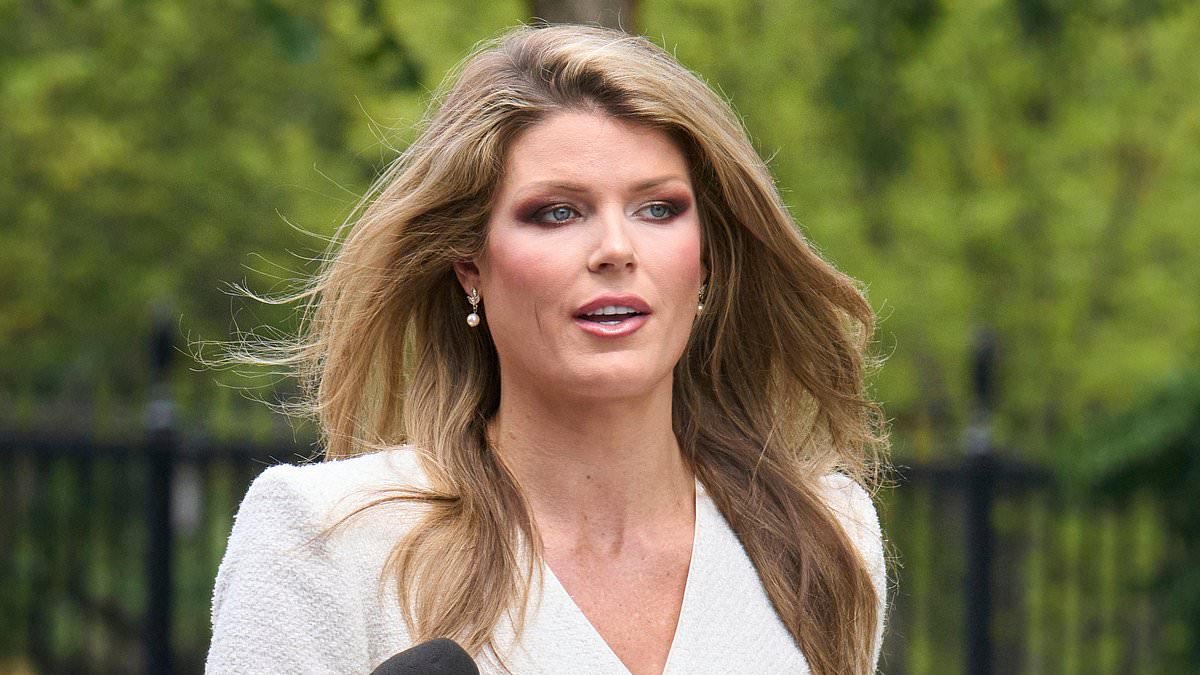
A seasoned attorney was appointed on Friday by federal judges as the leading federal prosecutor for the Eastern District of Virginia. This position had been recently occupied by Lindsey Halligan, a favorite among MAGA supporters and a former beauty queen.
However, James Hundley’s tenure as US Attorney was cut short when he was unexpectedly dismissed by the Department of Justice just hours after his appointment.
The announcement of Hundley’s firing came from Deputy Attorney General Todd Blanche, who shared his thoughts in a pointed social media post.
Blanche reposted a CBS journalist’s update about Hundley’s new role and commented, “Here we go again. Eastern District of Virginia judges do not select our US Attorney. The President does. James Hundley, you’re fired!”
According to federal law, US district judges have the authority to appoint prosecutors in such situations.
Previously, Halligan was appointed to a temporary 120-day term by Attorney General Pam Bondi, following public encouragement from President Donald Trump. Trump believed that Halligan, his former personal lawyer, would take legal action against his political adversaries.
In a November 24 ruling, Judge Cameron McGowan Currie questioned Halligan’s ability to serve as prosecutor, and her cases against former FBI Director James Comey and New York Attorney General Letitia James.
Currie said the attorney general is only allowed one 120-day appointment in any particular US attorney’s office, which was already used on Halligan’s predecessor, Erik Siebert. Siebert was fired by Trump for choosing not to prosecute Comey and James.

James Hundley, who was appointed Friday by federal judges on Friday as the top federal prosecutor for the Eastern District of Virginia, was fired hours after he took the oath of office

Hundley, who has 35 years of litigation experience, was set to replace Lindsey Halligan, President Donald Trump’s former personal lawyer who was illegally appointed as the US Attorney according to a judge
Therefore, Halligan’s appointment was illegal from the start, Currie said, which meant her indictments against Comey and James were invalid.
Currie said from that point forward, the new US Attorney would either have to be chosen by his fellow judges, or the Trump administration would have to advance a permanent, Senate-confirmed candidate.
After Halligan’s departure in January 2026, which followed a judge’s accusation that she had been ‘masquerading’ in the role for months, the Trump administration did not name a successor.
That’s why the district court stepped in and chose Hundley, a litigator with more than 35 years of experience, as the next interim US Attorney.
An order penned by the district’s chief judge, Hannah Lauck, said Hundley graduated from Georgetown University Law Center in 1989, after which he went on to serve as a prosecutor in Fairfax County for six years.
He then co-founded a law firm, which has ‘a prominent criminal and civil litigation practice’. The order also stated that Hundley has successfully argued cases in front of the Supreme Court.
Hundley’s near-immediate firing is the second time the Department of Justice has sacked a prosecutor appointed by judges.
Last week, Donald Kinsella was dismissed by the White House as as interim US Attorney for the Northern District of New York.
Kinsella was chosen by the judges of that bench to replace John Sarcone III, a Trump ally who like Halligan, was deemed to be serving in the position unlawfully.

Deputy Attorney General Todd Blanche announced Hundley’s firing with a social media post

Hundley’s firing came a week after Donald Kinsella was similarly sacked from the top job at the Northern District of New York. He was there to replace temporary appointee John Sarcone III, another Trump ally

The ongoing tug of war between the federal judiciary and the executive branch continued on Friday with the Supreme Court striking down Trump’s sweeping global tariffs
Though Kinsella and Hundley’s appointments were legally sound, it is unclear whether the men will challenge their firings.
Hundley has not commented publicly on his firing. The Daily Mail has reached out to him via email for comment.
Kinsella hinted to Law.com in an interview on Thursday that he likely won’t go against the White House’s decision to cut him loose.
‘It’s not important what my position is. It’s not about me. There’s a statute that authorizes the judges to fill the position, and the president hasn’t nominated anyone,’ Kinsella said.
‘The judges decided that they wanted to fill the position. That’s their prerogative. And the White House apparently believes that the president can fire the US attorney, so that’s what they did.’
‘I don’t want to get involved in all the controversy,’ he added.
Even beyond Hundley’s sensational hiring and firing, Friday was a day defined by the ongoing battle between the federal judiciary and the executive branch.
Trump’s sweeping global tariffs were struck down in a 6-3 decision by the Supreme Court, which has had a conservative majority thanks to Trump himself.
That fact certainly wasn’t lost on him when he raged against Neil Gorsuch and Amy Coney Barrett, two conservative justices who voted to invalidate the tariffs.

In a 6-3 decision, the Supreme Court ruled that Trump illegally levied many of the tariffs. Chief Justice John Roberts (pictured with Trump on March 4, 2025) wrote the majority opinion
‘What happened today with the two United States Supreme Court Justices that I appointed against great opposition, Neil Gorsuch and Amy Coney Barrett, whether people like it or not, never seems to happen with Democrats,’ Trump wrote Friday evening on Truth Social.
‘They vote against the Republicans, and never against themselves, almost every single time, no matter how good a case we have.’
The majority decision was penned by Chief Justice John Roberts, who said Trump did not have the authority under the International Emergency Economic Powers Act (IEEPA) to impose tariffs.
The Trump administration has long pointed to a section in IEEPA that grants the president the power to regulate imports in times of national emergencies.
Trump cited two national emergencies: the influx of illegal immigrants and drugs into the US and large trade deficits with other nations.
The Supreme Court did not weigh in on whether these were legitimate crises, it only ruled that IEEPA itself did not grant the president the authority to impose tariffs.
‘The President asserts the extraordinary power to unilaterally impose tariffs of unlimited amount, duration, and scope,’ Roberts wrote. ‘IEEPA’s grant of authority to “regulate . . . importation” falls short. IEEPA contains no reference to tariffs or duties.’
Trump signed an executive order hours after the Supreme Court decision that instituted a new 10 percent global tariff under a new law.
This new import tax can only remain in effect for 150 days without congressional approval.