

TUNIS – In a significant and troubling development, Tunisian authorities have enforced a one-month suspension on the Tunisian League for Human Rights. This organization, recognized as one of the oldest human rights groups in Africa and the Arab world, was part of the National Dialogue Quartet, which received the Nobel Peace Prize in 2015. This recent action signals an alarming escalation in what many perceive as a growing crackdown on civil society within the country.
Late Friday, the league confirmed the suspension through an official statement, expressing grave concern over what it described as “a serious and arbitrary violation of freedom of association.” The league views this decision as “a direct assault” on Tunisia’s hard-won democratic achievements.
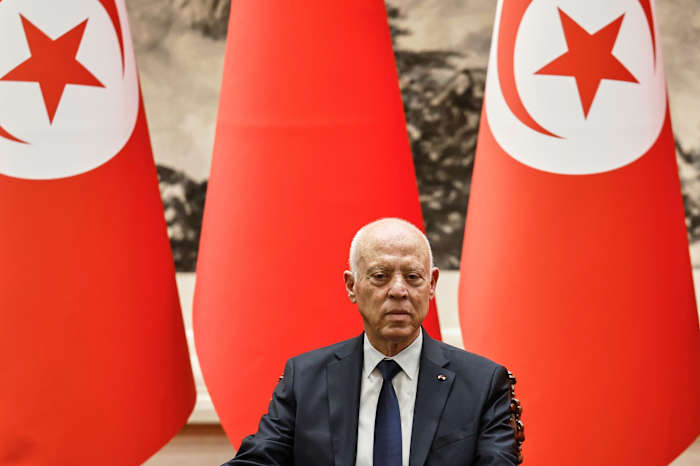
President Kais Saied has frequently raised alarms about the foreign funding that many rights groups depend on, framing it as a threat to national sovereignty. This rhetoric has been employed to bolster a populist narrative, casting political adversaries and social justice activists as foreign agents inciting domestic turmoil.
“This measure cannot be seen in isolation from a broader context in the country marked by increasing systematic pressure on civil society and independent voices,” the organization asserted. Despite the suspension, the group vowed to contest the decision legally and continue advocating for victims of rights abuses without bias.
This suspension is part of a troubling pattern in Tunisia, where similar punitive actions have been directed at various rights organizations. Last year, several prominent NGOs, including those focusing on migrants’ and women’s rights, were ordered by the courts to cease activities for a month.
Adding to the climate of suppression, journalist Zied El-Heni recently faced a 48-hour detention due to a Facebook post, highlighting a broader trend of legal actions and arrests aimed at silencing critics.
Mohamed Yassine Jlassi, a former president of the Tunisian journalists union SNJT, told The Associated Press on the sidelines of a protest in Tunis on Friday that hundreds of people are being detained over speech-related charges, including social media posts.
“Repression has come to affect everyone. Journalism has become a crime, civil society work has become a crime, political opposition has been criminalized,” he said.
“People now increasingly find themselves facing arbitrary prosecutions without the bare minimum guarantees of a fair trial.”
Meanwhile, the investigative outlet Inkyfada faces a court hearing on May 11, as authorities pursue the dissolution of Al Khatt, the association that publishes it.
The group said in a statement that it disputes the legal basis of the case and says the claims cited by the government have not been examined by Tunisian courts since 2024.
These developments add to growing concerns among rights advocates over restrictions on independent media, civil society and any dissenting voices under Saied, who has consolidated power since 2021 and has increasingly targeted groups he repeatedly accuses of receiving foreign funding to stir unrest and destabilize Tunisia’s national interests.
Copyright 2026 The Associated Press. All rights reserved. This material may not be published, broadcast, rewritten or redistributed without permission.