
The U.S. Secretary of Energy has offered some optimistic news for drivers: gas prices, which have been a point of concern for many, have likely reached their highest point and are expected to continue their downward trend. However, a return to prices below $3 per gallon might still be a distant prospect.
Energy Secretary Chris Wright has suggested that it could take until the following year for the average cost of gas to dip below the $3 mark, a level last seen before the onset of the Iran conflict initiated by President Trump on February 28.
Currently, the national average for gas prices hovers just above $4 per gallon, as reported by the American Automobile Association. In certain states, especially those on the West Coast, prices have soared even higher, with California seeing averages nearing $6 per gallon.
In a recent interview with CNN, Wright emphasized that the United States has adeptly handled the global oil supply disruptions brought about by the Iran war, suggesting that the most severe effects are now behind us.
“Ending this 47-year conflict and thwarting Iran’s nuclear ambitions naturally led to some short-term upheaval. Yet, I believe we’ve handled it remarkably well,” Wright stated during the discussion.
“Amidst what is the most significant interruption in energy flow ever, gasoline prices reached their climax last week, still roughly a dollar beneath the peak experienced during the Biden administration,” he added.
Gas prices under Biden indeed peaked at just over $5 per gallon in June 2022, caused by factors such as the invasion of Ukraine and post-pandemic demand, but by the time Trump took office, prices had returned to about $3.10.
When asked about when Americans might see numbers at the pump closer to that $3 mark or below, Wright cautioned: ‘That might not happen until next year, but prices have likely peaked, and they’ll start going down.’

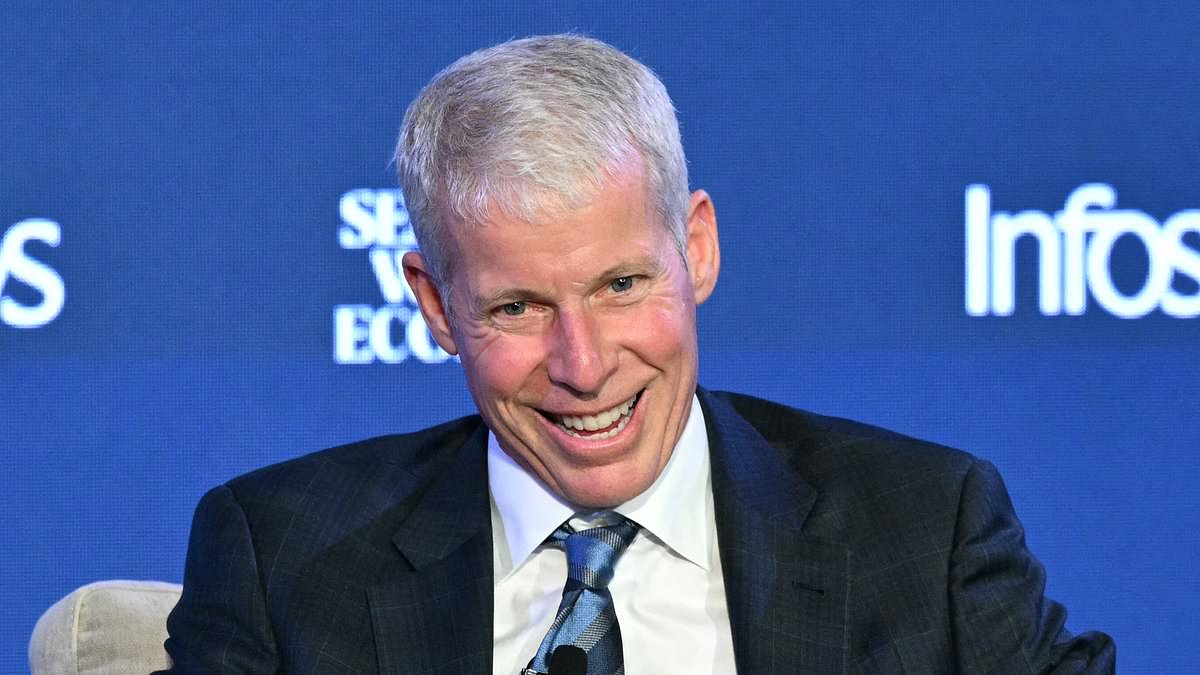
US Secretary of Energy Chris Wright has said that gas prices have peaked and will continue to decline, though it may take until next year for them to get below $3 per gallon

When President Donald Trump launched the Iran war on February 28, the average national gas price was below $3. The national average gas price is currently hovering just above $4
‘Certainly, with a resolution of this conflict, you’ll see prices go down,’ he added.
On April 7, the US and Iran agreed to a two-week ceasefire, which immediately drove crude oil futures down from about $112 to about $75.
But peace talks have faced roadblocks and the ceasefire has been wobbly, particularly due to Israel continuing to launch strikes against Hezbollah in Lebanon. Crude oil futures thus climbed back up to $90 and stayed around that level.
On April 16, Lebanon and Israel agreed to a ten-day cessation of hostilities in order to conduct negotiations, which caused oil futures to drop back down closer to $80 and created enormous optimism in the market.
The optimism was further buoyed the next day by Iran announcing that the Strait of Hormuz was reopened, even as the US continues to blockade the waterway and prevent Iranian ships from leaving.
Online, Trump proudly declared that the strait was now, ‘COMPLETELY OPEN AND READY FOR BUSINESS.’
The S&P 500 and Nasdaq reached record highs by the market’s close on Friday.
But less than a day later, Iran went back on its promise to reopen the strait and said it had reimposed ‘strict control’ over the crucial shipping lane.

On Friday, Iran announced that the Strait of Hormuz would reopen, but went back on the action one day later, citing the US blockade of the strait. Commercial vessels are pictured anchored in the strait on Saturday

Trump resumed his threats against Iran, saying the country could not blackmail the US by closing the strait again. He once again threatened to bomb civilian infrastructure if a peace deal could not be reached
By Saturday morning, Islamic Revolutionary Guard Corps (IRGC) gunboats fired on at least three commercial vessels, according to maritime security reports.
Iran’s Supreme National Security Council said that the US’s blockade, which has turned away at least 23 ships since it began on April 13, is a violation of the ceasefire agreement and that the Strait of Hormuz will remain closed until it is lifted.
Trump has said that the blockade will remain in place until the peace talks are over and the US and Iran have reached an agreement. After the Strait of Hormuz was closed again, Trump said that Iran could not blackmail the US.
All of these developments since Friday have sapped the short-lived optimism that drove oil prices back down and sent the stock market soaring, but the market’s exact reaction will not be completely clear until it reopens Monday morning.
With the two-week ceasefire scheduled to end on April 22, and drama over the Strait of Hormuz having no end in sight, the ‘resolution of this conflict’ that Energy Secretary Wright expects will cause prices to go down may not be as imminent as hoped.
Direct talks between US and Iranian officials resumed on Sunday in Pakistan, and Trump has repeated his threats to destroy civilian infrastructure in Iran if a deal cannot be reached.

Iran wants the blockade to be lifted immediately, but Trump has vowed to do so only once a deal has been reached. A US destroyer that is part of the blockade is pictured on Saturday
‘We’re offering a very fair and reasonable DEAL, and I hope they take it because, if they don’t, the United States is going to knock out every single Power Plant, and every single Bridge, in Iran,’ the president wrote on Truth Social.
He also said that the US may ‘have to start dropping bombs again’ once the ceasefire expires, though he said he hoped a deal would be reached in time.


