
Share this @internewscast.com
In the wake of the tragic shooting of Renee Good by an ICE agent in Minneapolis, the public discourse has been distilled into one pressing question: Was the shooting justified?
While this question is understandable, it oversimplifies a complex situation.
As experts who have dedicated decades to studying policing, evaluating law enforcement’s use of force, and training police agencies, we know that the issue demands a deeper analysis than a mere yes-or-no answer.
Among our team, two members bring firsthand experience as former officers involved in use-of-force scenarios, including those that were deadly.
The third member has substantial experience serving as a monitor under various federal consent decrees, drafting use-of-force policies, and helping set up review boards for use-of-force incidents.
A comprehensive investigation into the Minneapolis incident should aim to answer two distinct questions.
First, whether anyone did anything wrong. Identifying wrongdoing is a necessary prerequisite to accountability.
Second, and separately, whether the specific officers involved or the agency as a whole can do something different to improve future outcomes.
To address these points, agencies must ask six structured questions that illuminate not only whether an officer acted within the rules, but also whether suboptimal outcomes can be avoided in the future.
1: Was the use of force reasonably unavoidable?
For more than fifty years, police training has emphasized that officers are safer and more effective, and thus less likely to need to use force, when they use sound tactics. Modern policing emphasizes time, communication, distance, and cover precisely because these elements, among others, increase officers’ personal safety and reduce the likelihood that force will be needed.
When officers take unnecessary and unprofessional risks, the force they use may be a direct consequence of the dangerous situation that their misstep helped create.
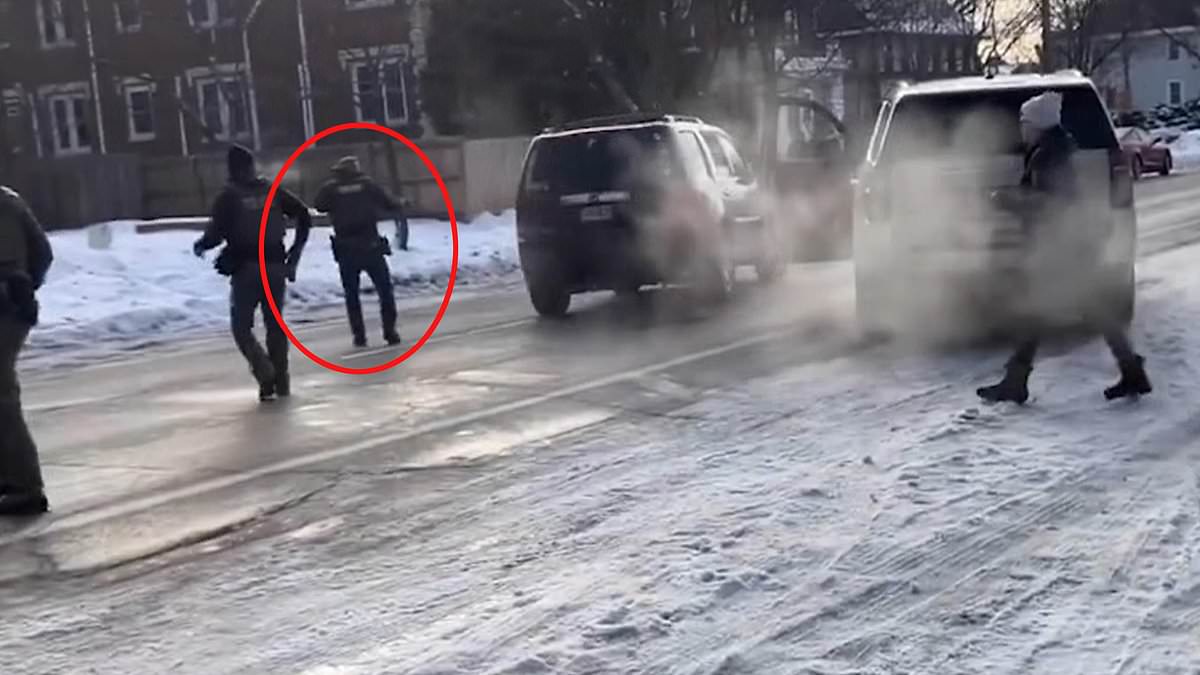
Amateur video of the Minneapolis incident shows the uniformed ICE officer, who fired the fatal shots, may have stepped directly in front of the vehicle driven by the deceased subject, Ms Good. This would be contrary to decades of tactical training.
That does not mean Ms. Good bears no responsibility in this event, but it identifies how better police decision-making could have prevented the need for force altogether.

Amateur video of the Minneapolis incident shows the uniformed ICE officer, who fired the fatal shots, may have stepped directly in front of the vehicle driven by Ms Good (pictured)
2: Was the use of force reasonably justified?
Officers don’t get to use force just because they want to; they can use force only to address imminent threats that threaten to undermine the governmental interests in enforcing the law, maintaining public order and safety, or protecting officers and the public from injury.
The key phrase is imminent threat. Incident reviewers must identify what harm was threatened—the threat that someone may evade arrest is different than the threat of injury or death—and whether the subject reasonably appeared to have the ability, opportunity, and intent to cause that harm.
Several of the videos from Minneapolis appear to show the officer standing to the front left of the vehicle while Ms Good’s car accelerated forward and turned to the right, perhaps even making contact with the officer. Additional information will be necessary to determine exactly where the officer was standing and the threat presented by the vehicle at the time of the shooting. The officer’s perception of the situation and whether that perception was reasonable must also be taken into account.
3: Was the use of force reasonably proportional?
Officers can use some force when the subject’s actions present an imminent threat; the question of proportionality addresses how much force is appropriate.
As the Supreme Court has described, this is a balancing test: a minor threat warrants limited force, while a very serious threat may warrant deadly force. An officer’s use of force can be justified yet unreasonable in degree—either insufficient or excessive—depending on the nature of the threat presented.
A vehicle striking, running over, or dragging an officer can inflict serious injury, which can justify the use of deadly force. Additional information is needed to determine whether the officer was in a position to be struck, run over, or dragged at the time of the shooting or whether the only threat was that Ms. Good might evade arrest.

A vehicle striking, running over, or dragging an officer can inflict serious injury, which can justify the use of deadly force
4: Was the use of force reasonably necessary?
Just because some amount of force can be used does not mean that it should be used. Necessity examines whether other options could have avoided or reduced the force used. Importantly, the mere existence of alternatives does not make an officer’s choice unreasonable. In most encounters, officers can choose from multiple reasonable options.
Nevertheless, necessity helps define one boundary between reasonable and unreasonable force, and it highlights opportunities for improvement that might reduce unreasonable harm in future encounters.
If, for example, Ms. Good’s vehicle did present a threat of striking the officer, but that threat could have been safely and effectively addressed by stepping out of the way, that would clearly be preferable to shooting. The videos suggest that the officer did exactly that while shooting at Ms. Good, so the question is whether it would have been reasonable to do so without shooting.

If Ms. Good’s vehicle did present a threat of striking the officer, but that threat could have been safely and effectively addressed by stepping out of the way, that would clearly be preferable to shooting
5: Was the use of force reasonably likely to be effective?
Force that predictably fails to resolve a threat—or that creates greater risk without meaningful benefit—is not reasonable. Shooting at moving vehicles, for example, is rarely effective and often creates an unguided missile which introduces additional danger; perhaps that is why leading police organizations sharply restrict doing so.
As the video shows, Ms. Good’s vehicle didn’t stop moving after the shooting. Instead, she lost control of her SUV and crashed into another vehicle parked on the street.
That said, effectiveness must be assessed in context. Officers sometimes face situations where even the best available option has a low chance of success. The question is not whether the force was guaranteed to work, but whether there was a practical basis for it under the circumstances.

As the video shows, Ms. Good’s vehicle didn’t stop moving after the shooting. Instead, she lost control of her SUV and crashed into another vehicle parked on the street
6: Was the use of force reasonably appropriate?
Even force that is unavoidable, justified, proportional, necessary, and effective can still be inappropriate if it creates undue risk to others. Appropriateness focuses on collateral harm; danger to bystanders or uninvolved third parties.
A deadly-force response may be proportional when an officer faces a lethal threat, but firing into a crowd or ramming a vehicle full of passengers may cross a different line. This question ensures that use-of-force evaluations account for broader public-safety and ethical considerations, not just the immediate tactical problem.
In this case, there were other federal agents and bystanders on scene. More information will be necessary to identify whether anyone was in the line of fire.
Together, these six questions move the conversation beyond slogans and toward substance. They allow us to hold officers accountable when standards are violated while also identifying how agencies can learn from these critical incidents and improve future outcomes. That dual purpose—accountability and improvement—is essential if policing is to reduce harm, protect life, and maintain public trust.
Seth W. Stoughton is a Professor of Law at the University of South Carolina Joseph F. Rice School of Law, where he is the Faculty Director of the Excellence in Policing & Public Safety program.
Ian Adams is an Assistant Professor in the University of South Carolina Department of Criminology and Criminal Justice, and a Senior Research Advisor at the Excellence in Policing & Public Safety program.
Geoffrey Alpert is a professor at the University of South Carolina Department of Criminology and Criminal Justice and is the Faculty Research Director of the Excellence in Policing & Public Safety program.