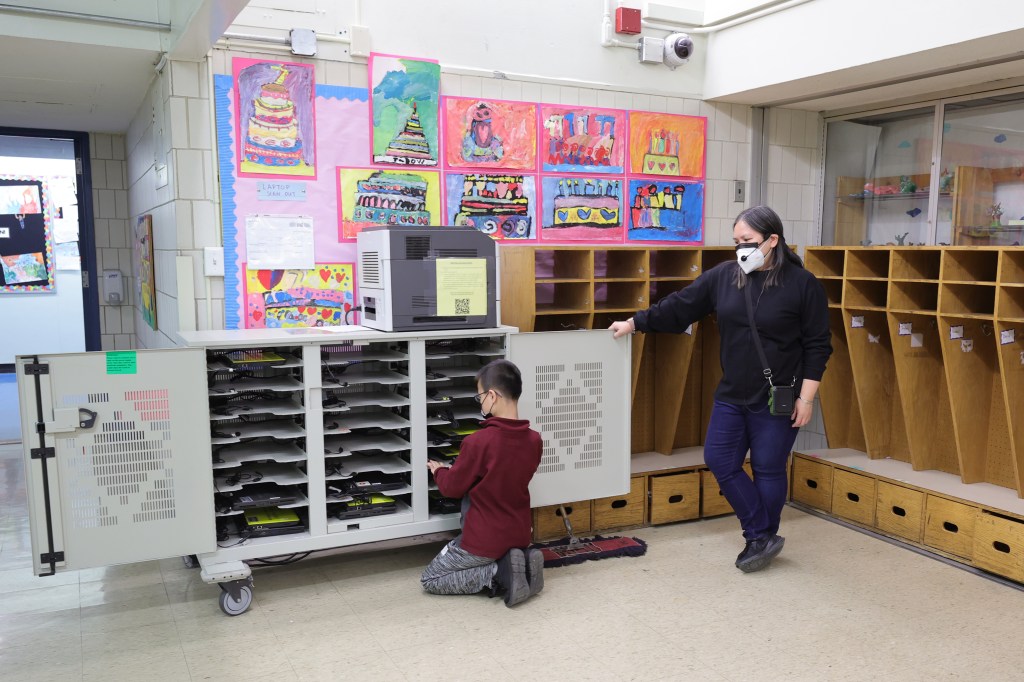


As the school year unfolds in New York, it is becoming increasingly evident that the city’s approach to tech education must evolve to stay relevant.
In the past ten years, New York has made commendable strides in broadening career pathways in the tech industry for underrepresented groups. This progress has largely been driven by initiatives such as coding boot camps for adults and the incorporation of computer science classes in K-12 schools.
However, the rapid advancement of generative AI is shaking up these established methods. The current educational landscape needs a transformation, moving from selectively teaching coding skills to embedding fundamental computing skills across all grades and subjects within the K-12 curriculum.
The necessity for change is becoming more pressing. OpenAI’s release of GPT-5 exemplifies the capabilities of AI in generating software with minimal human input, which diminishes the demand for traditional coding skills. Meanwhile, new AI agents are emerging, capable of managing intricate engineering processes with little to no human intervention. Anthropic CEO Dario Amodei has cautioned that AI might eliminate half of all entry-level office positions within the next five years.
To equip students for this evolving environment, it’s crucial to instill computational thinking and digital literacy. This means fostering the ability to think critically, solve challenges, and leverage technology across various disciplines. Understanding algorithms and logic will enable students to not only use AI tools effectively but also influence the systems that impact daily life.
Fortunately, New York’s policymakers have a robust foundation to build upon. The city’s pioneering Computer Science for All initiative has made significant progress since 2015, tripling the number of students engaged in computing courses. This program has also succeeded in narrowing educational gaps for girls, students of color, English language learners, and those with disabilities.
But most students still don’t take a computing class before graduating. In part, that’s because computer science has been viewed as a supplement to the required basic education, not an essential part of one.
To change this, the next mayor should champion a CS4All 2.0 — an initiative to integrate computational fluency across the city’s K-12 system. This plan should invest in preparing every teacher to bring computing into their classrooms with creativity and joy.
Kindergarteners can learn pattern recognition with shapes and blocks. Third graders can explore logic by designing interactive story games. Middle schoolers can investigate civic issues through data visualizations and mapping tools. And high schoolers need hands-on opportunities to experiment with AI — learning how to use, question, and critique it.
The city can achieve this by scaling a cost-effective program that’s already working: CUNY’s Computing Integrated Teacher Education (CITE) initiative. Since 2021, CITE has trained roughly one-third of CUNY’s teacher education faculty and reached more than 10,000 aspiring teachers with computing-infused practice. Its impact is already being felt in city classrooms, which hire roughly one-third of their new teachers from CUNY. But the initiative has only been partially implemented to date, and thousands more teacher candidates are yet to be trained.
By expanding CITE to reach every future teacher, New York can build a sustainable pipeline of educators equipped to bring computational thinking into classrooms citywide. A modest investment of $600,000 per year over the next three years would be enough to scale CITE across all 16 campuses. The city should pair that investment with $800,000 to launch a new Computing Across the Curriculum microcredential, providing in-service teachers with training in digital literacy and AI integration while helping them advance in their careers.
This new credential would also help the city’s schools meet New York State’s new Computer Science and Digital Fluency standards, which will require many more educators to be equipped to teach computing across subjects.
The state can support this work by appointing a high-level statewide director of computing education to set clear goals and coordinate efforts across agencies, and by partnering with the city to scale CUNY CITE and adapt the model for SUNY teacher education programs.
Taken together, these steps would position New York to seize a generational opportunity — and with bold action, lead the nation in preparing every teacher and student for success in the age of AI.
Dvorkin is editorial and policy director of the Center for an Urban Future. Toribio is director of economic and fiscal policy at Robin Hood.