
Share this @internewscast.com

SAN FRANCISCO – A significant legal proceeding commenced on Friday involving five current and former students of Stanford University. These individuals occupied the offices of the university’s president during a pro-Palestinian protest in 2024. This case marks a rare example of demonstrators being brought to trial following the surge of campus protests that year.
Initially, authorities detained and charged a total of 12 individuals after they barricaded themselves inside the offices of the president and provost on June 5, 2024. This event took place on the final day of spring classes at the prestigious university located in California’s Silicon Valley.
Among the defendants, a 21-year-old man opted to plead no contest. His plea was part of an agreement designed for eligible youth, allowing for potential dismissal of their cases and sealing of records upon successful completion of probation. This individual later testified for the prosecution, which resulted in a grand jury indictment in October of the remaining 11 individuals on charges of felony vandalism and felony conspiracy to trespass.
Out of these 11, six accepted pretrial plea agreements or entered diversion programs. Meanwhile, the remaining five have entered not guilty pleas and are proceeding with their trial.
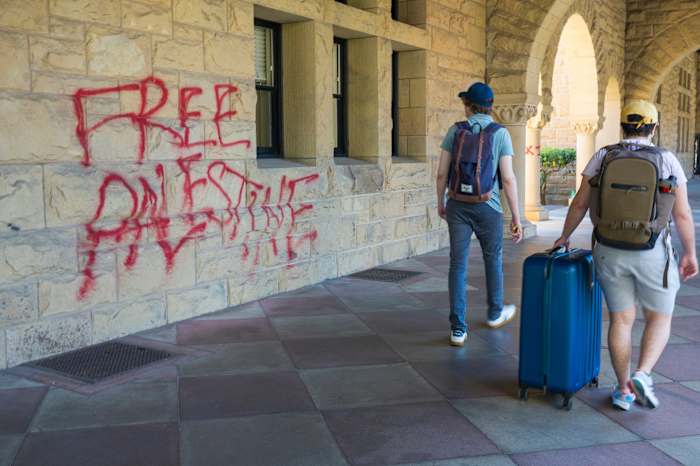
The prosecution has accused these demonstrators of causing damage by spray-painting the building, breaking windows and furniture, disabling security cameras, and spreading a red liquid, purported to be fake blood, throughout the offices. Stanford University is seeking $329,000 in damages as restitution for the incurred destruction.
Avi Singh, who represents Stanford student Germán González, stated that González has chosen to exercise his right to a jury trial.
“Germán González and the other four defendants are exercising their constitutional right to have a jury trial, and demand the district attorney prove everything that is required for a conviction,” including whether they planned to trespass and what their intent was, he said.
Santa Clara County District Attorney Jeff Rosen said last year when announcing his decision to charge the group that the protesters went too far when they damaged the building.
“Speech is protected by the First Amendment. Vandalism is prosecuted under the penal code,” he said.
Protests sprung up on university campuses across the U.S. with students setting up camps and demanding their universities stop doing business with Israel or companies that support its war efforts against Gaza.
About 3,200 people were arrested in 2024 nationwide. While some colleges ended demonstrations by striking deals with the students, or simply waited them out, others called in police when protesters refused to leave. Most of the charges were dismissed.
Copyright 2026 The Associated Press. All rights reserved. This material may not be published, broadcast, rewritten or redistributed without permission.