
Share this @internewscast.com
Susie Wiles, Donald Trump’s chief of staff, is calling for urgent measures to curb rising gas prices, which have surged due to escalating tensions with Iran, insiders have disclosed.
Reports from industry executives indicate that Energy Secretary Chris Wright, along with a special council led by Interior Secretary Doug Burgum, are under intense pressure to unearth any potential solutions that might offer a glimmer of hope in this volatile situation.
The crisis intensified when Iran closed the Strait of Hormuz, a critical channel for global oil supply, causing oil prices to leap by over 10% in just a week. Brent crude prices have climbed sharply from $72 to exceed $82 per barrel.
In response, the average gas price soared by 11 cents overnight on Tuesday, reaching $3.11 per gallon, marking the steepest increase in a single day since the Russian-Ukraine conflict erupted in 2022, according to the AAA.
In the face of these challenges, energy leaders and Trump administration officials have been brainstorming potential solutions, such as implementing a temporary gasoline tax holiday or increasing military presence to protect oil facilities in the Gulf region.
The White House is reportedly leaving no stone unturned in its quest to find strategies that could stabilize energy prices, particularly gasoline costs, as shared by one energy executive with Politico.
A White House spokesman declined to comment, pointing instead to press secretary Karoline Leavitt’s earlier remarks that Treasury Secretary Scott Bessent and Burgum had been working on the oil issue ‘well in advance’ of Saturday’s strikes.
The pain at the pump lands at a delicate moment for Trump, who faces crucial midterm elections in November. A new Daily Mail/J.L. Partners poll puts his approval rating at its lowest point ever, down four points to 44 percent since Friday.

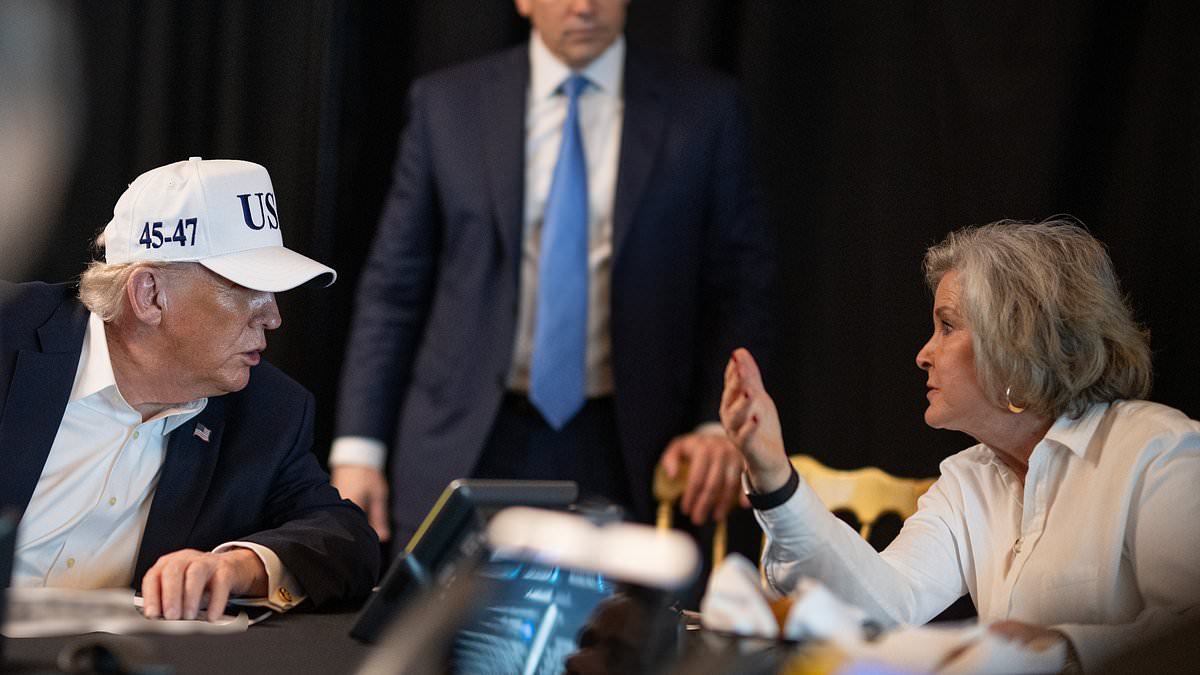
Donald Trump and Susie Wiles in the Situation Room at Mar-a-Lago on Saturday as the US and Israel launched strikes on Iran

Wiles attends Trump’s meeting with German Chancellor Friedrich Merz in the Oval Office at the White House on Wednesday
The administration only began calling energy executives days after the strikes.
Roadblocks include the congressional approval required for any gas tax break, and the political sensitivity of putting American boots on the ground in the Middle East.
Wright joined other Trump officials in backing the Iran strikes and downplayed spiking oil prices as a temporary blip.
The Energy Secretary called the gas spike a ‘transient bump’ and a ‘small price to pay’ to achieve the military objective of disarming the Iranian regime during an interview with Fox’s Laura Ingraham.
‘The faction of the White House that would care about $80–90 oil is being silenced,’ an administration source said. ‘There are louder voices winning at the moment.’
Trump swatted away concerns, telling reporters ‘if we have a little high oil prices’ that was acceptable because ‘as soon as this ends, those prices are going to drop, lower than even before.’
The administration on Tuesday announced it would protect ships traveling through the Strait of Hormuz and ordered the US International Development Finance Corp to provide ‘at a very reasonable price’ insurance to shippers in an effort to cool markets.
But the narrow passage remains choked.
Despite the offer of Navy escorts, shipping giants Hapag-Lloyd and CMA CGM have suspended all transits, and at least 14 LNG tankers have stopped or reversed course as marine insurers largely withdrew coverage following the attack on the Palau-flagged tanker Skylight off the coast of Oman, according to tracking firm Kpler.
Since the US and Israel launched the war Saturday and killed Ayatollah Ali Khamenei, Iran has unleashed thousands of drones and ballistic missiles at Israel, American bases and embassies across the region, and energy facilities throughout the Gulf, with fire even directed toward Cyprus, Turkey and Azerbaijan.
Iran’s basic strategy is to instill fear about the dangers of a widening war in hopes that allies of the US will apply enough pressure to halt their campaign.
Iran’s leaders believe that by inflicting casualties and disrupting energy production to drive up oil and gas prices, America’s allies or an unsettled public back home will pressure Trump to ease back.
The US and Israel have carried out hundreds of airstrikes on Iranian government, military and nuclear targets.
Iran has continued to fire ballistic missiles into Israel despite being greatly outgunned, killing 11 people and disrupting life for millions of Israelis, while the broader campaign has killed 1,045 people in Iran and claimed further lives across Arab states.
Trump said Monday his four objectives were to destroy Iran´s missile capabilities, wipe out its navy, prevent it from obtaining a nuclear weapon and ensure that it cannot continue to support allied armed groups.