
AMD explained as Judi Dench 'can't leave house alone' because of condition
Share this @internewscast.com

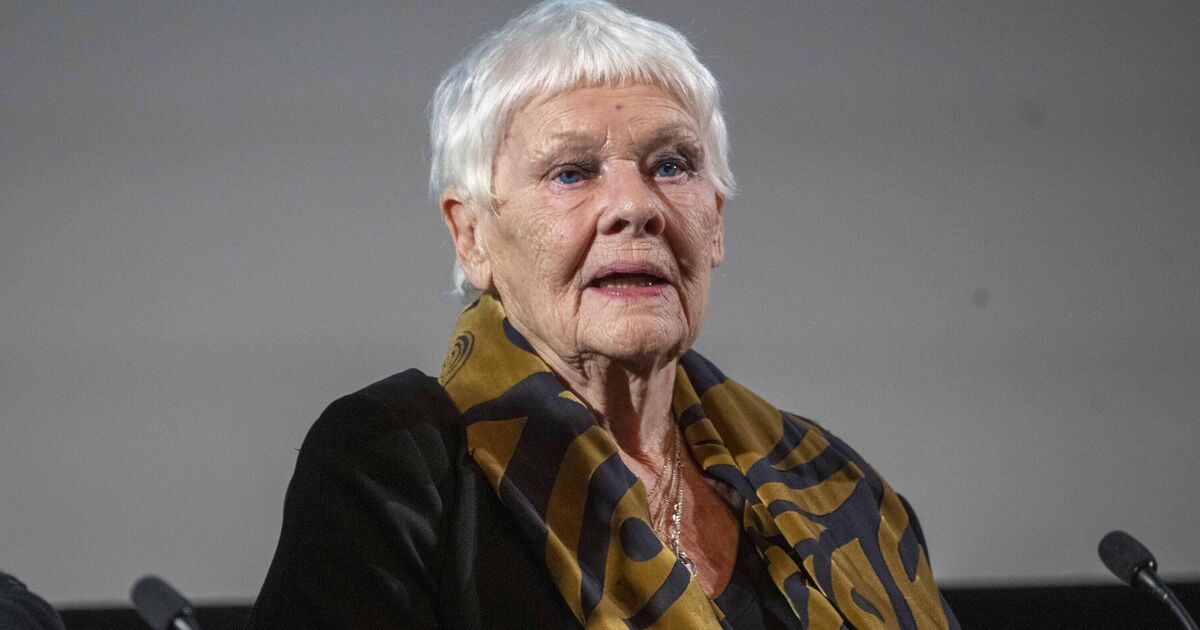
In a heartfelt revelation, renowned actress Dame Judi Dench has opened up about her struggle with age-related macular degeneration (AMD), a condition that has significantly impacted her independence. The beloved star, known for her iconic roles in the James Bond series, shared that she is no longer able to leave her home unaccompanied due to her deteriorating eyesight.

Dame Judi, who first disclosed her AMD diagnosis back in 2012, is now 90 years old and continues to face challenges related to her vision. The York-born actress recently provided an update on her condition, discussing its effects not only on her daily life but also on her illustrious acting career.

As her eyesight continues to decline with age, Dame Judi has admitted that she relies on a chaperone for outings. Speaking at the Theatre Royal in Bury St Edmunds, where she serves as a patron, she candidly stated, “I can’t see any more. When I go to the theatre, I can’t see. Hopeless.”

The Oscar-winning actress, celebrated for her performance in “Shakespeare in Love,” has previously discussed how AMD has altered her lifestyle, including the inability to watch television. During a January 2025 appearance on Trinny Woodall’s “Fearless” podcast, she confessed to needing assistance whenever she ventures outside.

Despite living with AMD for over a decade, Dame Judi remains resolute in her commitment to her craft, staying engaged with her work and keeping up with the latest television chatter. Her determination and passion for her profession continue to inspire many.

However, although she’s lives with AMD for more than a decade now, Judi remains committed to working and catching up on the latest TV gossip.

She says that although she can’t see much she just “deals with it” when it comes to being on set and reading scripts.

What is AMD?

According to the NHS, age-related macular degeneration (AMD) is a common condition that affects the middle part of your vision. It usually first affects people in their fifties.

It doesn’t cause total blindness, but it can make things like reading and recognising faces difficult.

The NHS states that without treatment, vision may get worse. This can happen gradually over several years, before it can then get worse quickly over a few weeks or months.

The exact cause of the condition is unknown, however it has been linked to things such as ageing, smoking, high blood pressure, being overweight and having a family history of AMD.

Symptoms of AMD

AMD affects the middle part of your vision, not the edges (peripheral vision), according to the NHS. You can can get it in one eye or both.

The first symptom is usually blurred or a distorted area in the centre of your vision. If it gets worse, you may struggle to see anything in the middle of your vision.

AMD can mean things like reading, watching TV, driving or recognising faces become difficult.

Other symptoms include:

  • Seeing straight lines as wavy or crooked
  • Being sensitive to bright light
  • Seeing flickering or flashing lights
  • Seeing things that are not there (hallucinations)

AMD isn’t painful and does not affect the appearance of your eyes.

Sometimes AMD is found during a routine eye test before any symptoms start showing. Experts advise to see an optician if you’re worried about your vision.

Early diagnosis and treatment may help stop your vision getting worse if you have a problem with your eyes.

It’s advised to get an urgent opticians appointment or get help from NHS 111 if:

  • Your vision gets suddenly worse
  • You have a dark “curtain” or shadow moving across your vision
  • Your eye is red and painful

These symptoms can be signs of other eye problems that need to be treated straight away.

You can call 111 or get help from 111 online.

What can you do to protect yourself from AMD?

Dr. Sarah Blackwelder, an optometrist based in the US, has taken to her TikTok account to share advice on what people can do to protect themselves from AMD.

She said in a video: “First and arguably the most important is to stop smoking. If you are or were a cigarette or tobacco smoker, that is highly linked to developing AMD. We definitely want you to quit.”

The expert then added: “Several studies have found that there is a link between AMD and an excess UV exposure, so anytime you’re outside, UV protective eyewear is a must.”

Cardiovascular disease is also linked to AMD, so Dr Blackwelder said preventing things like diabetes and high blood pressure as well as controlling them if you do have them is “really important”.

Next, she suggested making dietary changes, such as adding Omega-3s and consuming lots of green, leafy vegetables likes spinach and kale.

She said: “Those contain carotenoids that are really important for macular health.”

Lastly, the expert said regular eye examinations are key, because the sooner AMD can be spotted, the better.

Share this @internewscast.com
You May Also Like

New Study Reveals Potential Link Between Microplastics and Accelerated Heart Disease

Researchers have raised alarms over a new study that connects microplastic exposure…

Dr. Amir Khan Highlights 5 Critical Health Indicators to Monitor Following Cold Feet Advisory

As the chill of winter grips Britain, many are slipping on cozy…

Groundbreaking Research Reveals Century-Old Drug Effectively Manages Type 1 Diabetes

A century-old, affordable medication could offer new hope for individuals living with…

A&E Testing Initiative Launched to Eradicate New HIV Cases in England by 2030

England is on the cusp of eliminating new HIV transmissions by 2030,…

Shocking Cosmetic Surgery in Lithuania: One Woman’s Battle with Lopsided Mouth and Hearing Loss

Angela Paterson before her face and neck lift (Image: Angela Paterson/SWNS) A…

Exploring the Future of Ozempic: How the Food Industry is Adapting to the Impact of Popular Weight-Loss Drugs on Consumer Habits

Last November, senior leaders from one of the globe’s most influential companies…

Urgent Warning from NHS Surgeon: Recognize Pancreatic Cancer Symptoms Early to Save Lives

A leading expert in pancreatic cancer has issued a cautionary message, highlighting…

Misdiagnosed Symptoms Reveal Shocking Truth: Woman’s Brain ‘Falling Out’ of Skull After Dismissed by Doctors

A South Carolina teacher experienced years of frustration as her persistent symptoms…

Young Woman Misdiagnosed with IBS Faces Terminal Prognosis at 30

Lauren Carey’s family is speaking out after her rare and aggressive cancer…

How My Secret Mounjaro Journey Unraveled: A Candid Tale of Weight Loss, Judgment, and Family Revelations

The turkey had been a tad overcooked, the fine china was elegantly…

From ‘Child of Rage’ to Redemption: The Transformative Journey of Beth Thomas 35 Years Later

When asked about their dreams, most six-year-old girls might mention wanting a…