
Share this @internewscast.com
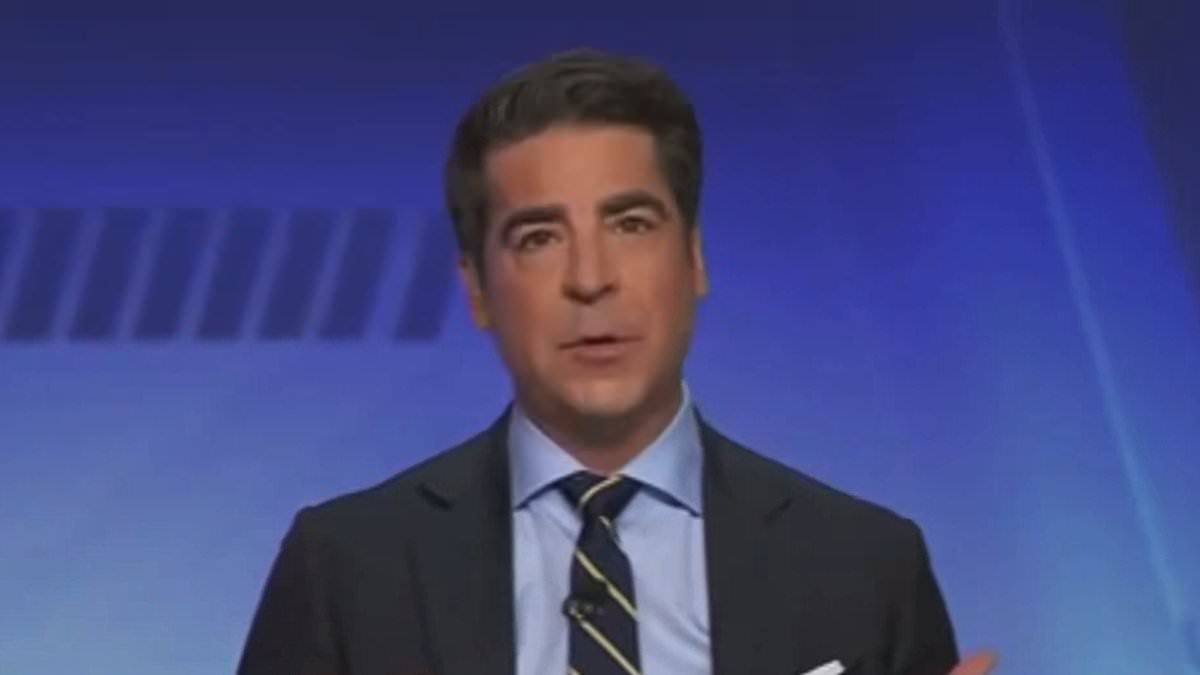
Fox News anchor Jesse Watters stirred controversy among viewers with his bold assertion that the United States claims ownership of the moon.
During a segment on ‘The Five,’ Watters was part of a panel discussion focusing on President Donald Trump’s proposal to purchase Greenland.
Watters argued that it was the United States’ fate to acquire the Arctic region from Denmark.
He stated emphatically, “We must secure Greenland; it’s inevitable. The United States consistently protects its interests, whether through economic means, military force, or outright purchase.”
He referenced historical acquisitions like Alaska, the Philippines, and the Marshall Islands post-World War II to support his point.
Watters then confidently added, “We have the moon; I’m certain we own it!”
The rest of the panel started to chuckle at Watters’ point but he continued to say that the US would have its way.
‘When the world changes, we change. So globalism’s dead, we have to protect our own supply lines, we have to protect ourselves from missiles coming from China and we’re gonna’ do it whether they like it or not,’ he said.

Fox News anchor Jesse Watters riled up viewers when he claimed that the United States owns the moon

‘We got the moon, I think we own it! I know we own it,’ Watters said on The Five
Watters then aped the president’s line that Denmark ‘cannot defend’ Greenland from any attacks.
‘They live under our security umbrella. It is a big, beautiful umbrella. Do they want to live under it or not? We are offering them $700billion!’
He added that the Danish royal family and Europeans are ‘dying to do this deal’ with Treasury Secretary Scott Bessent, Commerce Secretary Howard Lutnick and Secretary of State Marco Rubio.
‘Once Bessent and Lutnick and Rubio get into a room with all these guys and knock their heads together, we’re getting Greenland.’
Many liberal outlets and social media accounts rolled their eyes at Watters, with Huffington Post calling his claim ‘universally stupid.’
‘I’ve never used the term “blithering idiot,” but it applies to this man,’ said one social media poster.
Another added that Watters was the ‘biggest buffoon on cable news.’
However, there was some defense for the tone of his statement, with one account writing: ‘Pretty sure he’s joking when he said we own the moon.’

Watters was on the panel of The Five when they were discussing Donald Trump’s attempt to acquire Greenland


On Wednesday, Trump said he had agreed ‘the framework of a future deal’ regarding the control of the island, which he claims is vital for American security, after talks with NATO chief Mark Rutte.
Trump added that he was suspending plans to slap tariffs on Britain and other countries resisting his Greenland grab.
Markets in the US rallied on his announcement, having climbed on his earlier proclamation that he would not use force to take the ‘big, beautiful piece of ice’.
And the Daily Mail can reveal he is mulling making the inhabitants of Greenland (population 57,000) an offer of $1million each if they vote to join the United States.
Last night, Nato military officers were discussing an arrangement where Denmark would cede ‘small pockets of Greenlandic’ territory to the US, where it could build military bases.
Senior officials compared the proposal to UK military bases in Cyprus – which are treated as sovereign British territories – according to The New York Times.
Trump told reporters it was ‘the ultimate long–term deal’. When asked how long, he replied: ‘Infinite. There is no time limit. It’s a deal that’s forever.’

Donald Trump on Wednesday dropped his threat to invade Greenland following a furious bust–up with Britain and other NATO allies
He had earlier written on his Truth Social social media platform: ‘Based upon a very productive meeting that I have had with the Secretary General of Nato, Mark Rutte, we have formed the framework of a future deal with respect to Greenland and, in fact, the entire Arctic Region.
‘This solution, if consummated, will be a great one for the United States of America, and all Nato Nations.’
Danish foreign minister Lars Lokke Rasmussen said the US owning Greenland is a ‘red line’ that will not happen.
He said Copenhagen would keep ownership of Greenland, despite Trump’s earlier demand for negotiations on an ‘acquisition’. ‘It’s not going to happen that the US will own Greenland. That’s a red line,’ Rasmussen told national broadcaster DR.
Trump’s apparent climbdown on the imposition of tariffs over the Greenland dispute will fuel critics who coined the term TACO, short for ‘Trump Always Chickens Out’.
The row that has played out over the last fortnight has raised serious questions about the survival of Nato and yesterday plunged Britain’s ‘special relationship’ with the US into crisis. During a rambling address at the World Economic Forum in Davos, Trump sought to often belittle his allies.
In a reference to America’s role in the Second World War, he told his mainly European audience: ‘Without us, you’d all be speaking German, with maybe a little Japanese.’
France, Canada and even neutral Switzerland, the host of the summit, came in for some tough shots.
The President later said that ‘bad things’ would happen to Britain and Europe unless they clamped down on immigration and halted the drive for green energy. ‘They have to change their ways,’ he said.
Trump claimed that America ‘never got anything from NATO’, despite the deaths of British and Danish troops fighting to liberate Afghanistan from the Taliban.