
Share this @internewscast.com
In the picturesque town of Batlow, nestled 430 kilometers southwest of Sydney and renowned for its apple orchards, the local petrol station has made the surprising decision to cease fuel sales. The reason? An attempt to avoid public outrage over exorbitant prices that could have seen fuel costs soar to nearly $3 per liter.
The owner of this sole service station expressed concerns about attracting negative media attention. “If I did that, I’d end up as a headline in the newspaper,” he told the Daily Telegraph, referring to the potential backlash against such steep prices. His solution was to halt fuel sales entirely, stating, “I don’t want to be in the bad books, so the best thing for me is to not sell fuel at all.”
This sentiment is echoed by another local fuel distributor who faced a similar dilemma. He reported receiving a quote of $3.20 per liter for bulk diesel, a startling increase from the $1.70 he paid just days earlier. “We anticipated some price shifts once tensions rose overseas, but the escalation was far beyond our expectations,” he remarked.
With fuel prices fluctuating unpredictably, these service providers are caught between the necessity of maintaining their businesses and the risk of alienating their community with prohibitive costs. It’s a challenging situation for Batlow, where the economic impact of such a decision reverberates through the town.
Another fuel distributor nearby said he was quoted $3.20 a litre for bulk diesel to be delivered to his servo after paying just $1.70 only days earlier.
‘We knew there might be some movement once things started heating up overseas, but nothing like what happened,’ he said.
‘I had one load where the next delivery was 84 cents a litre higher than the previous one. I’ve never seen anything like that.’
Iran’s blockade of the Strait of Hormuz has choked the flow of about a fifth of the world’s oil, sparking fears of shortages around the world.

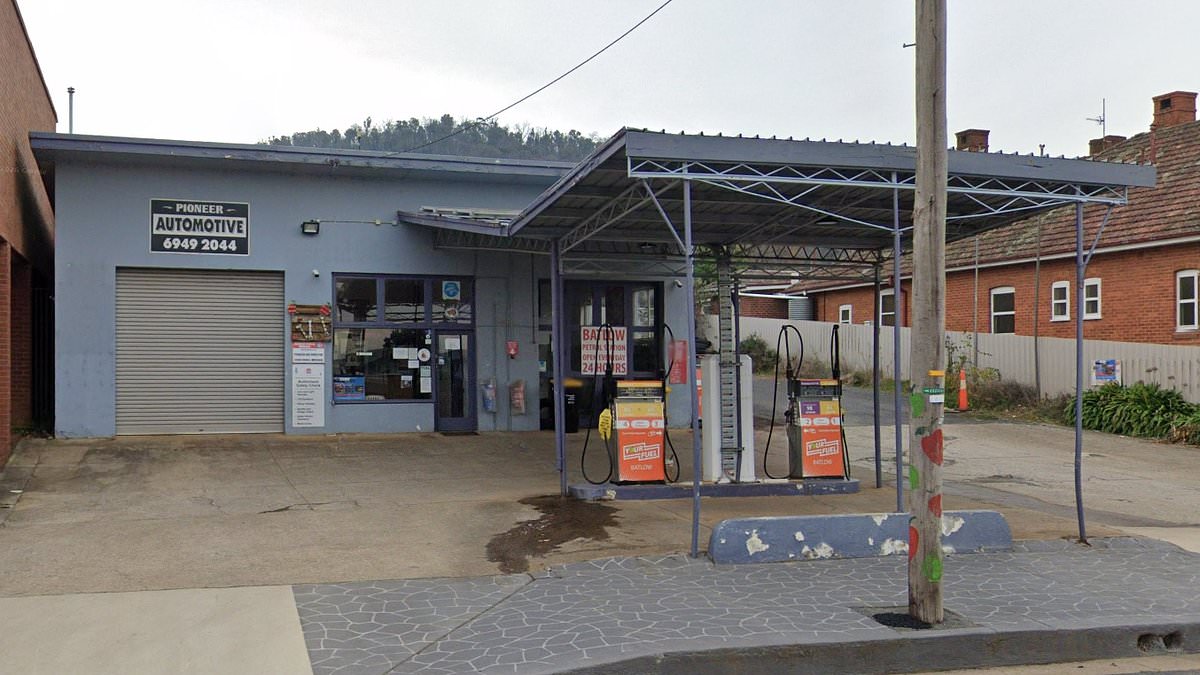
The service station at Batlow, in southern NSW, has shut down due to the cost of fuel

Snowy Valleys Mayor Julia Ham has invited Chris Bowen to visit Bartlow to see what the country’s fuel crisis is doing to small towns
And like many country towns, Batlow has been especially hard hit by shortages with reports of Aussies filling jerry cans in a effort to stockpile fuel.
The town, which is home to 1,270 people, has about 50 apple growers in the district and supplies 10 per cent of the Australian apple crop.
Snowy Valleys Mayor Julia Ham said locals are driving 25 minutes to Tumut to get their fuel which, as of Friday morning, was selling for $2.27 a litre.
Ms Ham wasn’t convinced by Energy Minister Chris Bowen’s claims there were no concerns about critical fuel supplies.
‘I would invite them to come to Batlow and see what it’s like to not be able to fill your car,’ Ms Ham said.
Local apple grower Greg Mouat said while he and fellow growers were focusing on the harvest, worries about fuel security were still looming large.
‘The last thing we want is significantly increased costs. Our product hasn’t been making as much money as we’d like over the past few years, so extra costs are the last thing we need,’ he said.
Independent Member for Wagga Wagga Dr Joe McGirr has written to Bowen requesting he help restore fuel supplies to Batlow.

Rural towns like Batlow are running out of fuel and residents are being forced to drive to other towns to fill up

Batlow apple growers Kris and Greg Mouat are worried about fuel security
‘It is unacceptable that the people of Batlow are denied critical fuel supplies and the Federal Government must act immediately to restore those supplies,’ Dr McGirr wrote.
‘The owner of the station is trying to do the right thing by his community but his hands are tied by circumstances beyond his control, and the people of Batlow are suffering as a result.’
‘This situation would not be tolerated in metropolitan communities, and it should not be acceptable in Batlow.’
It was reported earlier this week that independent fuel suppliers such as Bartranz Petroleum had claimed the crisis was not a supply issue, but a distribution problem.
Major oil companies have stopped supplying petrol to non-contract fuel distributors, many of which supply agricultural communities.
‘It’s become apparent that the four major oil companies, Ampol, Shell, BP and Viva, have the fuel supply but are keeping it for their inner-city retail sites and their contractors,’ Bartranz Petroleum owner Gretta Barton said.
The Australian Institute of Petroleum (AIP) CEO Dr Malcolm Roberts told the Daily Mail that many independent fuel distributors couldn’t get fuel from the major oil companies because they didn’t have a secure contract with them.
Bowen relaxed petrol rules on Thursday to allow a Queensland refinery to produce fuel with a higher level of sulphur, which he claimed would produce an extra 100million litres for regional areas per month.
While 100million litres sounds like a big number, in reality, it’s only an extra two days’ worth of fuel.