
Share this @internewscast.com
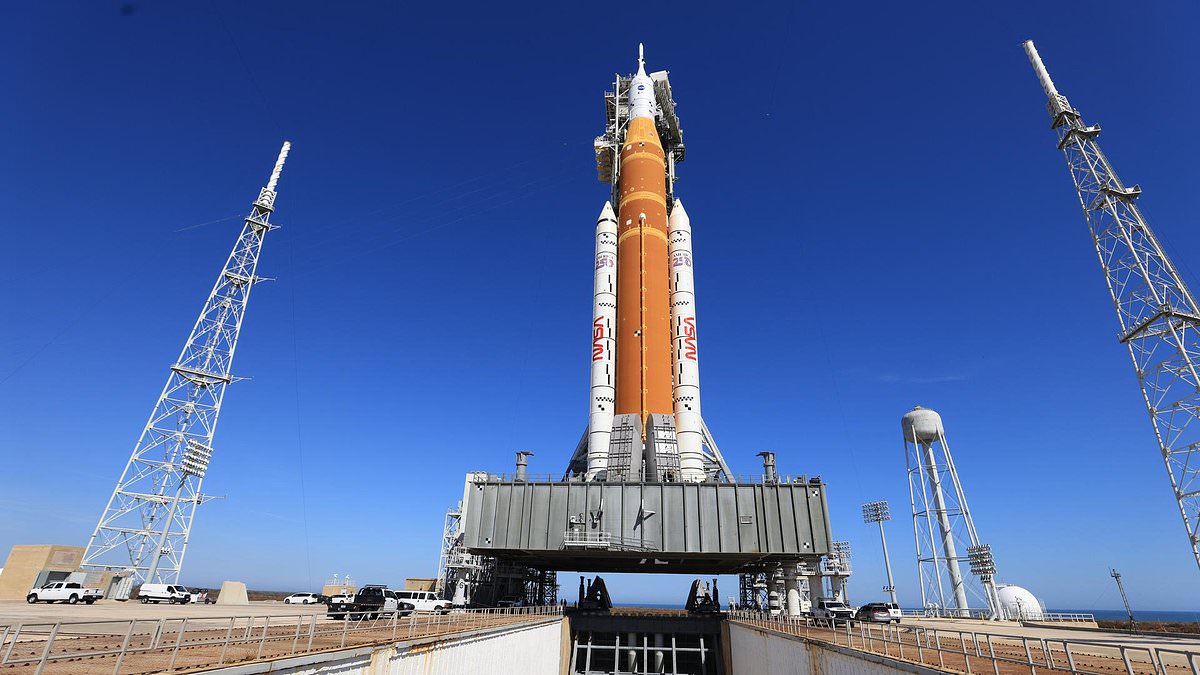
NASA has successfully completed the second wet dress rehearsal for the Artemis II mission, achieving a significant milestone after an earlier attempt faced setbacks.
This time, the rehearsal proceeded smoothly, with the hydrogen fuel leaks that had previously disrupted the process remaining within NASA’s acceptable loss rate of 16 percent. This was a crucial factor in the test’s success.
The operation began on Thursday at 10:30 a.m. local time (15:30 GMT), as NASA teams at the Kennedy Space Center in Florida began loading more than 2.6 million liters of propellant into the Space Launch System (SLS) rocket.
Following the fueling process, ground crews practiced sealing the hatches on the Orion spacecraft. This spacecraft is set to transport astronauts Reid Wiseman, Victor Glover, Christina Koch, and Jeremy Hansen on a mission around the moon.
The rehearsal culminated with the completion of two full simulated launch countdowns, marking the exercise as a complete success for NASA.
“NASA teams successfully fueled the Artemis II rocket during tonight’s prelaunch test for the lunar mission,” the space agency announced on social media platform X.
The Artemis II crew is now preparing to enter quarantine on February 20 in Houston, to remain away from sources of illness for at least 14 days.
Although NASA hasn’t announced a specific date for the launch, the space agency says this ‘preserves flexibility in the March launch window.’

NASA has successfully completed the second ‘wet dress rehearsal’ for the Artemis II moon mission, opening the path to launch as early as March 6

Importantly, the Space Launch System (SLS) rocket’s hydrogen leaks remained below safe levels during the practice fuelling
A wet dress rehearsal is a pre–launch test in which the ground crew fuel the rocket, seal the hatches, and walk through the countdown as if they were about to launch.
This is a vital safety procedure since SLS rockets are not reusable, meaning every rocket is slightly different to the last and every launch is, essentially, the first.
In fact, according to NASA’s associate administrator Amit Kshatriya, the SLS is still technically considered an ‘experimental vehicle’.
‘Nobody sitting in one of these chairs needs to be calling any of these vehicles operational,’ Mr Kshatriya told reporters during a February press conference.
During Thursday’s wet dress rehearsal, the only technical problem was a brief loss of ground communication.
This is a problem that has been plaguing the Kennedy Space Centre for some time, but the crew were able to move to backup communication systems and identify the source of the problem.
However, the real question for NASA was whether the SLS rocket would continue to leak hydrogen at a dangerous rate.
The SLS rocket uses a ‘cryogenic’ fuel mixture containing oxygen cooled to –183°C (–297°F) and hydrogen at a staggeringly cold –217°C (–423°F).

NASA’s ‘closeout crew’ were also able to practice sealing the hatches on the Orion spacecraft, performing the exact procedures they will use on launch day

Starting on Thursday, 10:30 am local time (15:30 GMT), the space agency loaded the Space Launch System (SLS) rocket with more than 2.6 million litres of propellant
Because hydrogen is about 14 times lighter than air on Earth, this super–cooled liquid mix offers the best power–to–weight ratio of any fuel.
However, hydrogen molecules are so small that they can squeeze through even the tiniest gaps, making it almost impossible to prevent leaks.
NASA caps the leak rate during fuelling at 16 per cent; any higher than this is considered too great a fire hazard on the ground.
During the previous wet dress rehearsal earlier this month, the SLS developed a major leak in a component called the ‘tail service mast umbilical quick disconnect’.
These are roughly nine–metre–tall pods which attach to the base of the rocket and route propellant lines up into fuel tanks, before disconnecting during launch.
Ultimately, NASA was forced to cancel the wet dress rehearsal with just five minutes left in the simulated countdown after the leak rate spiked beyond acceptable limits.
Despite these worries, the second rehearsal managed to fill each of the rocket’s tanks by 14:41 local time (19:41 GMT) and successfully concluded the test at 22:16 (03:16 GMT).
And with the successful fuelling of the SLS, NASA appears to have finally brought its hydrogen problems under control.

Despite the failure of the previous test, the second rehearsal managed to fill each of the rocket’s tanks by 14:41 local time (19:41 GMT) and successfully concluded the test at 22:16 (03:16 GMT)
In a blog post, NASA wrote: ‘Hydrogen gas concentrations remained under allowable limits, giving engineers confidence in new seals installed in an interface used to route fuel to the rocket.’
This now clears the way for Artemis II to target its March launch window – the second of three possible opportunities.
NASA has not said which day it will specifically target, but the window extends from March 6 to March 11.
If Artemis II is not able to launch in March, NASA will aim for the final planned opportunity between April 1 and April 6.
Artemis II will be NASA’s first manned lunar mission since the Apollo era over 50 years ago, although it will not involve landing on the moon.
When it eventually happens, the crew will board the Orion spacecraft and use NASA’s Space Launch System rocket to launch out of the atmosphere and into orbit.
After orbiting Earth, Orion will fire its engines one last time in what is known as a ‘translunar injection’, kicking the craft out of Earth’s orbit and on a looping path around the moon.
The spacecraft will spend four days drifting through space until it reaches lunar orbit, passing about 6,400 miles (10,400 km) behind the ‘dark side’ of the moon before heading back to Earth.