
Share this @internewscast.com
Oil prices from the North Sea have reached unprecedented levels, intensifying calls for the Labour Party to reconsider Ed Miliband’s policies and embrace profitable drilling opportunities.
The recent price hike, triggered by the conflict in Iran, highlights the UK’s untapped valuable resources. However, capitalizing on these assets requires the Energy Secretary to ease their stance against fossil fuel companies.
On Thursday, the Forties Blend, a key indicator for immediate North Sea oil delivery, soared to an all-time high of nearly $147 per barrel.
Before this spike, Offshore Energies UK, an industry organization, had already assessed that North Sea oil and gas could contribute up to £385 billion to the UK economy.
Meanwhile, European airports face the threat of jet fuel shortages if the Strait of Hormuz, a critical Middle Eastern oil and gas supply route, remains closed for more than three weeks.
The UK Government’s prohibition on new drilling and the extension of ‘windfall’ taxes, which impose a 78% tax rate on fossil fuel firms’ profits, are under scrutiny. Experts suggest that reducing these taxes could rejuvenate the industry, potentially creating jobs, boosting growth, and generating an additional £25 billion in annual tax revenues.
Mr Miliband is being urged to reverse course and back two projects, Rosebank and Jackdaw, which hold oil and gas resources worth more than £80billion.
Tory leader Kemi Badenoch said: ‘Drilling our oil and gas in the North Sea isn’t just energy security, it’s financial security and national security. With oil prices hitting record highs… it makes it even more nonsensical that Keir Starmer continues to let Ed Miliband’s green zealotry hold our country back.’

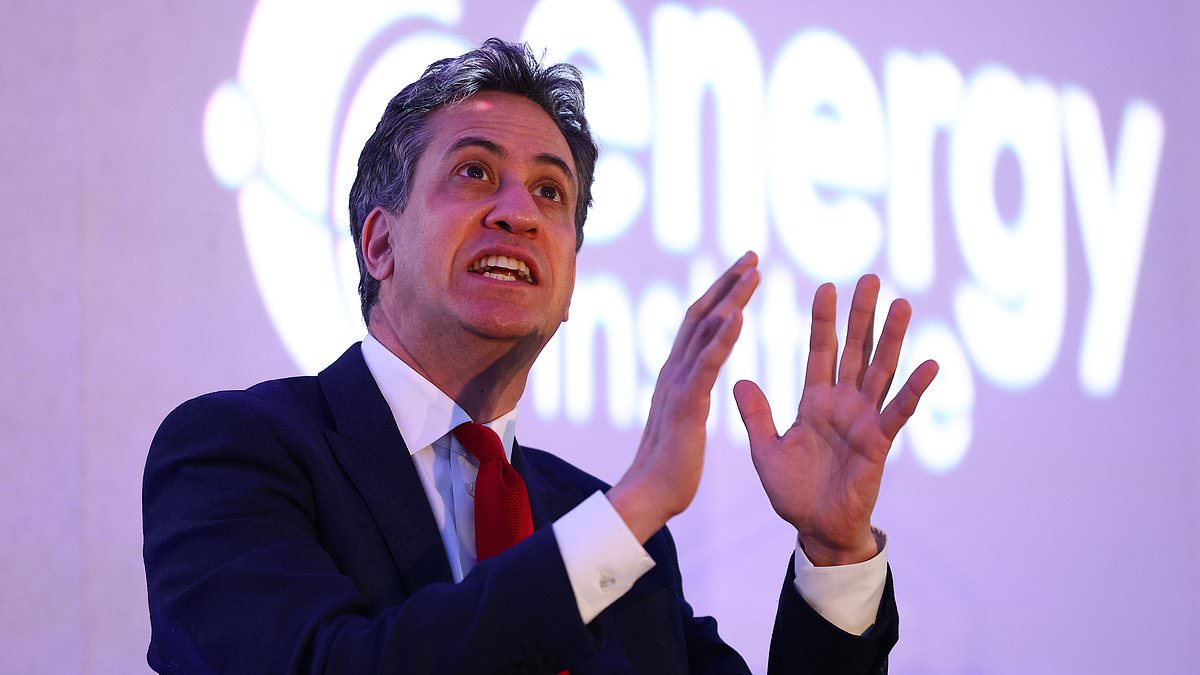
Energy Secretary Ed Miliband is being urged to reverse course and back two projects which hold oil and gas resources worth more than £80billion
Oil prices have surged since the conflict in the Middle East choked off supplies, leaving vast quantities stranded in the Persian Gulf.
Brent crude, a global oil benchmark, has climbed from $72 a barrel before the war to nearly $120. Yesterday it was trading at $97.
The crisis has prompted a scramble by refineries – which turn crude oil into petrol, diesel and jet fuel – to find new supplies, paying a premium to obtain it immediately, from regions such as the North Sea. That is why the Forties benchmark is trading at a higher level than Brent crude.
Even the Tony Blair Institute think tank has urged Mr Miliband to begin drilling. Institute energy expert Tone Langengen said: ‘In times of geopolitical stress… locally available production becomes more valuable. It underlines the long-standing importance of maintaining a domestic energy base.’
Some argue that the tax revenues from new North Sea drilling could be used to ease the pressure on households and businesses that are seeing their fuel and energy bills soar.
Tory energy spokesman Claire Coutinho said: ‘It’s only Ed Miliband’s mad ideology that is stopping us drilling in the North Sea.
‘He is turning his back on £25billion of extra tax revenue – money that we would use to cut every family’s bills. Instead of using our own resources, we are losing good jobs in Britain and having to import dirtier and more expensive fuel from abroad.’
Andy Mayer, energy analyst at the Institute of Economic Affairs think tank, said there was ‘no excuse for Miliband and Starmer to still be sitting on their hands when they could be approving access to domestic resources’.

Pictured: The BP ETAP (Eastern Trough Area Project) oil platform in the North Sea
He added: ‘The Rosebank and Jackdaw fields were respectively discovered in 2004 and 2005. Both should already be producing, and could be by year end, if approved today. The public want it, the renewables industry want it, the Chancellor wants it, and even Tony Blair wants it. Pragmatic voices that understand this crisis and difficult choices have no issue with reopening the North Sea.
‘Ranged against them is a militant tendency of virtue-signalling climate purists, so wedded to ‘leaving it in the ground’ that they are prepared to increase global emissions through more imports.’
Offshore Energies UK said Rosebank was expected to produce 69,000 barrels of oil a day at its peak. Jackdaw could supply around 6 per cent of the UK’s future gas demand, enough to heat 1.4million homes.
The Department for Energy Security and Net Zero said: ‘We are taking action to bear down on the cost of living, including taking £117 off average energy bills this month and supporting de-escalation in the Middle East.’