Share this @internewscast.com
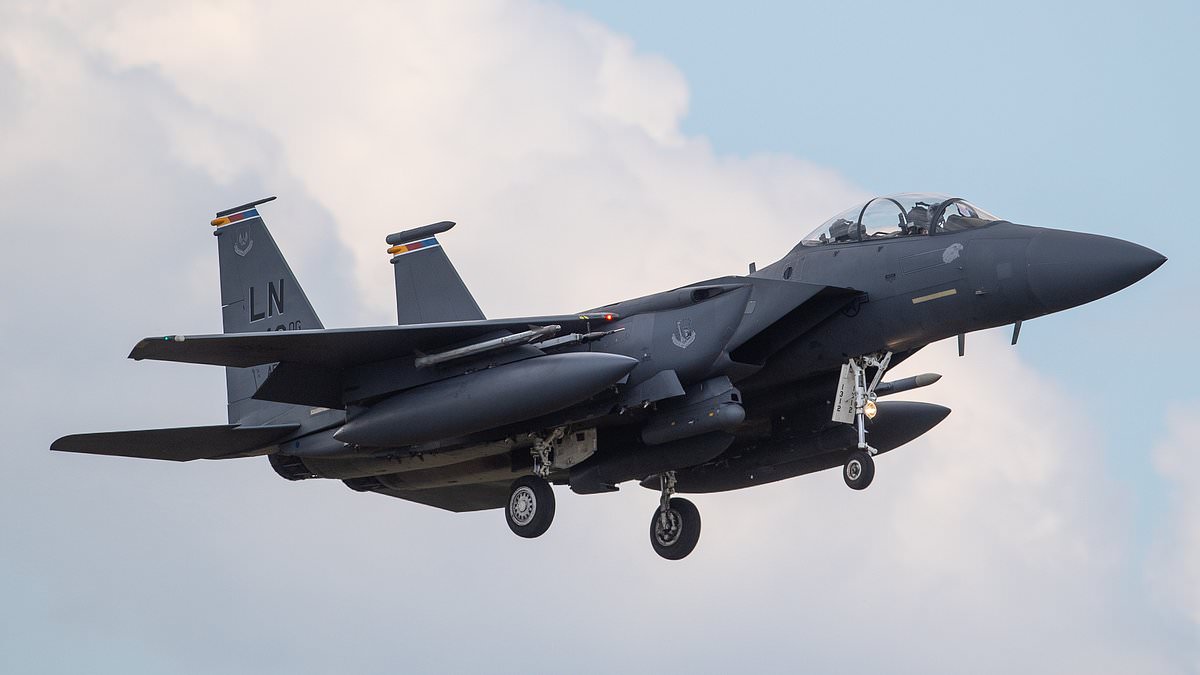
Yesterday’s startling news that U.S. forces are searching for the crew of an F-15 fighter jet, reportedly downed by a missile over southern Iran, is likely to jolt the American public into a harsh reality check.
Reports from Iranian media about an airborne rescue effort to locate two missing pilots are sure to evoke haunting memories of the 1979 hostage crisis. During that crisis, 66 U.S. citizens, including diplomats and civilian staff, were captured by a mob that overran the American embassy in Tehran.
Following closely on the psychological scars left by the Vietnam War, the 444-day hostage ordeal, which included a botched military rescue mission, dealt a severe blow to American influence and prestige.
Fortunately, it was reported yesterday that one crew member, who had ejected from the damaged aircraft, was quickly rescued by a search team. However, as night fell, there was rising concern about the fate of the other pilot.
With the Iranian government offering a reward for capturing the serviceman, the conflict, which began five weeks ago, is taking a dangerous and unpredictable turn.
If the Islamic Revolutionary Guard Corps (IRGC) captures the missing crew member first, the U.S. could find itself embroiled in a new crisis.
I have some experience of how this might play out after Iran seized six Royal Marines and two Royal Navy seamen on the Shatt al-Arab waterway between Iraq and Iran in 2004. As the UK’s deputy ambassador, I was despatched to the Iranian port of Bandar-e Mahshahr to negotiate their release.
There was one big difference from today – Britain was not at war with Iran. And after years of popular protest and weeks of key leaders being killed, the regime has become less coherent and less predictable.

US forces have been searching for the crew of an F-15 fighter jet, which was apparently downed by a missile over southern Iran

Images of the wreckage from a downed US fighter jet appear to show a ‘Europe’ logo

A photo emerged on Friday of an ejection seat as the whereabouts or status of the crew currently remains unknown
Nevertheless, I am certain there will be some similarities in how things play out.
Central to negotiating with Iran is to recognise that the regime, despite all the damage meted out by President Trump, is single minded and fixated only on its own survival.
Despite the blood-curdling sabre-rattling that comes out of Tehran, it is not suicidal, and ultimately it is pragmatic, acting rationally in its own interests.
It also has an acute sense of the need to create leverage against its enemies, which is why it is behaving as it is over the Strait of Hormuz and firing rockets and drones at its Middle East neighbours. At the same time the Iranian regime will want to appear to the world as the wronged party in this conflict.
Which brings us on to how it might treat a captured American pilot. Might the flyer be killed? It is highly unlikely, as the Iranians will want to keep them alive for maximum leverage.
But given the unpredictability of the regime at the moment, it cannot be ruled out.
The elimination of so many at the top by US strikes makes the calculation more difficult. Authority to make decisions has been devolved to local IRGC commanders, who may take a much more aggressive and uncompromising stance towards their prisoners. This might be physical mistreatment, but more likely it will be emotional.
Twenty-two years ago, the British military detained by the IRGC I was sent to negotiate over were blindfolded, marched into the desert and subjected to mock execution.

Footage has also emerged of Iranians shooting at US rescue planes

Smoke and flames rise at the site of airstrikes on an oil depot in Tehran
Unable to see, they believed they were about to be shot.
They were also forced to read scripts to cameras apologising for their ‘crime’ of entering Iranian waters. All these actions by the Tehran regime were in breach of international law. With an American prisoner, similar treatment is likely, along with isolation and sleep deprivation.
Will any US detainee be tortured? Again, unlikely given the Iranian regime’s preference for occupying the moral high ground. But local commanders might be capable of committing violence against a hostage.
There will undoubtedly be tensions within the Iranian hierarchy between those advocating humiliation of their greatest enemy and those wanting to show a humane face to the watching world.
One thing I am certain of is that the Iranian regime will want to parade their captured trophy for propaganda purposes as soon as possible. My guess is they would keep the prisoner at an undisclosed location, probably an IRGC barracks, having removed anything that might identify its whereabouts to US or Israeli intelligence.
There is one other factor: the Iranian regime is patient. They will be content to let a stand-off over a hostage last for months, even years, as they extract the maximum price and grind down the will of their adversary.
Today America has a very different sort of leader from Jimmy Carter in 1979. In Donald Trump we have a highly capricious president and the Iranians will find it is almost impossible to second guess what he might do.
In the meantime, the memory of the crisis nearly 50 years ago and former president Carter’s bungled rescue mission will haunt every hour until the flyer is brought home.
- Matthew Gould was deputy and acting ambassador to Iran between 2003 and 2005.