Share this @internewscast.com
Federal Parliament is set to reconvene ahead of schedule next week, as the government rushes to implement comprehensive new national-security measures following the terrorist incident at Bondi Beach.
On Monday, Prime Minister Anthony Albanese announced plans to summon both the House of Representatives and the Senate back to session on January 19 and 20 to address the pressing legislation.
The emergency session will commence with a condolence motion dedicated to the victims of the antisemitic assault, honoring those who lost their lives, those injured, and the families forever impacted by the tragedy.
In a rare show of bipartisanship, the government and the Opposition have already reached a consensus on the motion’s wording.
Following these tributes, the focus will swiftly shift to the government’s main legislative response: the Combatting Antisemitism, Hate and Extremism Bill 2026.
This bill, crafted in the wake of the Bondi Beach attack, is scheduled for introduction on Monday, with debates slated for Tuesday, before it is expedited to the Senate.
The bill marks one of the most far‑reaching crackdowns on extremism in years.
It introduces tough new offences aimed at hate preachers and extremist leaders who attempt to radicalise children.

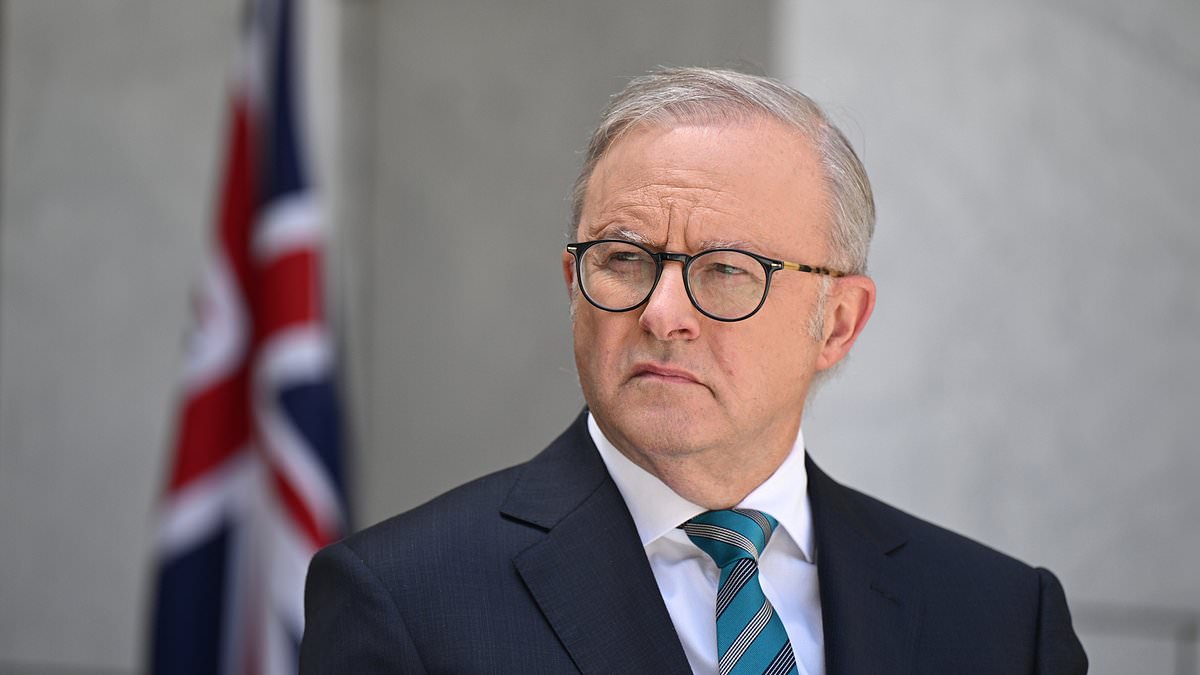
Anthony Albanese (pictured) confirmed Parliament would return on Monday January 19
Penalties for hate‑crime offences will be significantly increased, and courts will be required to take extremist motivation into account during sentencing.
The government is also creating a new offence for inciting hatred with the intention to intimidate or harass, while expanding the ban on prohibited extremist symbols.
‘We want to ensure that Australia remains a society where everyone has the right to be proud of who they are and we also want to make it clear that conduct which is hateful, dangerous, and divisive will also be illegal,’ Albanese said to reporters in Canberra on Monday.
‘Just as antisemitism and racism are an offence against our Australian values, they should be an offence against Australian law.’
Home Affairs Minister Tony Burke will gain stronger powers to cancel or refuse visas for individuals who attempt to enter Australia to spread hatred.
A new framework will allow the minister to formally declare organisations as Prohibited Hate Groups, a designation that makes it a criminal offence to join, recruit for, donate to, or assist such groups in any way.
Radical Islamic group Hizb ut-Tahrir and the neo-Nazi National Socialist Network were named by Burke as groups that the laws would target.
The package also includes the launch of a National Gun Buyback Scheme designed to remove dangerous weapons from Australian streets.

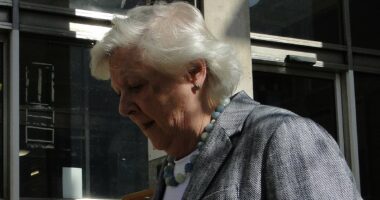
Sussan Ley (pictured) said the Opposition was ‘sceptical’ about the new laws
‘The terrorists at Bondi Beach had hatred in their minds and lethal weapons in their hands,’ Albanese said.
‘These reforms deal with both.’
Opposition Leader Sussan Ley said she would be briefed on the laws on Monday afternoon, but said she was ‘sceptical’ about the new laws.
‘The Opposition was not provided with the legislation prior to the Prime Minister’s announcement,’ she said.
‘We are deeply sceptical of the Prime Minister’s decision to introduce a single bill that will attempt to cover multiple complex and unrelated policy areas, for example issues of speech are clearly separate from the ownership and management of firearms.’
Ley also criticised Albanese for taking too long to call for Commonwealth Royal Commission into the Bondi Beach terror attack, following weeks of pressure.
‘Just days ago, the Prime Minister was dragged kicking and screaming to a Commonwealth Royal Commission, which is why Australians are right to be cautious when he preaches cooperation but does not practice it,’ she said.
‘As is so often the case with this Prime Minister, he is squarely focused on what he perceives to be his political interests, not the national interest. This is a political decision, aimed at fostering division – not creating unity.’