
Share this @internewscast.com
The biotechnology company known for resurrecting dire wolves has introduced a pioneering ‘modern-day Noah’s Ark’ project, aiming to protect the planet’s most endangered species.
Colossal Biosciences announced a collaboration with the United Arab Emirates (UAE) on Tuesday, focusing on preserving tissue samples from 100 different species. These samples will be stored in a state-of-the-art BioVault within a future World Preservation Lab set to be built in Dubai.
The selection of species for this initiative will follow specific criteria, with input from conservation experts and organizations such as the IUCN, regarded as a leading authority in global wildlife protection.
The BioVault will utilize cryogenic technology to freeze and maintain genetic material from various species, ensuring the preservation of genetic diversity.
According to Colossal, the facility will incorporate cutting-edge robotics and artificial intelligence to ensure meticulous oversight and management.
Headquartered in Dallas, the company has set an ambitious goal to accumulate over a million samples representing more than 10,000 species.
Faced with the possibility that nearly 50 percent of species may disappear by 2050, the BioVault could provide the genetic tools to preserve endangered animals and resurrect extinct ones, Colossal and the UAE said.
Colossal Biosciences co-founder and CEO Ben Lamm said: ‘We are losing species at an alarming rate, and the world urgently needs a distributed network of global BioVaults – a true backup plan for life on Earth.

The BioVault will safeguard cryogenically frozen genetic material from multiple species to preserve genetic diversity. Pictured is Colossal Biosciences co-founder and CEO Ben Lamm
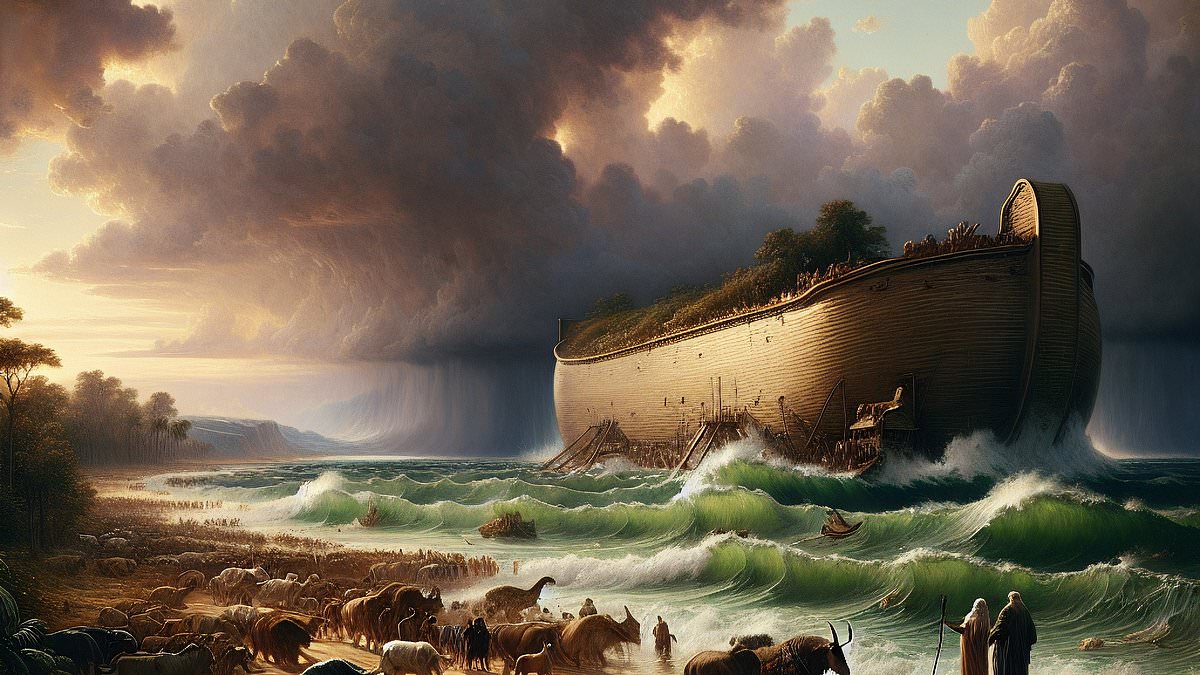
The scientists have likened the BioVault to the biblical story of Noah, who built a massive ark that held a pair of each species, saving them from a catastrophic flood that swallowed all life on Earth.
‘Colossal is now creating the world’s first Colossal BioVault: an unprecedented global resource, a modern-day Noah’s Ark for protecting and restoring life on our planet. We are excited to build on this relationship and pioneer bold new solutions to safeguard biodiversity for generations to come,’ Lamm said.
Colossal made headlines in April 2025 when it announced the first de-extinction of an animal species, reintroducing the dire wolf back into the world.
The company birthed three dire wolves, naming them Romulus, Remus and Khaleesi in honor of the legendary creature made famous from the HBO hit series Game of Thrones.
However, the white-coated wolf once roamed North and South America before vanishing around 12,000 years ago, likely due to the disappearance of their prey.
The team extracted DNA from fossilized remains, which was combined with the genetic code of a gray wolf, the closest living relative.
‘Our team took DNA from a 13,000-year-old tooth and a 72,000-year-old skull and made healthy dire wolf puppies,’ Lamm said at the time.
They then cloned high-quality cell lines using somatic cell nuclear transfer into donor egg cells, which involves taking the DNA out of the cell from a donor – in this case, a body cell.

The scientists have likened the BioVault to the biblical story of Noah, who built a massive ark that held a pair of each species, saving them from a catastrophic flood that swallowed all life on Earth
The embryos were then transferred to a surrogate, who gave birth to the three healthy pups in October 2024.
And Colossal is using the achievement to prepare for future extinctions.
Colossal Chief Animal Officer Matt James said: ‘The BioVault is our commitment to safeguard the present diversity of life and our promise to secure a resilient future.’
The conservation biotechnology partnership between Colossal and the UAE is backed by a nine-figure funding effort, according to the announcement.
The UAE has also committed $60 billion to Colossal through an investment led by Crown Prince Sheikh Hamdan bin Mohammed bin Rashid Al Maktoum, bringing the company’s total funding to $615 million.