
Share this @internewscast.com
Scotland Yard is testing innovative substance-detection technology aimed at curbing the rise in spiking incidents in London during the holiday season.
In a groundbreaking move, officers are utilizing a unique portable “vape testing kit” developed by researchers at the University of Bath. This device is specifically designed to identify harmful psychoactive substances in e-cigarettes.
Additionally, the police are employing a £12,000 handheld device that can determine the composition and purity of a substance simply by directing it at a bag of drugs, offering quick and accurate results.
The force has also teamed up with Meta, Facebook’s parent company, to create an interactive virtual reality game. This initiative aims to educate the public about the risks associated with spiking.
Deputy Assistant Commissioner Ben Russell expressed hope that these trials will demonstrate the effectiveness of these tools, potentially leading to their broader use among police forces.
Russell noted an increasing prevalence of vapes containing hazardous substances like Spice and THC. “This testing kit allows us to approach individuals on the street, offer to test their vape, and immediately inform them if it contains something dangerous,” he explained.

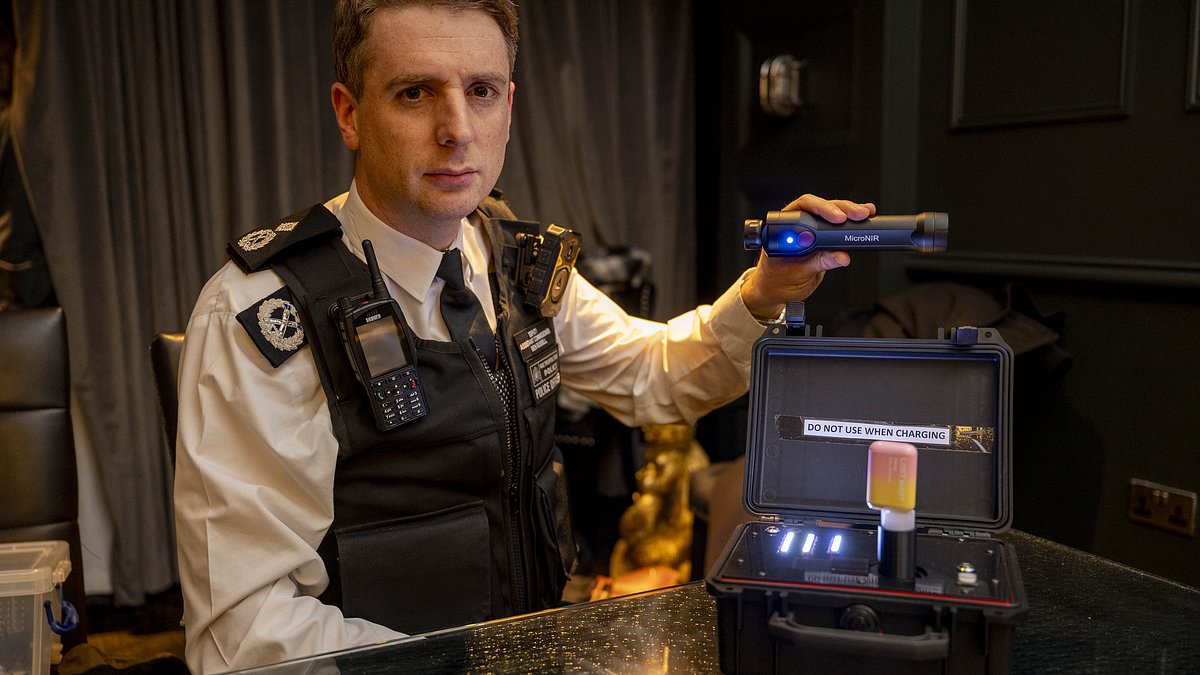
Deputy assistant commissioner Ben Russell demonstrates the vape testing kit and NIRlab drug detector technology

The vape testing kit, developed by Bath University, is unique and the force currently has only one. When the vape being tested contains no illicit substances, it turns green but if the device detects THC the lights turn purple, and red for ‘zombie drug’ Spice
Spice is a synthetic cannabinoid and is known as a ‘zombie drug’, while THC is the psychoactive component of cannabis.
A previous study of 596 confiscated vapes showed that about 17 per cent contained Spice, which 1.2 per cent contained THC.
The vape testing kit’s lights turn purple when THC is detected and red for Spice.
Mr Russell said: ‘The drug detection “torch”, from a company called NIRlab, is gamechanging in that it can tell us what a substance is straight away without even having to open the bag of drugs and potentially expose officers to something harmful.
‘We can just point it at a bag containing a white powder and it will tell us if it is cocaine, ketamine or whatever.
‘This is relevant to spiking because people can have all sorts of substances introduced into their drinks without their knowledge, including illegal drugs.’
The number of spiking reports received by police has risen by nine per cent over the past 12 months.
The Metropolitan Police receives more than 2,700 allegations of spiking a year, but the crime is hugely underreported and is expected to surge throughout the festive period.
Two-thirds of spiking victims are women, with more than half of incidents taking place in pubs and bars.
Almost one in fifty adults believe they may have been a victim of drink spiking over the past 12 months.

Meta has developed a virtual reality scenario-based platform which can show people various situations in which spiking may take place
The police partnership with Meta means hospitality staff can be trained through virtual reality how to identify spiking incidents and how best to deal with them.
Vapes containing illicit and unexpected substances is a new and growing phenomenon, Mr Russell said.
‘This is why devices like this vape testing kit will become more crucial,’ he added.
‘We have so far been using it in schools as many young people will unknowingly be buying vapes from places that aren’t reputable and may have dangerous substances in them.
‘But it can be deployed in city centres so people can test their vapes and learn more about the dangers.’
Commander Clair Kelland, the Met’s public protection lead, said: ‘Spiking is a frightening crime that can have devastating consequences. No one should feel the need to change their behaviour to protect themselves from becoming a victim of an illegal offence.
‘While we are determined to prevent spiking and continue working closely with partners and venues, it’s encouraging to see more people coming forward. But we need even more victims to report incidents as early as possible – it’s the key to identifying offenders and stopping them from harming others.’